Chianti Alert

Sangiovese Grosso, Sangiovese Piccolo, Sangioveto ….. is to name just a few of
the aliases for this grape and closely related cultivars; providing the core body
for most Tuscan, blended red wine recipes; still reigning as the most consumed
Italian wines–at home and abroad. Dark-blue-skinned Sangiovese takes its name
from the Latin term Sanguis Jovis (‘blood of Jove’); an exalted reference to both
the elixir’s colour and an esteemed place in Europe’s pantheon of great grape
species: Vitis Vinifera. It’s also the most widely cultivated variety in central Italy,
with prolific vineyards in Lazio, Umbria, Marche and Tuscany combining for 95%
of worldwide plantings–a largely unrivalled dominance of a major grape, sourced
from a single country. Over several hundred years, generations of growers have
steadily built up expertise with ‘San-joh-vay-say’; stewarding these slow ripening
fruit clusters through to balanced maturity is something Tuscans have diligently
become very, very good at!

In the viticultural history of many long-lived old world wine regions, development
of a distinctive wine style that becomes immensely popular, aided by prodigious
yields of grapes that are well-suited to the terroir, adds up to a mixed record of
glory times and a fair share of winemaking folly. The sometimes over-voluminous
output of Tuscany’s Chianti is no exception to the latter. Happily, the decades in
the mid-20th century during which large commercial producers were marketing
far too much unremarkable bulk wine dressed in attractive round-bottom flasks,
swaddled with woven raffia called Fiasco–are long gone. In its 21st century place,
aptly, a renaissance of a different sort is taking place in the baseline of Italianate
winemaking. This time, Tuscany is focused on artfully advancing the competitive
quality across all its grades; from everyday offerings such as charmingly simple
Chianti thru to premium production of Brunello or Vino Nobile di Montepulciano.
Too bad about the general demise of the raffia wrapping, it was so rustically and
warmly emblematic of Italy for such a long time!

Among the undulating landscape to the south-west of Florence, the vineyards of
Fattoria Di Piazzano roll down and outward from the tree-ringed hilltop estate:
first established by debutante vintner Otello Bettarini in 1948, then overseen by
nephew Riccardo for a time, and now with another quarter-century of hands-on
experience and investment, the fattoria (farm) under guidance by Rolando, Ilaria
and Michela endures as a Bettarini family affair. This week’s DéClassé featured
bottle of Piazzano Chianti 2013 is evidently one of their entry-level wines from a
very limited release. Nonetheless, this is a delightful, lighter-bodied and youthful
Chianti, displaying an integrated character of savoury earth and still-vibrant fruit.
Generally, exercising restraint in the finishing process of wine displays modern
winemaking wisdom. Here, the straightforward recipe of 80% Sangiovese–likely
from young vine stock–is rounded by a healthy splash of Colorino and Canaiolo.
Exposure to wild yeast and aged briefly in vitrified concrete vats and bottle only,
results in an unfettered, honest and refreshing wine, pleasingly devoid of oak.
Add a $14.95 price-point and you have a winner that will sell quickly. I would buy
many, to fill empty slots in your loose-raffia-lined storage boxes, as the success
of this trial offering will probably prompt a price increase for the next vintage!

Piazzano

PIAZZANO CHIANTI 2013
VINTAGES – LCBO Product #393199 | 750 mL bottle
Price $ 14.95
13.5% Alcohol/Vol.
Sugar Content Descriptor: D

Made in Tuscany, Italy
By: Societa Agricola Fattoria Di Piazzano
Release Date: October 31, 2015

Tasting Note
This appealingly nimble young wine has a surprising range of the savoury thru to
cherry-driven flavours and aroma expected of Sangiovese. Try serving this with
antipasti, Pappardelle noodles and mushrooms or sausage-stuffed roast pork.
Primitivo Alert

In a period that Roman historians term as Magna Graecia, expansionist Greeks
crossed the westward seas to establish a ring of thriving colonies around the
perimeter of this distinctive land spit; in the modern age it became whimsically
known as either stiletto or heel of the boot. Jutting downwards from mainland
Italy, the southern peninsula of Puglia acts as a geographic divide between the
sheltered Gulf of Taranto and the Otranto Strait of the Adriatic Sea. Throughout
thousands of years in antiquity through to the middle ages, this was a strategic
crossroad of trade and target of conquest for many Mediterranean civilizations.
As a cumulative result, 800km of coast and the parallel line of inland mountains
now serve to frame a hybrid culture; unique within the broad diversity of regional
Italian identities. Though early colonizers seem to have been warlike Spartans,
by the 5th century BCE, it was philosophy that had become the preoccupation in
Greco-Italian centers of learning such as the city of Elea (now Velia). Notably, this
was home to visionary thinker and mentor Parmenides; credited with laying an
influential foundation for Aristotle, Plato and young Socrates. Unsurprisingly, the
wealth of clay Amphorae unearthed from archeological excavation also reveals
that the making of wines and their sea-borne export were well underway!

With naturally fertile reddish-brown soils, Puglia’s flat plains and valleys host a
proverbial abundance of wild rose and berries, rosemary and thyme; punctuated
by stands of stalwart maritime pine. As for the mixed agricultural landscape, the
widespread grain farming and groves of ulivi secolari (centuries-old olive trees)
yields an impressive 50% of Italy’s total pasta and olive oil production. Artichoke,
tomatoes, sheep herding, fish and seafood, and of course grapevines, round out
the bountiful output here.

Curiously, in spite of being so prolific, Puglia remains one of the less-well-known
Italian regions. In its middle and southern provinces, the hot and dry climate is
perfect for cultivating fulsome grapes such as Negroamaro, Malvasia Nera and
Primitivo. With a name derived from several Latin terms loosely translating as
‘the first to ripen’, Primitivo has traditionally been a reliable blending component.
More recently, the variety has gained increased profile as a stand-alone varietal
wine, due in part to the burgeoning popularity of Zinfandel; a clonal relative that
flourishes in Californian vineyards and North American marketplaces. Local lore
suggests that this Italian variant of a Croatian parent grape was discovered by
a 17th century Benedictine monk, Francesco Primicerius, as a wild vine growing
in his monastery gardens. Gradually, cultivars of Primitivo were then proliferated
throughout Puglia, finally rooting in Taranto Province 100 years later.

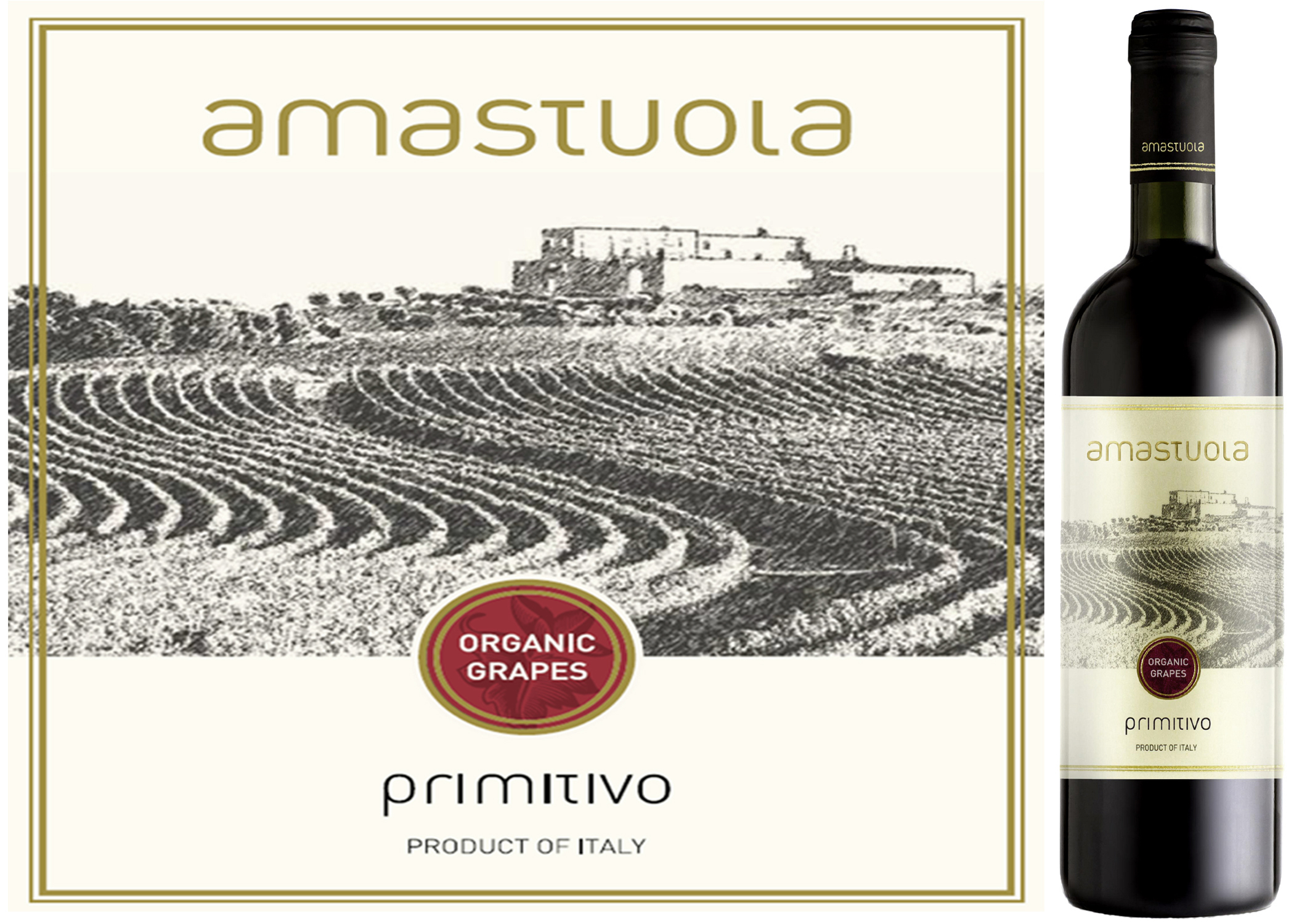
Home to this week’s DéClassé featured bottle from the Montanaro winemaking
family, the town of Crispiano and surrounding vineyards are proudly becoming
an agrotourism destination in their own right. So much so that these vintners
engaged a landscape architect, Fernando Caruncho, to oversee development of
the property as a garden-vineyard; wherein the undulating waves of vines are
interspersed with 24 islands of 800-year-old olive trees. Compelling aesthetics
aside, their Amastuola Organic Primitivo is a plush, pleasingly rounded example
of how expert that Taranto’s vintners have become in fashioning their local wine.
Budget allowing–half a case would be hard to hold in your cellar for very long!

 
Amastuola2

AMASTUOLA ORGANIC PRIMITIVO 2011
VINTAGES – LCBO Product #300004 | 750 mL bottle
Price $ 15.95
13% Alcohol/Vol.
Sugar Content Descriptor: D

Made in Puglia, Italy
By: Amastuola Societa’S Agricola S.S.
Release Date: October 17, 2015

Tasting Note
A very fruity palate typical of the grape style with aromas of mixed berries, plum,
spice and vanilla. Try with some classic, cool-weather comfort foods like braised
beef brisket, veal scaloppini, pasta Bolognese or eggplant Parmigiano.

Syrah Alert

The central Atacama Desert is distinctively known to climatologists as the driest,
non-polar geography on Earth; desolate and desiccated to such extremes that
it’s biologically sterile, with some zones having never recorded any measurable
rainfall–ever. Here in the northern 3rd of Chile, to an unpractised outside eye, the
cultivating of fruit at the outer fringe of an expanding desertification seems likely
to be a futile exercise? Undaunted, the imaginative and resourceful Chileans are
applying their ancient understanding of the land while also employing innovative
and sustainable techniques such as drip irrigation–to excel in the face of these
challenges. Also blessed with a relatively pest-free environment, they’re naturally
exercising less-invasive, organic and biodynamic farming practices; both healthy
and more economical in terms of production costs. The sum of this viticulture
intelligence is imparting a discernibly fresh character into their premium wines,
while also compellingly demonstrating Chile’s new age, winemaking leadership;
now becoming an additional, largely unrivalled and fruitful export of expertise!

Just southwest of this hostile territory, the Limarí Valley stretches east to west
from the Andean foothills across to the Pacific shore. Open at the seaward end,
the valley acts as a funnel for the low-lying, billowing coastal fog named Garúa or
Camanchaca by the indigenous Aymara and Atacama Indians. In having passed
on the long understood benefits of this climate dynamic, modern descendants
continue to explore and exploit its magical properties both as air-borne irrigation
and air conditioning. Softly blanketing the vine stock with precious moisture each
morning, the fog then gives way to an equally significant cooling breeze later in
the day; providing some critical respite in an otherwise hot, semi-arid landscape;
emerging as one of the most promising of Chilean terroirs.

The growing of vines is not new to Limarí agriculture as some of these vineyards
were established in the mid-16th century; roughly corresponding with the arrival
of Spanish Conquistadors. In more recent ages, the majority of plantings here
are destined to produce table grapes or lesser grades of wine grape suitable for
the distilling of Chile’s trademark brandy, Pisco, also generically referred to as aguardiente (firewater). A quarter century or so on from the introduction in the
1990’s of Noble varieties such as Sauvignon Blanc, Chardonnay, Pinot Noir and
Syrah, this maturing vine stock coupled with the savvy of wine makers like the
much heralded Felipe Müller, is now yielding world-class, varietal wine in a range
of accessible price points.

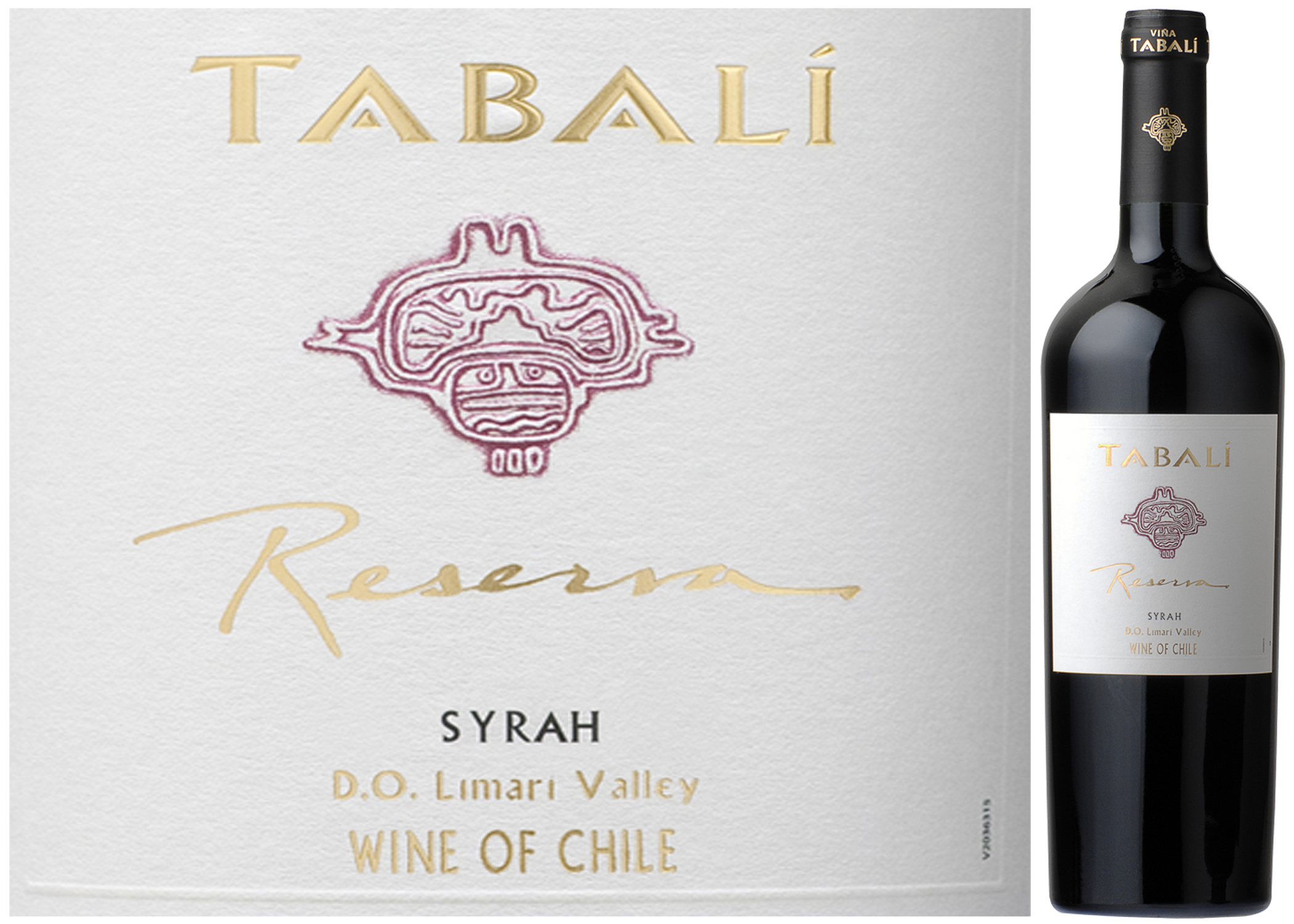
For this week’s DéClassé recommended bottling of Tabali Reserva Syrah 2012,
the fruit is sourced from an alluvial terrace of clay, chalk and limestone silt lying
adjacent to the Limarí River; acting as a conduit for mineral-rich meltwater that
flows downslope from the Andes Mountains. This intriguing and substantial wine
has an appealing balance of tannin structure and softness; helped by a yearlong
maturing in second-use, French oak barrels. This will cellar for some time, but if
you prefer red wines with an acidic brightness—then start drinking immediately!

Tabali

TABALI RESERVA SYRAH 2012
VINTAGES – LCBO Product #662692 | 750 mL bottle
Price $ 14.95
14% Alcohol/Vol.
Sugar Content Descriptor: D

Made in Limari Valley, Chile
By: Vina Tabali
Release Date: October 3, 2015

Tasting Note
This fairly rounded Syrah gives off dark fruit aromas, juicy cherry and black plum
flavours with expected pepper and bitter chocolate notes that define the grape.
Try with roast lamb, braised short rib in leeks or bacon-wrapped tornadoes.

Ripasso Alert

Often thought of as a singular, blended wine style, the prodigious vintners and
their vineyards in the Valpolicella DOC actually produce a spectrum of grape
varieties and blending recipes; finished in a range of grades and styles including
Classico, Superiore, Ripasso, Amarone and Recioto. Alternately referred to as
the Pearl of Verona or Verona’s Garden, the two adjacent valleys and plain that
comprise Valpolicella are nestled among the hills of Monti Lessini with the Adige
River acting as a boundary to the south and west. Apart from the storied city’s
anointment as a UNESCO World Heritage Site, its surrounding agricultural zone
is also recognized for the fashioning of youthful wines that unabashedly display a
vibrant and fruity character; intended for early consumption within 3-5 years. In
this week’s DéClassé feature of Storia Antica Ripasso Valpolicella 2013, many
of these attributes shine and are amply demonstrated in the bottle.

The typical vine stock planted here is Corvinone, Rondinella, Molinara and the
region’s signature variety: Corvina Veronese. One of the many local methods of processing wine is called Ripasso (to go over again). This is an ancient vinification
technique that 
likely was adopted from the Greeks; further developed by Romans
to make sweet Recioto della Valpolicella, then later refined for making the region’s fulsome wine star: Amarone. What all these styles have in common is the grape
drying process called appassimento, whereby optimally ripe grape bunches are
picked long after the main harvest and laid out to dry on Arele (bamboo racks).
Having reaching the desired concentrations of sugar and glycerin content, the
withered grapes are slowly pressed to yield the fermenting nectar that will over
five long years become Amarone; the residual pomace is re-purposed by being
added to a partially aged Valpolicella base wine, prompting a second fermentation
that elevates the alcohol content by 2% while adding tannin, colour and richness.
Add a year spent in barrels – it becomes Ripasso della Valpolicella Superiore.

The style has again become popular with red wine lovers longing for somewhat
bolder versions of the easy drinking, regional blend though still nimbler than the heavyweight and significantly more expensive Amarone version. Given the effort
that’s been invested in this bottling; paying a few extra dollars above the average
price-point for standard Valpolicella is more than justified. It’s ready. Decant.

Storia Antica

STORIA ANTICA RIPASSO VALPOLICELLA 2013
VINTAGES – LCBO Product #273672 | 750 mL bottle
Price: $ 15.95
Wine, Red Wine
13.0% Alcohol/Vol.
Sugar Content Descriptor: D

Made in: Veneto, Italy
By: Le Ville Di Antane S.R.L.
Release Date: Sept. 19, 2015

Tasting Note
A nicely extracted Ripasso with delicious aromas of blackcurrant, chocolate 
and
peppery spice. Medium-bodied, dry and flavourful with a pleasing, zippy freshness.
An excellent choice for barbecued beef, mushroom risotto and aged cheeses.

Swartland Blend Alert

Over the 67-year span since 1948, development of the Swartland Winery just
outside of charming and historic Malmsbury has kept a steadfast pace with the
maturing of its vine stock. Sprouting up from the undulating scrubland that these
vineyards occupy, un-trellised, gnarly bush vines personify the determined spirit
at work in the land’s nature and its prolific farmers; both are deeply rooted and
at home on the sprawling ranges of greater Swartland.

Thought of as the breadbasket of South Africa, this diverse agricultural zone in
the country’s Western Cape Province is conducive to crops of wheat, canola,
fruit orchards of all sorts and somewhat surprisingly: olive groves. For cultivation
of grapevines in the unirrigated, dry land conditions that exist at the periphery of
more arable parcels, there’s an unavoidable requirement for the wine makers to
perform a balancing act: Stressed vines inherently produce low yields of grapes;
sometimes too marginal a yield can result in small producers failing to achieve
commercially viable volumes of wine output. On the other hand, as a trade-off,
the very same factors in this arid terroir, desirably encourage the development
of far more interesting fruit; enriching the base – for the building of quality wines.

As evidenced by this week’s DéClassé recommended winery and their bottling of
a Reserve Cabernet Sauvignon/Merlot blend from 2013, this vintner has found
ways to imaginatively exploit the trade-off, as a strength in a challenging landscape
and business model. While taking into account that this is their entry-level wine,
it is nonetheless remarkable that it’s being made available at this price-point!

Cellarmaster Christo Koch evidently stands as a good example of the leadership
steering South Africa’s continuing renaissance of profile and competitiveness in
the global marketplace. Wisely, this current generation is dedicated to refining
the regional distinctiveness of character; reflecting terroir more directly in an
unfettered manner; largely eschewing production practices that might serve to
homogenize their wines. The latter trend is a difficult one to side-step, as a result
of commercial pressures and the employing of distinctive grape varieties which
originate from other regions. In short summary, the prevailing philosophy here
in Swartland’s estates seems to be: create appealingly rustic, honest wine that’s
reflective of soil and climate, with minimal processing interference. Bravo!

The blending of Cabernet Sauvignon and Merlot is discernibly a near-Bordeaux
recipe that’s been adopted and skillfully adjusted to better suit how these grape
varieties ripen in South Africa. If you are a fan of the medium-bodied, red table
wines from the benchmark French region, then this will be very satisfying. If you
are not yet hooked, then this offering should build both affection and a deeper
appreciation for how well they’re able to craft it in Swartland. Enjoy now-2017.

Swartland

SWARTLAND WINERY RESERVE CABERNET SAUVIGNON/MERLOT 2013
VINTAGES – LCBO Product # 419648 | 750 mL bottle
Price $ 12.95
14% Alcohol/Vol.
Sugar Content Descriptor: XD

Made in: Swartland, South Africa
By: Swartland Wine Cellars
Release Date: September 5, 2015

Tasting Note
This Ruby hued, medium-weight red has the expected red berry fruit flavours
and aroma typical of these grape varieties, accented with spice and Vanilla.
Preferably served with foods to balance its 14% alc. – try with grilled zucchini
and sweet peppers, pork or beef tenderloin medallions topped in a Madagascar,
green peppercorn sauce.

Bordeaux Alert

The designation Bordeaux Supérieur is a qualified, superior grade in comparison
to standard Bordeaux AOP wines. As aspiration, they intend to be more layered
and rich due to 3 primary mandates of the appellation: higher planting density of
vines to promote healthy competition between their root systems for nutrients;
judicious pruning to tailor harvest yields and concentrate grape character, and
finally, the typical .5% increase of alcohol level, reflecting the careful selection of
mature fruit from older vines with sufficiently developed, natural sugar content.

The greatest concentration of Supérieur producers is in the peripheral areas
north of Pomerol and St-Emilion though fully 25% of all vineyards throughout
greater-Bordeaux are dedicated to achieving this target grading. The diverse
patchwork of 38 sub-regions encompassing 60 AOC appellations, also divided
into a lengthy list of individual, legendary plots, is somewhat more decipherable
with the understanding that most are anchored around key, namesake towns
and villages. Moreover, they’re further distinguished by being grouped around
the Gironde Estuary at the region’s Atlantic end, or inland along the converging
Garonne and Dordogne rivers. Lastly, the paths of these 3 waterways, roughly
drawn as a diagonal line through the region, provide demarcation for which of
the vineyards and wines are of so-called Right or Left Bank origin. North of the
Dordogne is Right, south of the Gironde and Garonne is Left. An added anomaly
is the sizeable zone between called Entre-Deux-Mers (between 2 seas). It’s all
delightfully bewildering, this vast collection of 7,375 wine-producing Châteaux!

As for price-point range, the loose designation of petit Château encompasses
thousands of producers who don’t officially qualify as Cru Classés: the 5 top-tier,
Bordeaux classifications. In many cases, their vineyards are located right next
to those of better-recognized brands. In rarer instances, there are microclimate
and soil composition factors that innately result in differing wines being yielded
from plots nearby to each other. However, cost and desirability are generally
determined by the reputation of a particular vintage and how much investment
in production there has been by the estate. Despite a common perception that
the offerings from Bordeaux tend toward premium pricing, a significant majority
of Bordelais vintners sell their red and white wines, fairly, at between $15-25.

Fronsac is among the better-known Right Bank appellations where blended reds
are distinctively built around an early ripening Merlot grape; a robust variety that
has the ability to develop adequately in slightly cooler terroirs. The nature of the
resulting wine is typically more supple and softer than the tannic and intense,
Cabernet Sauvignon, hybrid counterpart – which characterizes Left Bank blends.
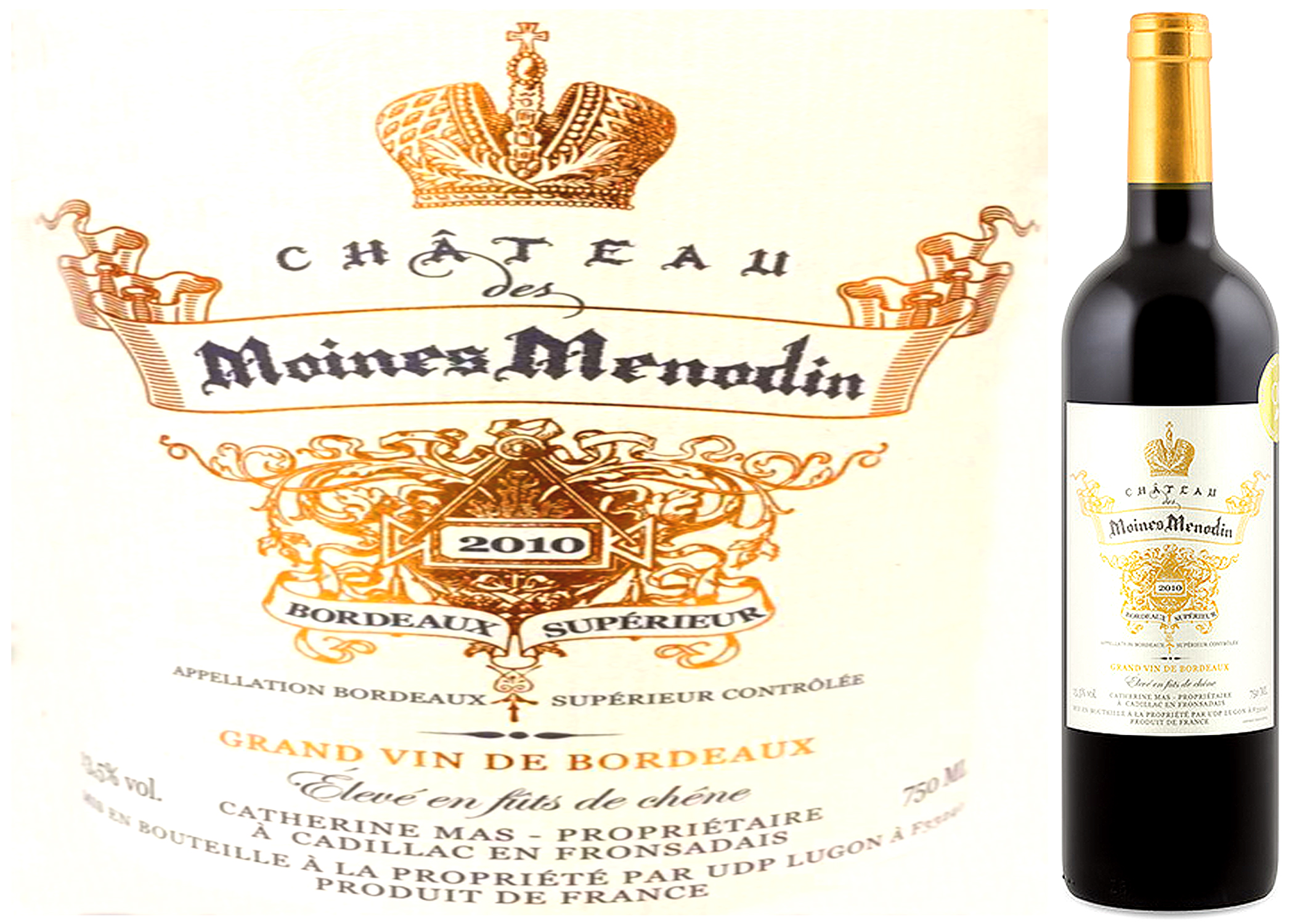
Partially hidden among 180 growers in the Les Vignerons du Fronsadais co-op
is Château des Moines Menodin, which has already done the cellaring work for
this week’s DéClassé feature. The secret is out and this will rightfully sell quickly.
If you haven’t enjoyed a remarkably inexpensive 2009 or 2010 Bordeaux lately,
then here’s a great starting point for their rediscovery. Drink now thru 2016.

Chateau Des Moines

CHATEAU DES MOINES MENODIN 2010
VINTAGES – LCBO Product #424259 | 750 mL bottle
Price $ 14.95
13.5% Alcohol/Vol.
Sugar Content Descriptor: XD

Made in: Bordeaux, France
By: Catherine Mas, Prop.
Release Date: August 22, 2015

Tasting Note
This garnet coloured, fleshy, fully rounded table wine has loads of red fruit flavours
and aroma, accented with cassis, vanilla and spice. Try it with grilled asparagus,
roasted veal, or a baked Brie served on savoury bread crisps.

Garnacha Tinta Alert

As a signature example of both Spanish modern and old school winemaking
methods, this fresh-fruited red represents the vanguard for well-made table
wines in Spain’s blossoming, quality-revolution. Here in the extremely hot wine
country around Alfaro, it’s a desirable combination, which deftly pairs innovation
with deeply rooted tradition. It is modern, in that the updated production style
of minimal, mechanical handling and filtering helps to preserve the brightness
of the wine, balanced with a softer, integrated presence of Oak. The old school
facets are a higher blending proportion of 50% Garnacha Tinta (Grenache)
into the standard Tempranillo base, as well as, incorporating small batches of
finished wine from the previous vintage (max. 15%). Both are typical in this 3rd
La Rioja sub-region called Baja – home to this week’s DéClassé featured wine
from vintner, Bodegas Palacios Remondo.

Winemaker and visionary figure, Alvaro Palacios, has for some time now been
making news in the wine world with his influential strategies of promoting the
development of quality over quantity. As of this Spring, he is the news, in having
been declared Decanter Man of the Year 2015 by the well-regarded journal.
It’s an apt, crowning juncture for a cutting edge winery that purposefully dared,
in a key transition period, to cut output from 200,000 cases of unremarkable
bulk wine to 50,000 of refined grades – a business risk that’s now paying off.

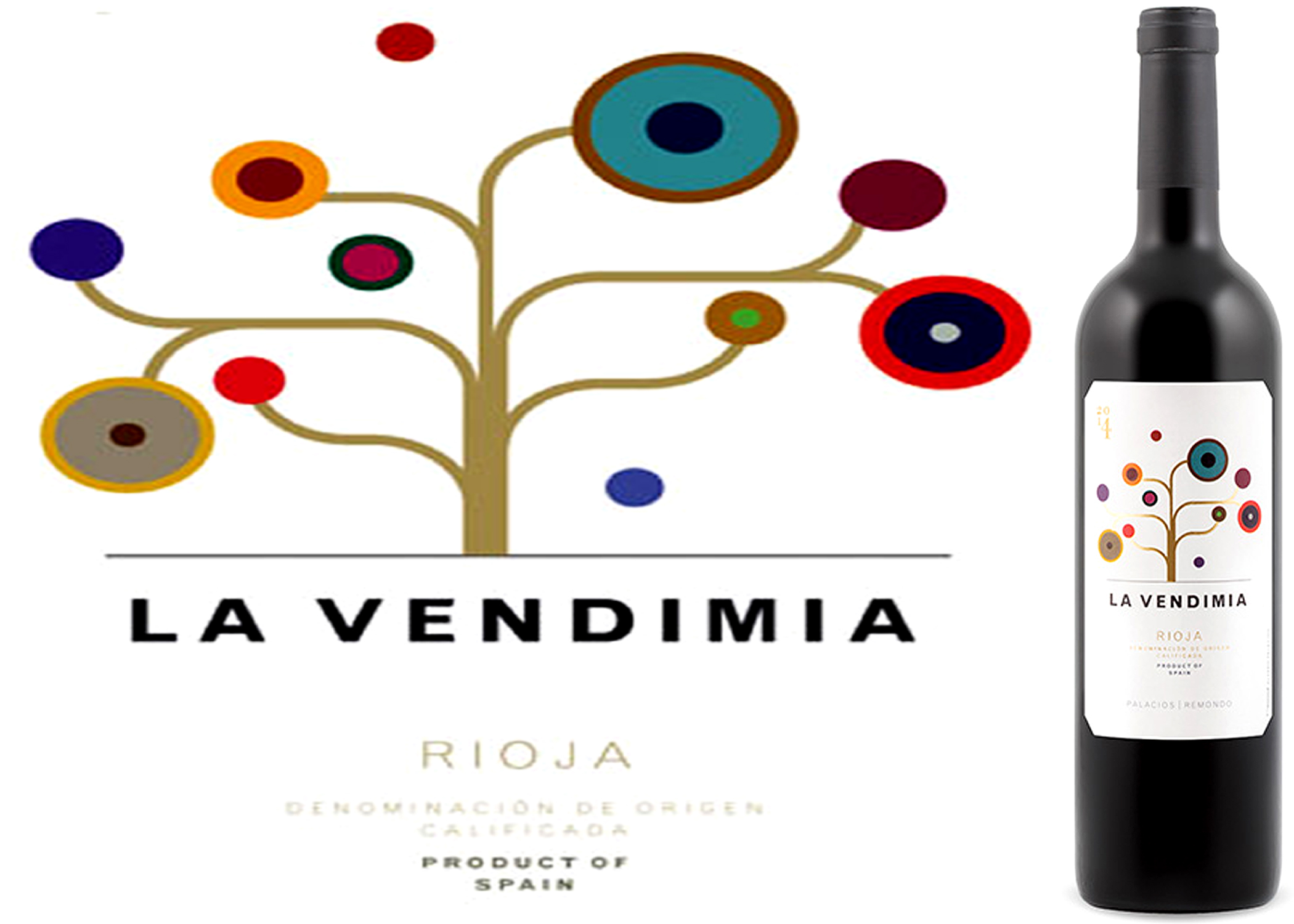
La Vendimia (‘the harvest’) is a solid version of a Spanish Joven designation;
a decidedly young wine, which has been barrel-aged for less than six months.
Here on the arid, rocky slopes of Monte Yerga, the Bodega draws fruit from
240 hectares of 10-40-year-old vines, grown organically, without irrigation, at
some of Rioja Baja’s highest altitudes (+550m). Along with the varietal bottling
of 100% Tempranillo, famously fashioned in the other two La Rioja sub-regions
of Alta and Alavasa, this is as close to a perfect, informal sipping wine that Spain
currently produces. By design, it’s meant to be enjoyed young and year-on-year,
continues to be offered at a modest price-point. That’s very much, still the case!

La Vendimia

PALACIOS REMONDO LA VENDIMIA 2014
VINTAGES – Product #674564 | 750 mL bottle
Price $ 15.95
14.0% Alcohol/Vol.
Sugar Content: D

Made in: Rioja, Spain
By: Bodegas Palacios Remondo
Release Date: August 22, 2015

Tasting Note
Consistently well made, this cherry-coloured, fruit-driven wine reveals aromas of
blackberry jam, raspberry and a hint of Garrigue (fragrant, wild Mediterranean
shrubs). Enjoy this on its own or with hearty fare such as Ratatouille, lamb ragout,
or pretty much most BBQ-roasted dishes.

Sangiovese Alert

The somewhat mysterious Etruscans are an Italianate culture that proceeded
and laid a foundation for the much later Roman age. Though their winemaking
traditions in Tuscany, Umbria and Lazio can be dated roughly to 1000BC, the
far less ancient vineyards now overseen by head winemaker Benedetta Contini
Bonacossi has a relatively contemporary history that’s rooted in the Italian
Renaissance. Their 100-hectare Cappezzana estate on the slopes of Monte
Albano north-west of Florence was part of a large land holding of the influential
Medici Grand Dukes. After centuries of twists and turns in ownership, passing
in title through numerous Tuscan nobilities, it was acquired by the Bonacossi
family early in the 1920’s. Historically, the wine output of this small agricultural
area was an undistinguished part of the greater, Chianti designation of origin;
the estate now produces its premium wine lines within the Carmignano DOCG
(Denominazione di Origine Controllata e Garantita), established in 1990.

The appellation covers 450 hectares of vineyard around the namesake town of
Carmignano with its evolving history as a vinicultural nursery. In the 18th century,
under guidance from the Grand Duke Cosimo III, the region’s range of grapevine
plantings were expanded, including the adopting of French Cabernet Sauvignon;
now one of the allowable and distinctive components in the region’s basic blend.
Built around the starring grape, Sangiovese, the classic Tuscan recipe also calls
for incorporating splashes of indigenous Canaiolo Nero and Cabernet Franc to
help round out the structure, flavour and aroma.

In the modern age, the Cappezzana winery is also producing more youthful red
wines employing the same varieties, under the umbrella of a parallel appellation:
Barco Reale di Carmignano DOC created in 1994. These are only a lesser
grade in the sense that they’re fashioned from younger vines and aren’t officially
subject to the more stringent, ageing requirements of Carmignano (a minimum
2 years) prior to release. Nonetheless, this week’s DéClassé feature has spent
12 months in tight-grained Allier oak barrels and much more in the bottle. With sufficiently smoothed tannins, this very well-made, layered, fresh and charming
offering is ready to punctuate your well-laid dinner table now.

Barco Reale

CAPEZZANA BARCO REALE DI CARMIGNANO 2012
VINTAGES – LCBO Product #508531 | 750 mL bottle
Price $ 17.95
13.5% Alcohol/Vol.
Sugar Content Descriptor: XD

Made in: Tuscany, Italy
By: Conte Contini Bonacossi
Release Date: August 8, 2015

Tasting Note
As the wine is made with younger fruit, it has a decidedly bright, red-berry flavour
profile, but also offers complimentary hints of Cassis and spice. Try serving with
dishes such as pasta with Bolognese sauce or heartier stews and tapas.

Rioja Alert

Hilltop monasteries and other now-tumbled stone fortifications built-up over the centuries, lie littered about and imbued into these richly historic lands of North
Central Spain. Sharing a border with the former Franco-Spanish, medieval
kingdom of Navarre, the regional identity of Rioja is equally distinct on its side
of the modern boundary. Apart from holding a unique place in the diverse Spanish
cultural patchwork, its vintners are among the visible leaders of competitive and progressive wineries in Iberia.

The larger, designated wine denomination of Rioja is actually comprised of three
sub-regions: Rioja Baja, Rioja Alta and the source of this week’s DéClassé focus:
Rioja Alavesa; which in turn, is considered a part of so-called Basque country. In
this zone, the Sierra Cantabria ridge of mountains provide sheltering geography
for 350 h. of vines either owned or directly managed by Bodegas Luis Cañas.
The vineyards are widely distributed over 870 small, individual plots, so drawing
fruit evermore discerningly has been both the challenge and the key strategy
pursued by the vintner toward producing an expanding range of premium wine.

Once focused only on less-remarkable, bulk winemaking, the steady process of
upscaling quality by employing advanced production techniques has also been
influenced by the agricultural reality of prolonged drought. In the current period
of the last 5 growing seasons or so, this stress is condensing yields but is also
bolstering the layered character of the smaller grape clusters. Nonetheless,
impressively, this irrepressible Bodega still remains capable of producing more
than167,000 cases of fruit yearly – in a virtual desert!

This modern Rioja style blends 95% Tempranillo grapes with a small splash of
Garnacha (Grenache) to top up its fruitiness. Making up fully ¾ of all rootstock
planted in this storied region’s vineyards, Tempranillo’s name is derived from
the Spanish temprano meaning early and it does reliably ripen quite early. The
designation as Crianza means that it’s spent one year in oak casks and another
in the bottle prior to release. The use of mellowed, 3-year-old French barrels
coupled with the star grape’s naturally soft tannins, translates into a pleasing
mouthfeel. Albeit still youthful, this lively, medium-bodied red is ready-to-go and
may become somewhat more velvety as it settles. Though not really destined
for long-term storage, you can certainly dare to hold this well-crafted example
of the excellent 2011 vintage for at least several years. For those with less will,
be encouraged in knowing that Rioja’s 2012 harvest, also anticipated as very
good, is almost on its way – to replenish the empty slots on your rack.

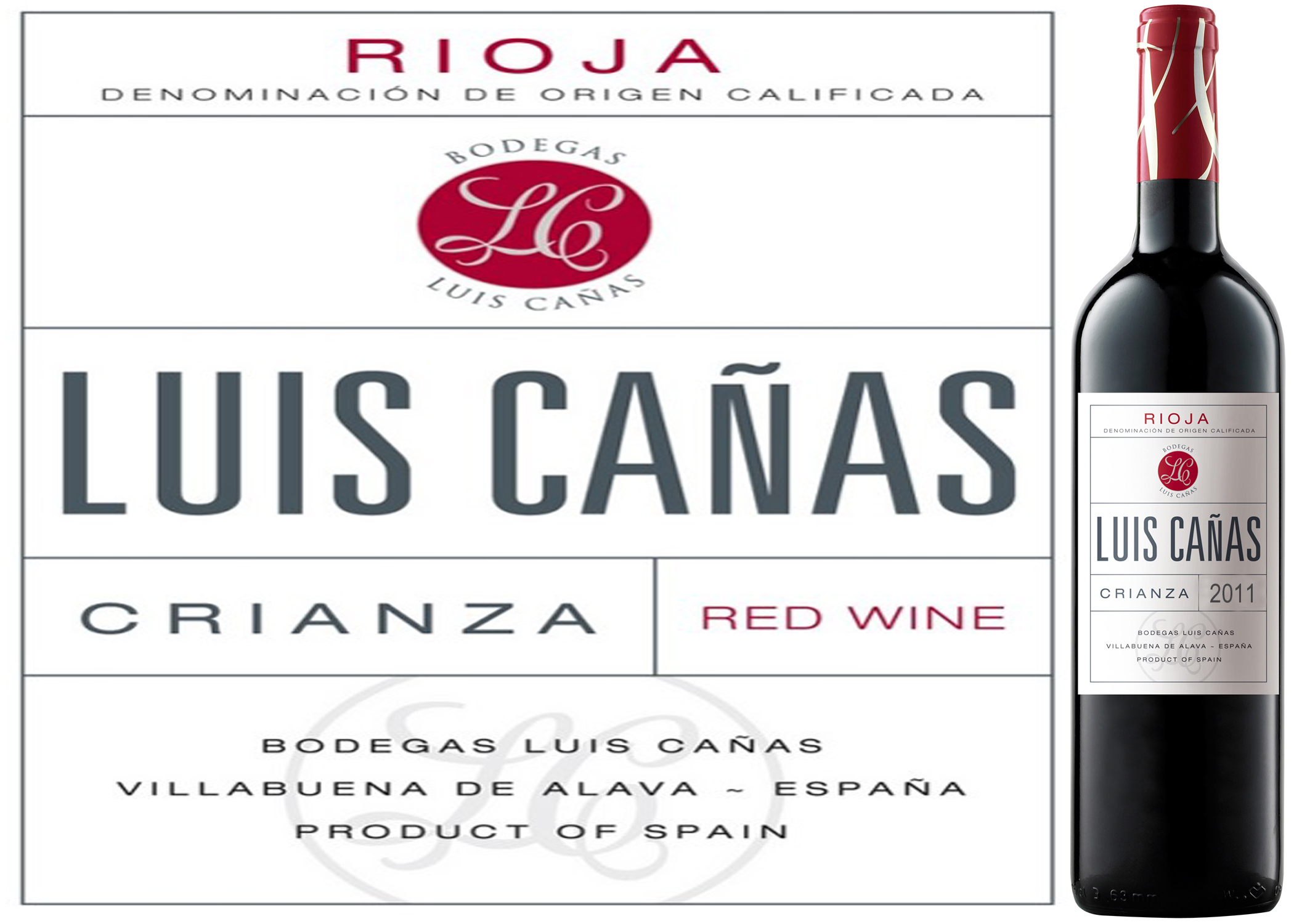
Luis Canas

LUIS CANAS CRIANZA 2011
VINTAGES – LCBO Product #336719 | 750 mL bottle
Price $ 17.95
14% Alcohol/Vol.
Sugar Content Descriptor: XD

Made in: Rioja, Spain
By: Bodegas Luis Canas S.A.
Release Date: July 11, 2015

Tasting Note
With a complex mix of dark, red fruit aromas and flavours that features cherry,
raspberries and fig, try serving this to keep up with most anything prepared on
a charcoal grill, including beef tenderloin brochettes, Chorizo sausages or as an
apéritif with semi-ripe cheeses and spicy tapas.

Syrah Alert

Having begun with the planting of its first vineyards in the so-called new world by
16th-century Spanish conquistadors, Chile’s somewhat surprising 500 year-long
history of making wine coupled with the recent development of new vine growing
regions – continues to impress and amaze. For a time, as of the mid-1800’s, its
output was of a middling grade, aiming to produce reasonably well-made bulk wine
for local markets and consumption. This fact is equally true of many, so-called old
world regions in Europe during the same time period and through to the middle of
the 20th century. Chile though has not simply kept pace with the rise of highly competitive, premium wine production and export, rather 
it has become a leader
on this globalized scene. They’re excellent wine makers!

Revealingly expressed in the often difficult history of the indigenous Mapuche
(earth people), is a reputation for personal courage, strong communal identity
and a fierce and unconquerable spirit. An essence of this carries forward, as
modern Chilean vintners continue to innovatively exploit challenging geography
for agricultural cultivation while demonstrating great concern for sustainability.
Framed between an endless Pacific coastline to the west and Andean peaks to
the east, the regional designation called Entre Cordilleras (between mountains)
is a collection of verdant, inland valleys including Colchagua: home to some of
the wine world’s most progressive vineyards – excelling at fashioning Malbec,
Syrah, Carménère and Cabernet Sauvignon wines.

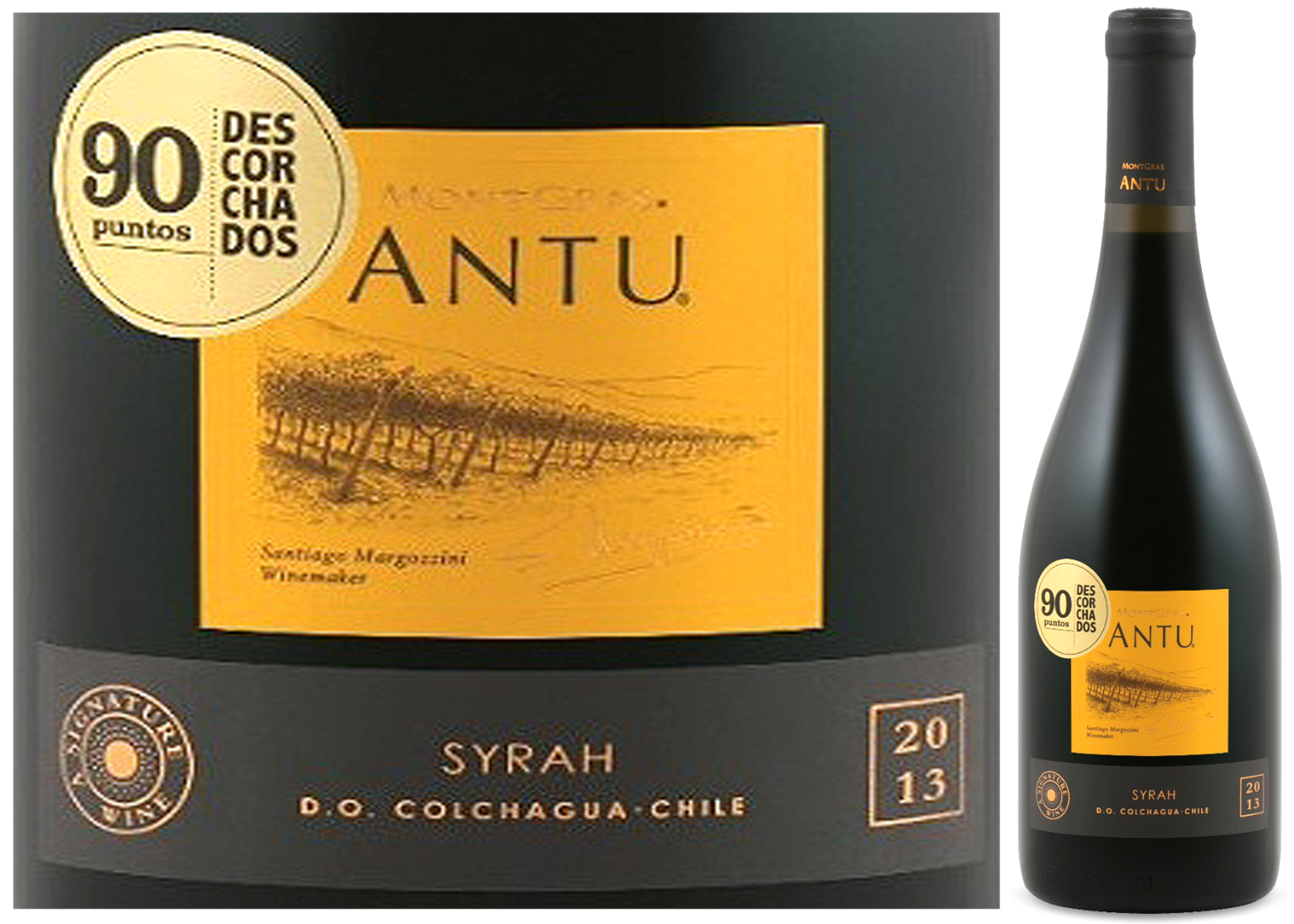
For this week’s DéClassé recommended bottling of a ripe Syrah, the source is
Ninquén, meaning ‘Plateau on a Mountain’ and so it is. The 27-year-old Antu
estate is a visionary addition to the holdings of Viña MontGras, whose guiding
philosophy is based on the highly selective integration of agriculture into the
rugged, natural landscape. There’s very little that’s rough in this offering from
the brothers Hernán and Eduardo Gras, having spent 16 months settling in a
combination of 30% new and 70% second use, French Oak barrels. It’s ready
to be uncorked, though you might challenge yourself to put several aside for
another year – after having tried one now, outdoors at an upscale BBQ.

Antu

NINQUÉN ANTU CHILEAN MOUNTAIN VINEYARD SYRAH 2013
VINTAGES – LCBO Product #675371 | 750 mL bottle
Price $ 17.95
14.5% Alcohol/Vol.
Sugar Content Descriptor: XD

Made in: Colchagua Valley, Chile
By: Viña MontGras
Release Date: June 13, 2015

Tasting Note
A robust red wine made of dark, ripe plum and red current fruit. Soft tannins
blend easily with balanced touches of sweetness and spice. Try serving this
slightly chilled alongside rich, braised meat or barbecued vegetable kabobs
and marinated Portobello mushroom caps.