Apulia Primitivo

Curiously, in spite of its ancient and storied culture — and being so agriculturally prolific in modern times — Apulia (aka Puglia) remains a less-well-known Italian region. It hasn’t always been so. In antiquity, the Phoenicians and Spartan settlers understood the potential of the land, as well as its strategic importance in straddling the Adriatic and Mediterranean seas. Its attraction wasn’t lost on the Lombard’s, Goths, and Byzantines either, who ruled Apulia during the early Middle Ages. In the 13th-century, Holy Roman Emperor Frederick II of Swabia was so enamoured of its charms that he built a host of Romanesque cathedrals and palaces. Shortly thereafter, though, a long period of decline and neglect set in; largely due to being distantly governed by the succession of Spanish, Austrian, and French Bourbon rulers. In having become an unprotected land, it was also vulnerable to Saracen raiders who shipped off much of the population into slavery. Surprisingly late in the long path of Apulia’s history, the gradual restoration of stability and prosperity came in 1860 when it was finally re-embraced as a part of the Italian Kingdom; forerunner to the republic that we’re familiar with today.

With fertile reddish-brown soils that are a mix of calcareous fossils, iron oxide, clay and silted loam, Apulia’s plains, valleys, and coastal zones are home to wild roses, berries and the proverbial herbs, rosemary and thyme; thriving among stands of maritime pine. As for agriculture, extensive grain farming and groves of ulivi secolari (centuries-old olive trees) impressively yield 50% of Italy’s total pasta and olive oil production. Artichoke, plum tomato, seafood and fish, sheep herding, and of course grapevines, round out the bountiful output. In the mid and south sub-regions of the Murge Plateau and the Salento Peninsula, the sun-baked and dry climate is ideal for cultivating fulsome red wine grapes
such as Negroamaro, Malvasia Nera, Aglianico, and Primitivo – the star variety in this week’s DéClassé feature, San Marzano Talò Primitivo di Manduria 2013.
san-marzano
.
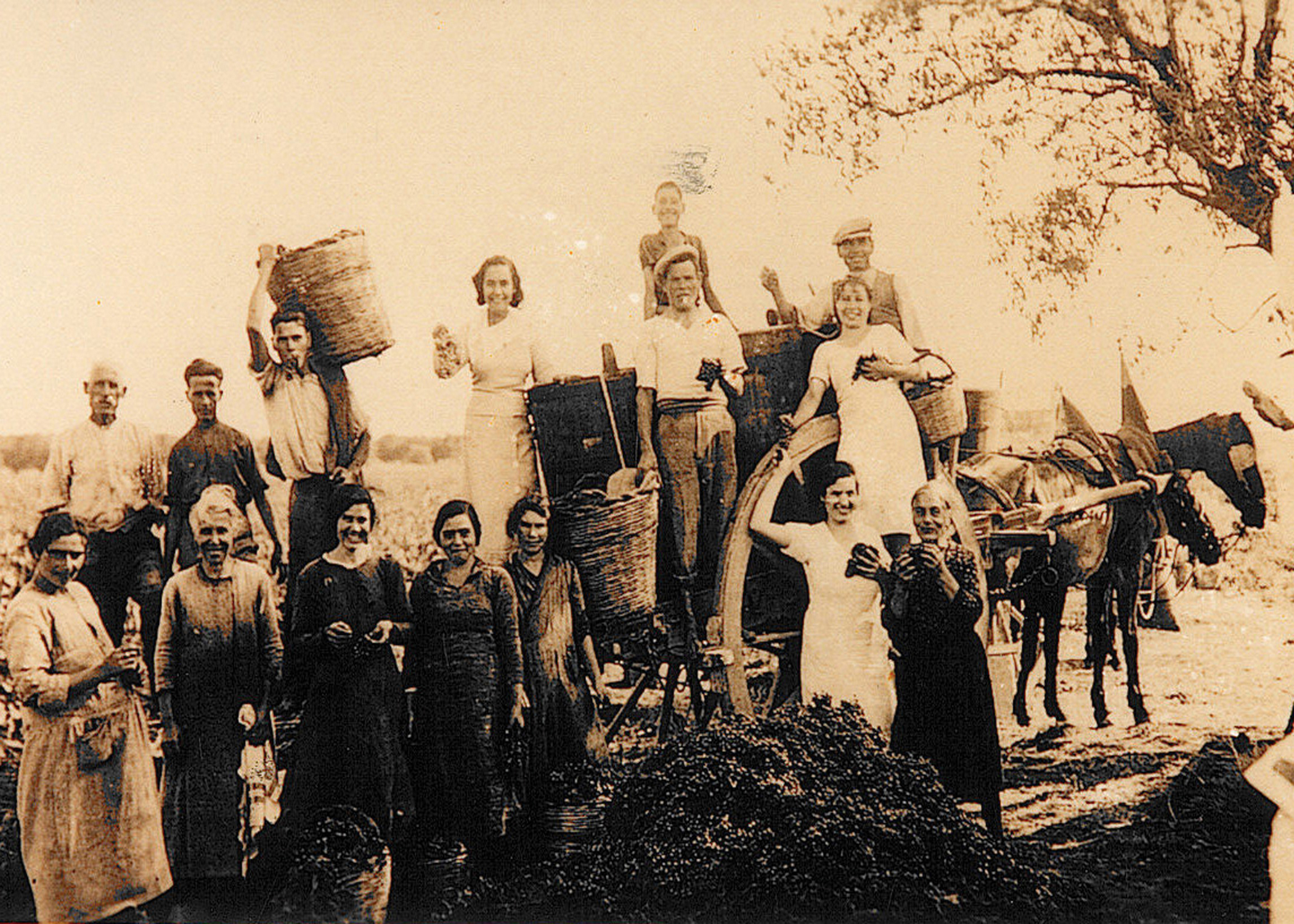
With a name derived from several Latin terms loosely translating as ‘the first to ripen’, Primitivo has traditionally been used to fortify blended reds. More recently, the variety is increasingly being finished as a varietal wine, prompted in part by the popularity of Zinfandel; a clonal relative that flourishes in Californian vineyards and has had great success in North American markets. Local winemaking lore suggests that the Italian variant (descendent from a Croatian parent grape) was discovered by a 17th-century monk, Filippo Francesco Indellicati, growing as a wild vine in his monastery gardens. Over time, the adapted cultivars of Primitivo spread throughout Apulia, eventually arriving in Taranto Province 100 years later.

Founded in the early 1960’s by less than two dozen winemaking families rooted around the regional center of San Marzano, Cantine San Marzano has grown into a coop with over 1200 members; sharing a commitment to produce quality wine that authentically reflects the region’s indigenous grapes and related finishing styles. The cantine has steadily evolved into one of southeastern Italy’s premier, exporting producers, and this bottling stands as a well-made, mid-level example of what Apulia’s vintners can offer in the 21st century. With the slide into cooler Fall weather, now is an apt time to revisit more robust wine styles such as this Primitivo – ti fa bene (it’s good for you)!
san-marzano

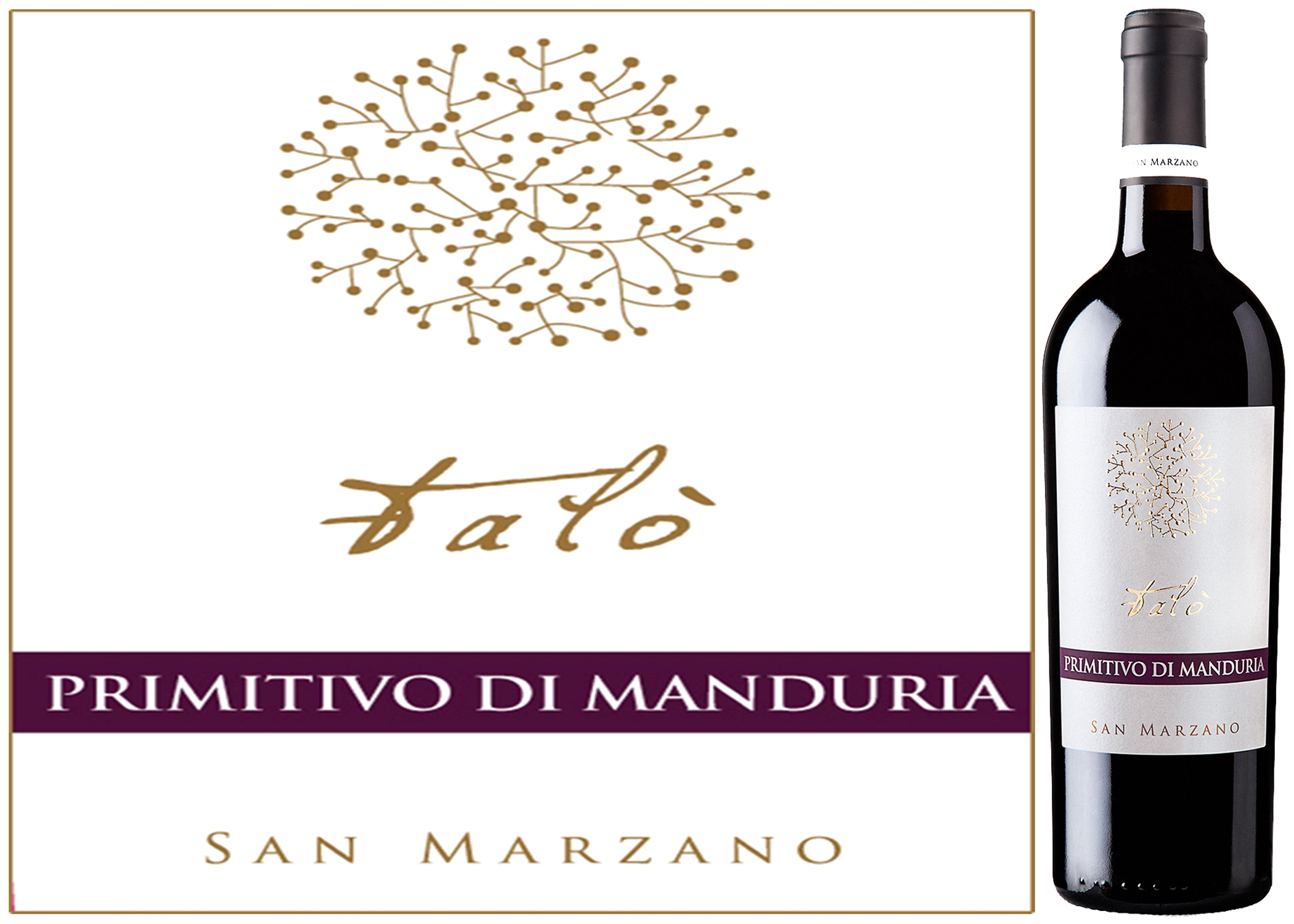
SAN MARZANO TALO PRIMITIVO DI MANDURIA 2013
VINTAGES – LCBO Product #455220 | 750 mL bottle
Price $ 16.95
14% Alcohol/Vol.
Sugar Content Descriptor: D

Made in: Puglia, Italy
By: Cantina Oleificio Soc San Marzano
Release Date: October 15, 2016

Tasting Note
This deep ruby red wine has a very fruity palate typical of the grape style with aromas and flavours of raspberry, plum, clove and a restrained touch of sweetness. Try serving alongside some classic autumnal comfort foods such as braised beef brisket or short ribs, hearty ragout, veal scaloppini with fresh pasta or a Neapolitan style pizza.
Rioja Tempranillo

The wine trade in Spain’s La Rioja has both ancient roots and is in an evolutionary transition. Despite a wealth of archaeological evidence for Phoenician, Celtiberian, and Roman winemaking in antiquity, a millennium will pass before a written reference to viniculture appears in Spanish; the 11th-century Carta de población de Longares (Letter to the settlers of Longares). 150 years later in 1102, King Sancho 1st of Navarra and Aragon bestows legal recognition on the region, which births the signature, Rioja Wine. In terms of the relative quality and practices in modern times, local wine merchants and
bodegas have a tradition of marketing wines fashioned from intermixed grapes; supplied by approx. 20,000 growers; drawing from harvests throughout Rioja’s three designated sub-regions: Rioja Alta, Rioja Baja, and Rioja Alavesa. More recently, to better typify their individual output, bodegas are becoming selective in sourcing their grapes from single zones only. The underlying point is that the varied terroirs of these sub-regions produce discernibly different versions of so-called Rioja wine; it’s not a uniform styling, but it is a testament to innovation!

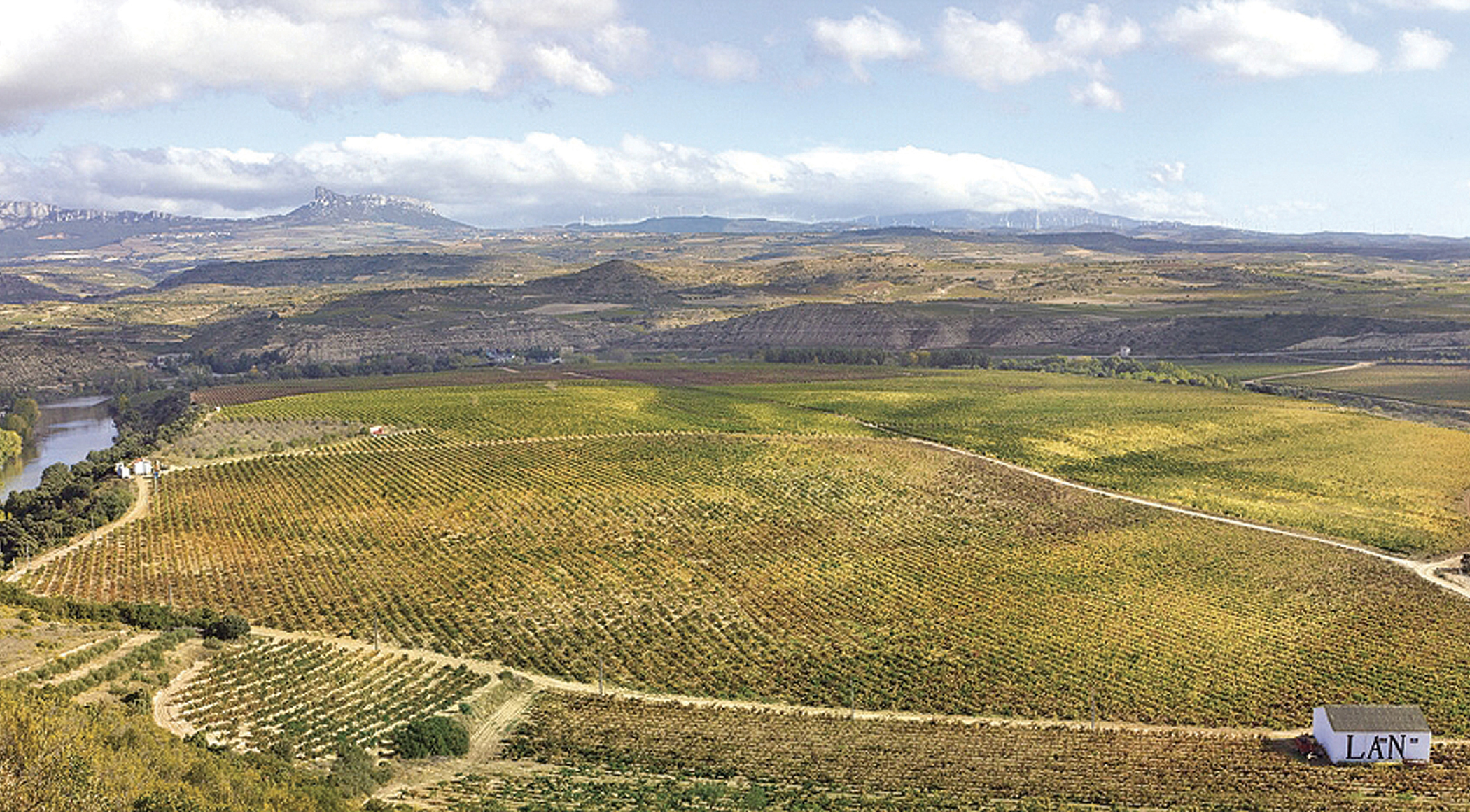
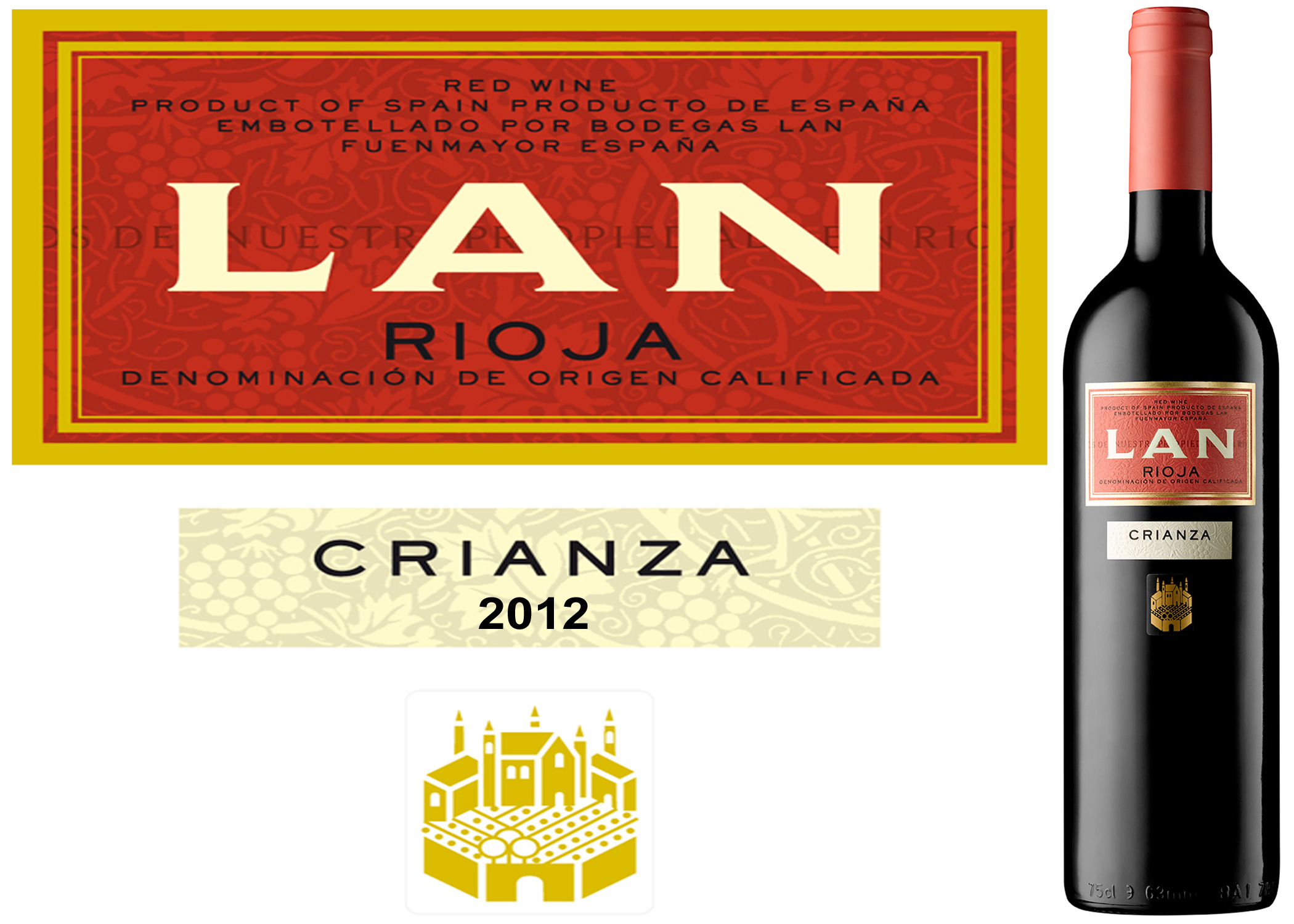
Here in North-central Spain, hilltop monasteries and other stone fortifications built up over centuries provide ample evidence of a storied land that shares a border with the medieval, Franco/Spanish Kingdom of Navarre. On its side of the modern boundary, Rioja’s cultural identity remains distinct and grounded in a 120km-long geography that straddles both banks of the famed Ebro River. As for the roots of its name, ‘Rio’ (river) was combined with ‘Oja’ (a tributary of the Ebro) to create the recognizable moniker that has achieved a global renown. For this week’s DéClassé feature of the Bodegas LAN Crianza 2012, the bodega’s name, LAN, is an acronym reference to the provinces that make up the larger Rioja DOCa (Denominación de Origen Calificada) – Logroño (now called La Rioja), Álava, and Navarra.

lan-lanciano

This winery’s flagship vineyard, Viña Lanciano, is a spectacular 72-Hectare plot that’s framed by a horseshoe-shaped bend of the meandering Ebro River. At higher elevation, Rioja Alta has a reputation for producing lighter, fruit-forward wines that result from a shorter growing season coupled with the character of its limestone, sandstone, and alluvial soils. For this entry-level bottling, that’s an accurate description for a blend that combines 95% Tempranillo (Rioja’s indigenous grape) with 5% Mazuelo (Carignan Noir) to boost its tannin, acidity, and colour. The Crianza designation attests to the wine being aged for 14 months in a novel construction of hybrid wooden casks that are made of American Oak staves with French Oak tops. This current offering has also undergone 3 years of cellaring in the bottle; well beyond the 1year mandated for a Crianza grade.

Unlike the perennial DéClassé recommendations of the 2006 – 2009 vintages, the immensely popular 2010 thru 2012 releases were ordered by the LCBO in sufficient amounts to qualify for its ‘Vintages Essentials’ listing; translating into yearlong availability. 2012 was a very good growing year in the Rioja DOCa, and though this example is not the most complex that you might have the chance to savour, it’s well made, balanced and more-than-worth the sale price sticker!

lan-rioja

BODEGAS LAN CRIANZA 2012
VINTAGES – LCBO Product #166538 | 750 mL bottle
Sale Price $ 13.95
(until Oct. 9, 2016)
13.5% Alcohol/Vol.
Sugar Content Descriptor: XD

Made in Rioja, Spain
By: Bodegas Lan, S.A.
Release Date: April 1, 2016

Tasting Note
With layered aromas of red fruit, vanilla and spice, this medium-bodied and lively red has a smooth balance of light tannins and alcohol. As an apéritif, try pairing it with semi-ripe cheeses and spicy tapas. With main courses, serve alongside an Arugula salad topped with grilled chicken/lemon pepper dressing, brochettes of lamb with roasted beets or herb-crust pork tenderloin wrapped in prosciutto.

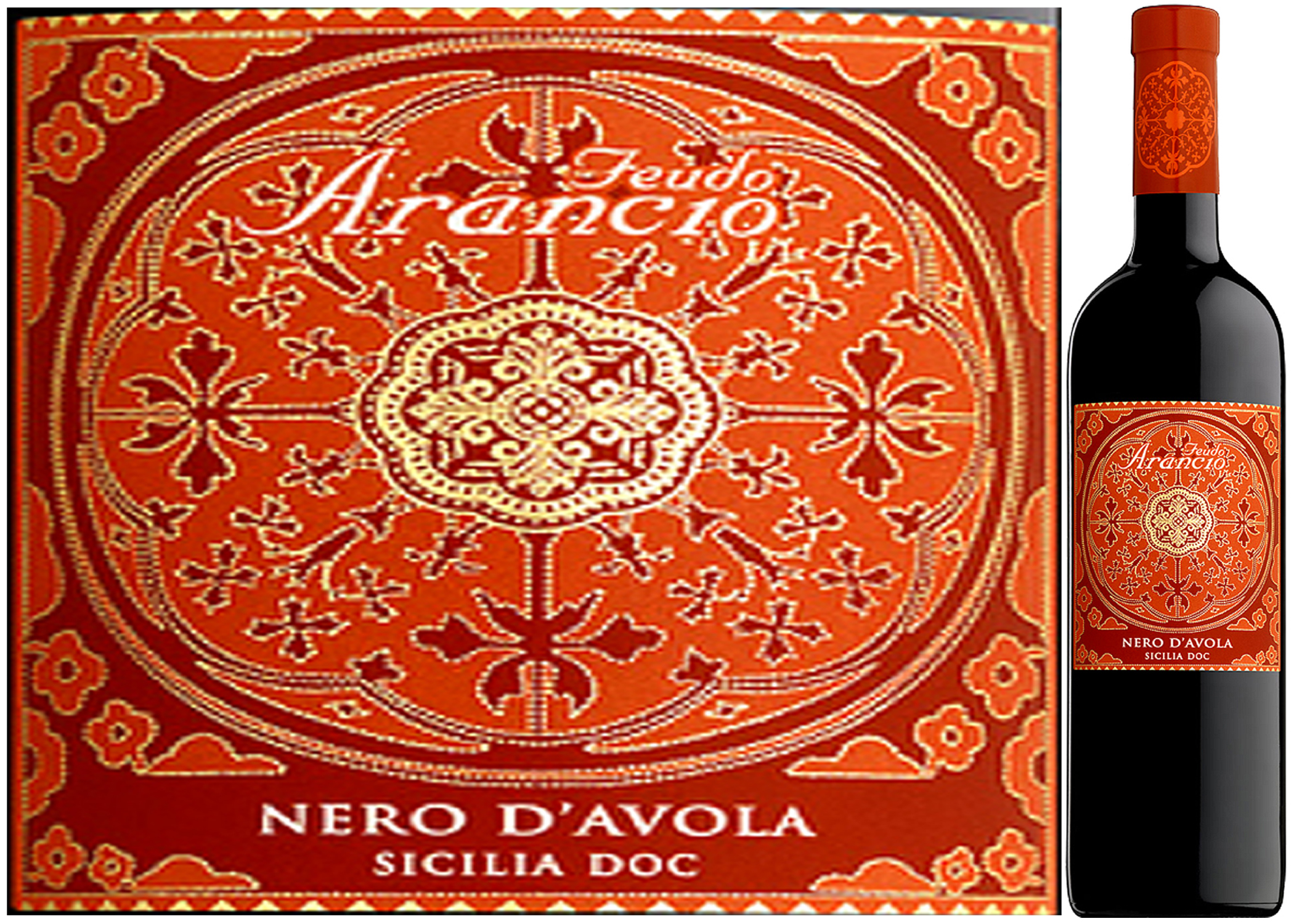
Sicilian Nero d’Avola

Shaped like an inverted triangle, the island of Sicily occupies a strategic position in the maritime laneways of the Mediterranean Sea, and so was targeted for conquest by many empires throughout the ages: Greek, Byzantine, and Norman. During the 2nd and 3rd centuries BCE, it was a buffer, then launch point in an epic clash between Rome’s navies and those of its arch-adversary across the sea to the south, Carthage. Though firmly a part of the modern Italian patchwork, its dynamic history and a diversity of influences have fostered a distinct culture; still thriving in a breezy and dry climate overtop a sun-drenched land that grapevines also love. As a result, Sicilians have always produced far more wine than could be consumed locally, prompting them to become experts in the export trade; first in clay Amphorae, then in large Fiascos (Straw-wrapped glass vessels), and to this day – in ships laden with caseloads of bottles!

feudo-arancio

Blessed with a wide range of indigenous, high-yielding grape varieties, generating large volumes of wine has never been a struggle; the objective of fashioning higher-quality grades has seen a lot of vacillation. In Sicily’s newest age of wine-making, the current generation has astutely settled on refining native grape stock and related finishing styles; rightfully offering their regionally distinctive, world-class wines at attractive and accessible price points. In the accomplished mid-range, you’ll find this DéClassé feature, Feudo Arancio Nero d’Avola 2014. The varietal wine’s namesake, Nero d’Avola (‘black grape of Avola’) has its roots in the southeastern village of Avola where it was developed as a highly localized cultivar. Gradually it spread across the island and found its way into the western corner and the Sambuca di Sicilia DOC vineyards. In the 20th century, the wine’s reputation of was summed up by less-discerning French vintners (who used it as an inexpensive bulk import) as ‘le vin médecine’ — having the desirable characteristics to bolster the colour/body of lightweight partners in blended wine, while still being neutral
enough not to overshadow them. In the 21st century, again astutely, it’s rich and fruity charms are being celebrated and allowed to shine on their own.

Beyond the complex achievement of bringing into the winery a mature harvest of the best grapes that the climate, the land, and its local stewards are capable of, other critical determinants between outputting so-called ‘bulk wine’ vs. ones of a more premium quality — is the amount of time, attention to detail, and additional steps that the winemaker is willing to exercise in the production process. One of those added steps is Malolactic Fermentation. Whereas primary fermentation is yeast converting sugar into alcohol, Malolactic fermentation sees the introduction of select bacteria to convert the tart Malic Acid found in grape juice into softer Lactic Acid. Depending on the innate nature of the source grapes and the age of the vines, this often-finicky production step can have a pronounced impact on the wine’s balance; translating into a more rounded mouth-feel and expanding the sensory perception of the wine’s complexity. In white wine, it also yields buttery aromas/flavours; in overly fruity red wines, it makes them less so.
In the case of this bottling, I’ll speculate that the compensation is necessary due to the fruit being drawn from somewhat younger vines. Regardless of the exact motivation, this Nero d’Avola has reaped the benefits: it’s nicely rounded; it’s soft while still possessing an identifiable character; it’s surprisingly layered; it’s $14.95!

feudo-arancio

FEUDO ARANCIO NERO D’AVOLA 2014
VINTAGES – LCBO Product #412668 | 750 mL bottle
Price $ 14.95
13% Alcohol/Vol.
Sugar Content Descriptor: D

Made in Sicily, Italy
By: Cantine Mezzacorona
Release Date: September 17, 2016

Tasting Note
This is a medium-bodied, concentrated wine with pomegranate, strawberry and currant aromas and flavours, accented by some nutty notes. As an apéritif, it pairs well with smoked cheeses, Prosciutto and Bruschetta or with mains of grilled lamb and fresh pea Risotto, eggplant with capers and olives or veal rolls stuffed with pine nuts and raisins.

Corbières GSM

Prominently displaying the dramatic Visigoth symbol dating to the 7th century, later referred to as the Languedoc Cross or Cross of the Cathars, this vintner’s apt bottle emblem also incorporates 2 white doves drinking from a single cup; representing the traditions of sharing and spiritual communion. Begun by father Georges Bertrand, a winemaking pioneer in Languedoc who worked diligently to foster a spirit of cooperation between local growers in the 1970’s, this family has consistently been at the forefront of quality development for a broad range of well-suited grape varieties, yielding a host of regionally distinctive wine styles. As of 1992, the inherited philosophies/vision continue to evolve under the dynamic stewardship of the founder’s son, Gérard Bertrand, who also provides the highly recognizable namesake for a burgeoning portfolio of vineyard estates and their related sub-brands. As an avowed champion of L’Art de Vivre, which
celebrates the local foods, wine, and Mediterranean culture of southern France, the Bertrand Winery has based their production facilities in the regional center of Narbonne and are impressively now exporting to 70 countries, worldwide!

corbieres-map

The South of France is playfully described as a European wine lake, containing 40% of the country’s vineyards. The process of replacing traditional high-yielding grapes with lower yielding varieties, to produce smaller quantities of premium wine, continues. What also carries forward, is that the wine being offered by Languedoc-Roussillon vintners remains comparatively inexpensive and a benchmark of outstanding value. Taking a pride-of-place among recent examples, this DéClassé feature of Gérard Bertrand Terroir Corbières certainly delivers on the expected rich, fruit-forward character that’s typical of the source region, while also being marketed at a delightfully discounted rate of $16.95 – down several dollars from the last recommended vintage in 2014.

This bottle’s blending of Grenache, Syrah and Mourvèdre marks some of the traditional output from a rugged landscape where no other commercial crops thrive except for grapevine. Having achieved an AOP classification in 1985, the terroirs that collectively define the Corbières sub-region are framed between the foothills of the Pyrenees to the southwest and Montagne Noire (Black Mountain) further north. In a variable mix of geology and microclimates, stressed by the wind, heat and poor organic soil, the surprising conduciveness of this land for grapes is demonstrated, near harvest time, like a rippling sea of lush green vine leaves crowning the plump clusters of fruit. White Limestone outcrops, spiky Garrigue (wild herb-like bushes), lines of Cypress tree windbreaks and sunbaked Terra Cotta tile-capped stone houses complete the characterful portrait of Corbières.

As with the free-spirited land, wine producing regulations are less stringent thaN in the neighbouring Burgundy or Bordeaux regions, allowing for a broader range of cultivation practices, permissible grape varieties, and blending proportions. The best Corbières wines can now claim a unique standing among other long-established appellations, and though you’ll find this prolific winery on the regular LCBO shelves, this limited release is only in the Vintages section — emblazoned with a remarkably modest sticker price!

Corbieres

GÉRARD BERTRAND TERROIR CORBIERES 2013
VINTAGES – LCBO Product #394288 | 750 mL bottle
Price $ 16.95
13.5% Alcohol/Vol.
Sugar Content Descriptor: XD

Made in Roussillon, France
By: Gérard Bertrand
Release Date: August 20, 2016

Tasting Note
As a blend of 3 fulsome grape varieties that have evidently reached full maturity before harvest, this is a herb-tinged, fruity wine style that’s best for heartier food fare such as stuffed peppers, meatballs in a spicy tomato and olive sauce, grilled meats. Or if slightly chilled, as an apéritif alongside ripe cheeses.

Cariñena Garnacha

At some point toward the end of the Iron Age, Celtic-speaking peoples from Gaul began to migrate south across the snow-capped Pyrenees mountains and their permanent glaciers, settling into the rich pasture lands and forested valleys of northern Iberia. Along with providing the basis for a new language, Celtiberian, they’re also reputed to have brought with them a peculiar and potent recipe for fermenting wine blended with honey; resulting in exceptionally high levels of alcohol content. As historical conjecture, this might be seen as a premonition for the vacillating reputation of Spanish wines during most of the 20th century. Nonetheless, throughout all its ages of experience and experimentation, Spain’s vintners have always produced some exceptional red and white wines; fashioned from a host of characterful, largely indigenous grape varieties. What has more uniquely evolved in the course of the last quarter century, is the commitment by a cadre of younger winemakers to increase, markedly, the proportion of quality wine vs. the bulk volume that was common practice in the past. Gracias España!

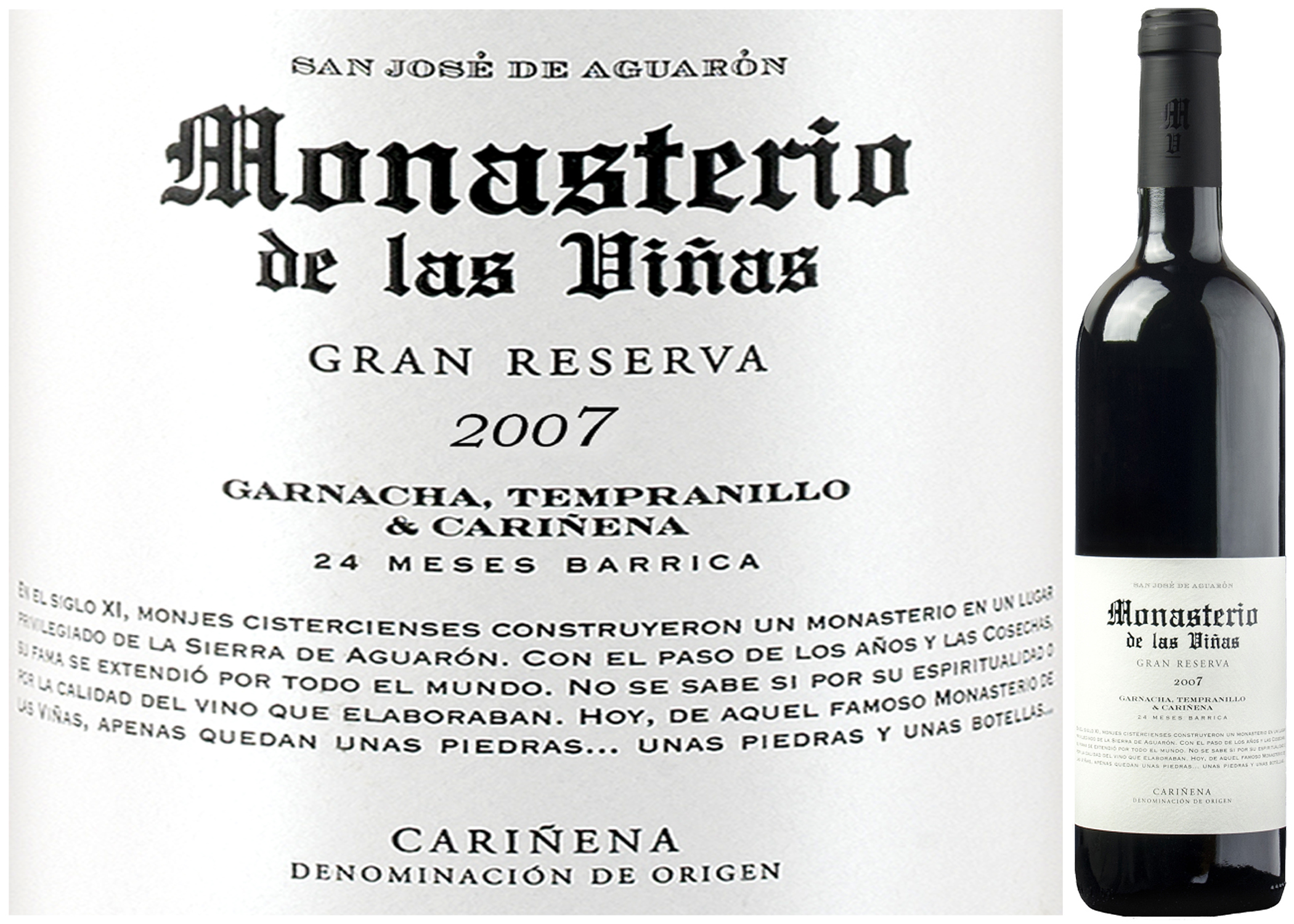
monasterio-de-las-vinas

Blessed with various soil types; a continental climate, whose extremes of day to night temperature shifts are tempered by the Cierzo wind; abundantly irrigated by the Ebro River and its tributaries, this dynamic landscape is agriculturally well suited to livestock grazing, grain production, fruit orchards, and grapevines. The rich potential attracted Roman and Moorish conquest before consolidating and prospering in the Middle Ages as the Kingdom of Aragón. Modern-day Aragón has remained an autonomous territory within Spain’s federated patchwork, and centered in its three provinces; Zaragoza is the prolific heartland of its winemaking. For this DéClassé recommended Monasterio de las Viñas, Gran Reserva 2007, the source lies 50km south of the provincial capital in Cariñena. Among many distinctions, the Cariñena DO was the first Spanish sub-region to earn and be granted official status in the 1930’s. In turn, the Cooperativa Viticola San Jose De Aguarón is one of the oldest of five grower’s cooperatives who produce and market their wines under the innovative umbrella group, Grandes Vinos.

This featured bottling is a robust blend of 60% Garnacha Tinta, 10% Cariñena, and 30% Tempranillo, with fruit harvested from mature 40-year-old vine stock. The clay soils of the Aguarón vineyards provide critical water retention and lend character to the wine; the rocky overburden provides the distinguishing moniker of Vino de las Piedras (‘wine of Stones’). To qualify as Gran Reserva , this blend spent 24 months in a mix of French and American Oak barrels, then another 36 in bottle before being eligible for release. In Cariñena, 2007 is on record as a noteworthy vintage, whereas forecasts for the pending arrival of the 2008 bottling are far less favourable/assured. So, despite being an LCBO’s ‘Vintages – Essentials’ listing that’s available year-round, you might want to stock up on enough of this amply charming version to side-step the next one!

Monasterio

MONASTERIO DE LA VINAS GRAN RESERVA 2007
VINTAGES (‘Essentials’) – LCBO Product #82024 | 750 mL bottle
Price $ 17.95
13% Alcohol/Vol.
Sugar Content Descriptor: XD

Made in Cariñena, Spain
By: San José de Aguarón
Release Date: July 23, 2016

Tasting Note
Medium-bodied and smooth, this mature red has a lively edge to its mix of dark berry aromas and flavours, accented by the expected Eucalyptus notes. In having achieved a balance of acidity and tannins, this bottling could transition seamlessly between a hearty aperitif to dinner wine offering. Try serving with a spicy sausage Paella, braised lamb or roasted vegetable Ratatouille.

El Bierzo Mencia

Tucked away in the autonomous province of León, the Bierzo DO region is at the forefront of emerging, Spanish winemaking frontiers; having quickly evolved into a reliable source of some of its most distinctive and qualitative wine. What’s far more longstanding are the Roman-era gold mines, the Templar Castles, and a host of medieval monasteries who are markers for the famed pilgrimage path, Camino de Santiago. Collectively, the various small valleys of El Bierzo make up the upper basin of the Sil River system that’s framed by the Montes de León and Cordillera Cantábrica mountain ranges. Acting as a Geographic funnel into the verdant northwest corner of the Iberian peninsula, it’s become aptly known as the ‘gateway to Galicia’, which in turn is characterized as the ‘green Spain.’ Though a relatively small and lesser-known Spanish region in the international wine market, Bierzo’s reputation is doubly rising due to its unique, microclimate mix of Atlantic and Mediterranean influences; serving to moderate each other’s extremes; making the conditions equally conducive to cultivating both red and white wine grapes. Capitalizing on this natural blessing, the 55 Bierzo bodegas are impressively outputting 11 million litres of wine annually, and with a current trend of rehabilitating older, under producing plots, their expansion continues.


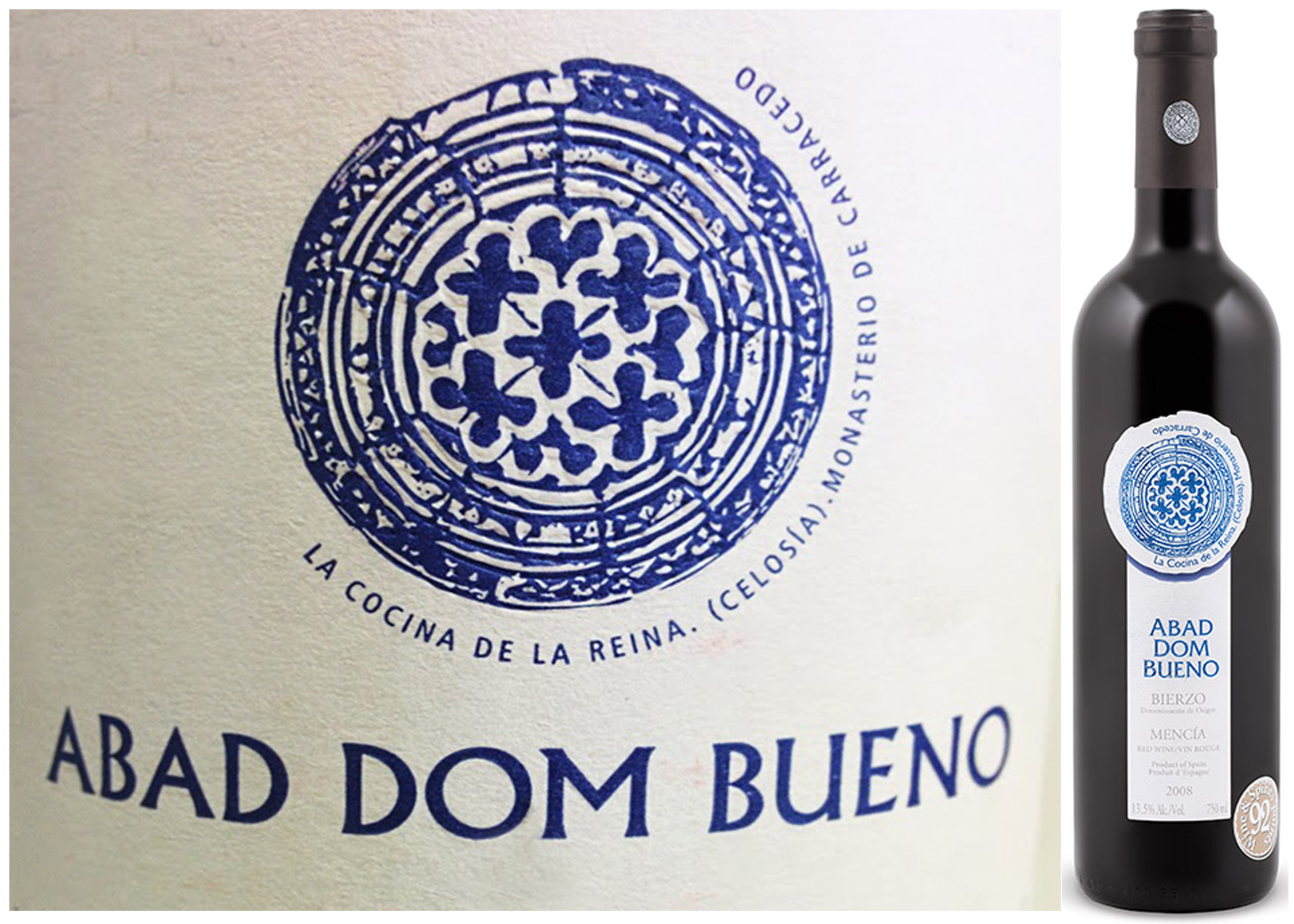
Though taking an inspiration for its name from the adjacent abbey, Monasterio de Santa María de Carracedo that dates to the 10th century, the Bodega del Abad (‘the Abbot’s Cellar’) only became active as an independent producer in 2003. Initially developed under the guidance of a local, legendary wine master, José Luís Santín-Vázquez, the bodega already boasts a loyal following that was struck by a surprising release of a 2001 Crianza-grade cache of their earliest vintage that had been hiding somewhere in the back corners of their cellars. This week’s DéClassé feature of a 2008 bottling is also a surprising re-release that’s being offered for a 3rd consecutive year. Evidently, the current vintner, Miguel Tienda, has exercised discretion in evaluating the character of this particular vintage that’s been settling for eight years now. Unsurprisingly, it’s now decidedly mature, so is soft and rounded, but surprisingly again, it also possesses fruitful vigour, some mineral streaks, and an enlivening acidity.

These attributes point to a wine-making accomplishment; due in part to modern production techniques, but also revealing the innate potential of Mencia. Indigenous to Bierzo, and with a significant increase in plantings, the variety has joined the list of the four most important Spanish red wine grapes: Tempranillo, Garnacha, and Monastrell. Producing compact grape clusters of medium-sized, violet-blue berries, its renaissance of popularity is bolstered by an ability to yield age-worthy wine at relatively modest price points. 35 hectares of this bodega’s vineyards are located up on steep terrain made up of slate and quartzite laden soils where the mix of old vines, with some approaching 70 years-of-age, are still yielding characterful fruit. When meticulously handpicked and sorted, as they are at Del Abad, the harvests are creating characterful, velvety wines.

This bottling is ready to go now, and as the vintner has done the expert work of ageing it under ideal storage conditions, it just might hold for several more years in your cellar. It will likely fly off the shelves quickly as word of this resurgent gem spreads, so if you’re not an optimist when it comes to storing wine, then just buy enough to get you through the summer and deep into Fall (maybe winter too)!

Abad Dom Bueno

ABAD DOM BUENO MENCIA 2008
VINTAGES/LCBO – Product #291989 | 750 mL bottle
Price $15.95
Alcohol/Vol. 13.5%
Sugar Content Descriptor: XD

Made in Bierzo, Spain
By: Bodega Del Abad
Release Date: July 23, 2016

Tasting Note
Though gracefully aged, this still offers juicy red cherry and currant flavours with a vanilla accent. A refreshing acidity enhances the core of soft tannins, so could stand to be slightly chilled before decanting. Try serving with rich poultry dishes, a roasted leg of herbed lamb, marinated steak or with spicy beef empanadas.

Côtes-du-Roussillon Villages Syrah

In terms of cultural history, Les Roussillonnais of southwest France arguably have as much in common with their Catalan neighbours in Spain as they do with their Occitan-speaking cousins in the adjacent territory known as Pays de Langue d’oc (Languedoc). Through most of the medieval period, Roussillon vacillated as a border region between these two peoples though was mostly ruled by the Counts of Barcelona as a part of Catalonia; in the modern age it has deferred to its French heritage and become bound up in Languedoc-Roussillon. More than just a political marriage, it’s a hybrid of Mediterranean shore lands and craggy inland geography; framed by the Rhône River Valley eastward, and the Pyrenees that divide Spain and France to the west. The wine world, however, still references these twinned regions as separate sets of distinct winemaking terroirs, and so we should!

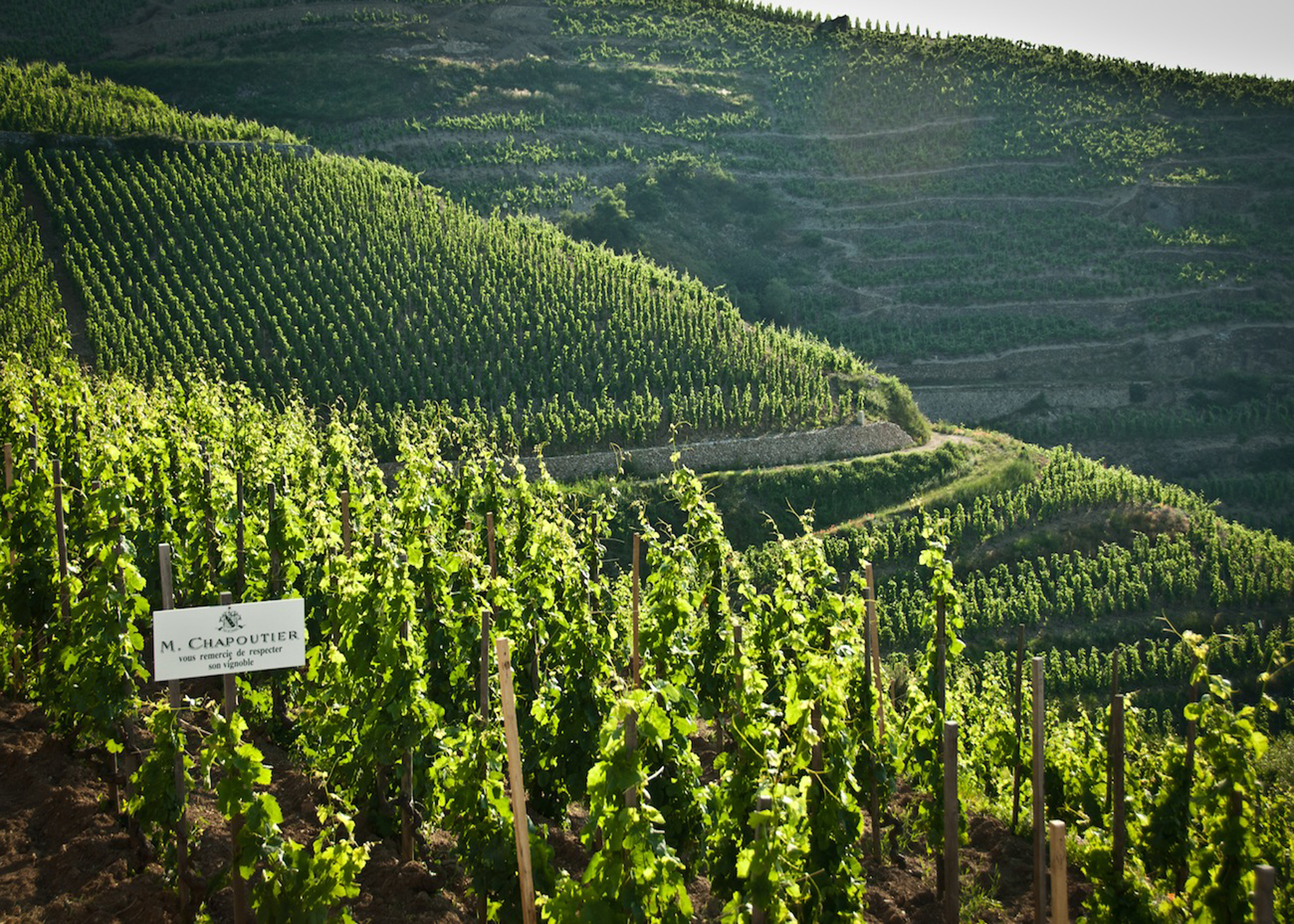
Originally founded at the turn of the 19th century, the Maison M. Chapoutier has progressively built up and expanded its broad portfolio of mature vineyards next door in the Southern Rhône. In recent decades, it continues to forge ahead with developing new properties and partnerships in various parts of Roussillon while also applying organic growing practices. For this bottling, the fruit comes from younger plots in the Côtes-du-Roussillon Villages AOP. Part of the hilly, northern reaches of Roussillon, the appellation encompasses 32 towns in one of the sunniest areas of France — where cool winters, hot summers, moderate levels of rainfall, and the drying Mistral breezes combine to create peak growing conditions for the dark-skinned grape varieties now thriving here.

maison-chapoutier

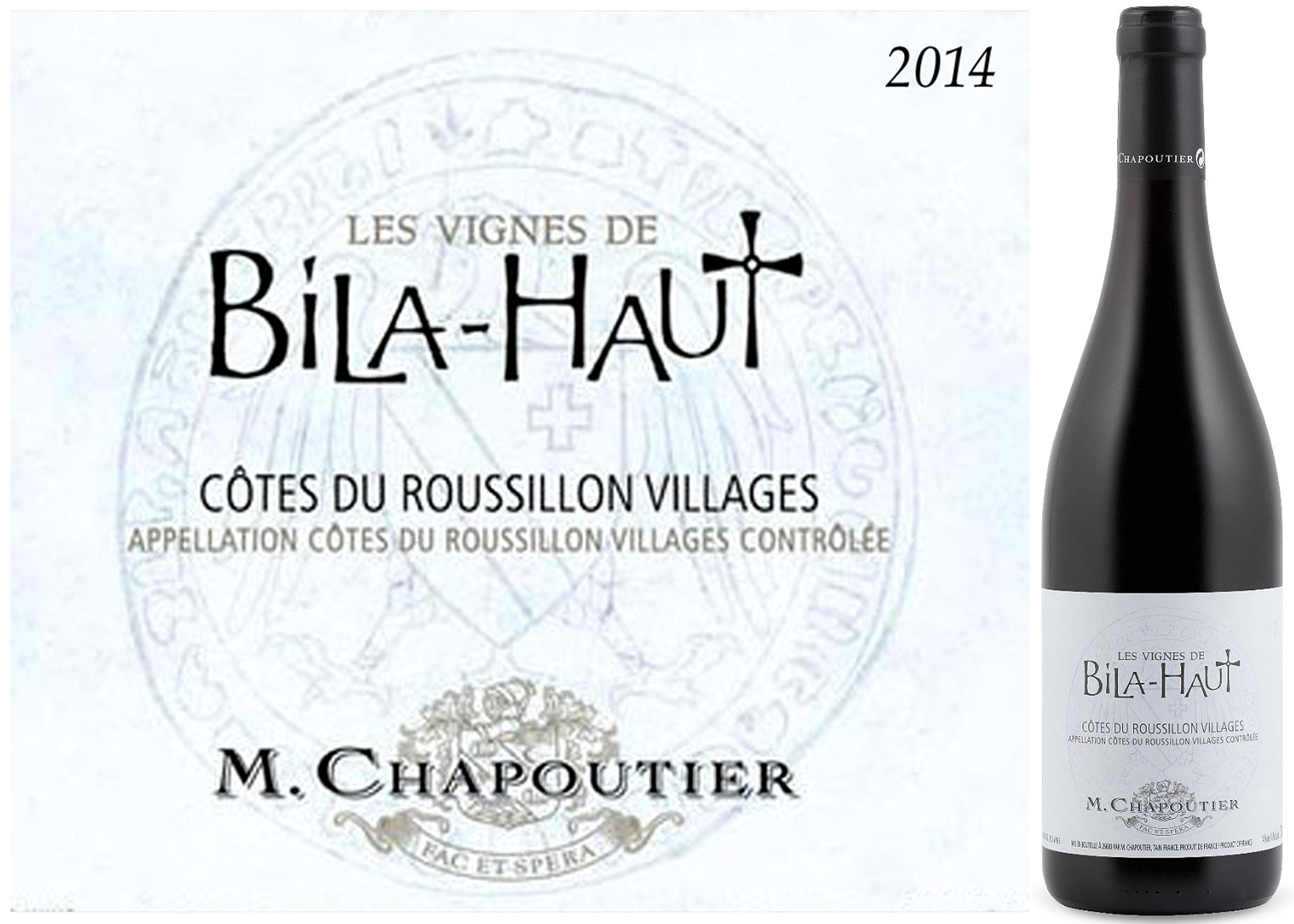
Clinging to slopes of the high Agly Valley, terraced vineyards are the source for this weeks’ DéClassé feature of Vignes de Bila-Haut 2014. Poetically described by vintner, Michel Chapoutier, as ‘an old plot of land, rough, almost hostile,’ his references illustrate an ancient geology made up of crushed Gneiss and Schist: mineral-rich types of sedimentary rock laden with limestone and chalk deposits. It’s also taken a while for Roussillon’s winemakers to discover and build an understanding that this landscape heaved into prominences and scrubland outcrops, is highly conducive to cultivating the sorts of grapevines that will yield fulsome yet still bright and lively red wines.

Using only hand-harvested grapes, this assembled blend incorporates three of the AOP mandated varieties: Syrah, providing spice and aromas imparted from the wild Garrigue of fragrant, flowering shrubs; Black Grenache to add firmness and body, and the region’s signature grape, Carignan, offering some crisp tannic notes. Aiming to create a fresher style of red, his recipe never sees an influence of wood barrels, rather it’s briefly aged in vats; producing wine that’s intended to be enjoyed young over the next several years. It’s time to reaffirm what so many prudent LCBO Vintage’s customers already know: if you want to invigorate patio dinners in the months to come, inexpensively, then dare to buy a whole case!

Bila-Haut

LES VIGNES BILA-HAUT CÔTES DU ROUSSILLON-VILLAGES 2014
VINTAGES – LCBO Product #168716 | 750 mL bottle
Price $ 14.95
14.0% Alcohol/Vol.
Sugar Content Descriptor: D

Made in: Midi, France
By: Maison M. Chapoutier
Release Date: July 9, 2016

Tasting Note
Deep garnet red with dark berry flavours, hints of vanilla and spice notes, this is a pleasingly uncomplicated, rustic wine that could stand to be chilled slightly when served during the summer heat. Try with grilled lamb chops, lentils with spicy sausage or a Ratatouille made with fire-roasted vegetables.

Maipo Cab Sauvignon

Having begun with the planting of European Vitis Vinifera vines by 16th-century Spanish conquistadors and missionaries, Chile’s 500-year history of fashioning wine coupled with the recent development of new growing regions continues to amaze and impress. For a period as of the mid-1800’s, the aim was to simply produce inexpensive bulk wine; to serve local markets and consumption. This is equally true of most so-called old world regions in Europe during the same time; right up until the mid-20th century. Since then, though, Chile has accomplished far more than keep pace with the evolution of highly competitive, premium wine production and export; rather, its diligent vintners have forged a leadership role, globally. They’ve truly become world-class winemakers!

montgras-vineyard

Revealingly expressed in the often difficult history of the indigenous Mapuche (‘Earth People’), is a reputation for personal courage, strong communal identity and a fierce and unconquerable spirit. The essence of these attributes carries forward, as modern Chilean vintners innovatively exploit challenging geography for agricultural cultivation, while demonstrating studied concern and care for its sustainability. Framed between an endless, snaking Pacific coastline to the west and the folded slopes of Andean peaks to the east, the new regional designation, Entre Cordilleras (‘between mountains’) is a group of inland valleys that includes the well-known Colchagua and the long-established Maipo, lying south of the capital Santiago. Excelling at Malbec, Carménère, and Syrah, the larger region has also had success with classic French reds, Cab Franc, Merlot and Cabernet Sauvignon wines — justifying the reference, ‘South America’s Bordeaux’.

This week’s DéClassé feature of Montgras Antu Cabernet Sauvignon 2013 is one of the Viña MontGras sub-brands for wines that head winemaker Santiago Margozzini describes as ‘exploratory’. Both light-hearted and serious, the term signals that Chilean vintners continue to play with and refine local cultivars of grapes that were imported at various points in the 19th century. Well-suited to the terroirs of their new home, and guided by local expertise, these should now be thought of as uniquely Chilean — and so it is. This bottling is ready to be uncorked, though you might challenge yourself to put more aside for another year or so – after having tried one; outdoors at an upscale BBQ.

boc ANTU 2014en bot

MONTGRAS ANTU CABERNET SAUVIGNON 2013
VINTAGES – LCBO Product #444703 | 750 mL bottle
Price $ 17.95
14.5% Alcohol/Vol.
Sugar Content Descriptor: XD

Made in Maipo Valley, Chile
By: Viña Montgras
Release Date: May 28, 2016

Tasting Note
Offering up loads of dark berry and cherry aromas and flavour, this deeply Ruby red wine also has some pleasing pepper and toasty oak notes well-integrated into a soft and creamy texture. Try this as a compliment to grilled food fare of all sorts: vegetable and meats; with a generous helping of Chilean cilantro salsa.

Puglia Primitivo

In an age that’s termed Magna Graecia, enterprising Greeks crossed the western seas and established a ring of thriving colonies around the perimeter of this distinctive land spit; in modern times it would whimsically become known as Stiletto (‘heel of the boot’). Jutting down from mainland Italy, the peninsula portion of Puglia (aka Apulia: ‘those who live on the other side of the Adriatic‘) divides the Gulf of Taranto and the Otranto Strait. For thousands of years in antiquity through to the middle ages, this strategic maritime crossroad was a target for conquest by successive civilizations. As a cumulative result, 800km of coast and the parallel line of inland mountains frame a hybrid culture; unique in the broad diversity of regional Italian identities. Though the early colonizers seem to have been warlike Spartans, by the 5th century BCE it was philosophy that was the focus in Greco-Italian centers such as the city of Elea (now Velia). This was home to the visionary thinker and mentor, Parmenides, credited with laying an influential foundation for Aristotle, Plato, and Socrates. Unsurprisingly, the long-hidden wealth of clay Amphorae unearthed from recent archeological excavations also reveals that grape cultivation, winemaking, and its significant seaborne export were all well underway!

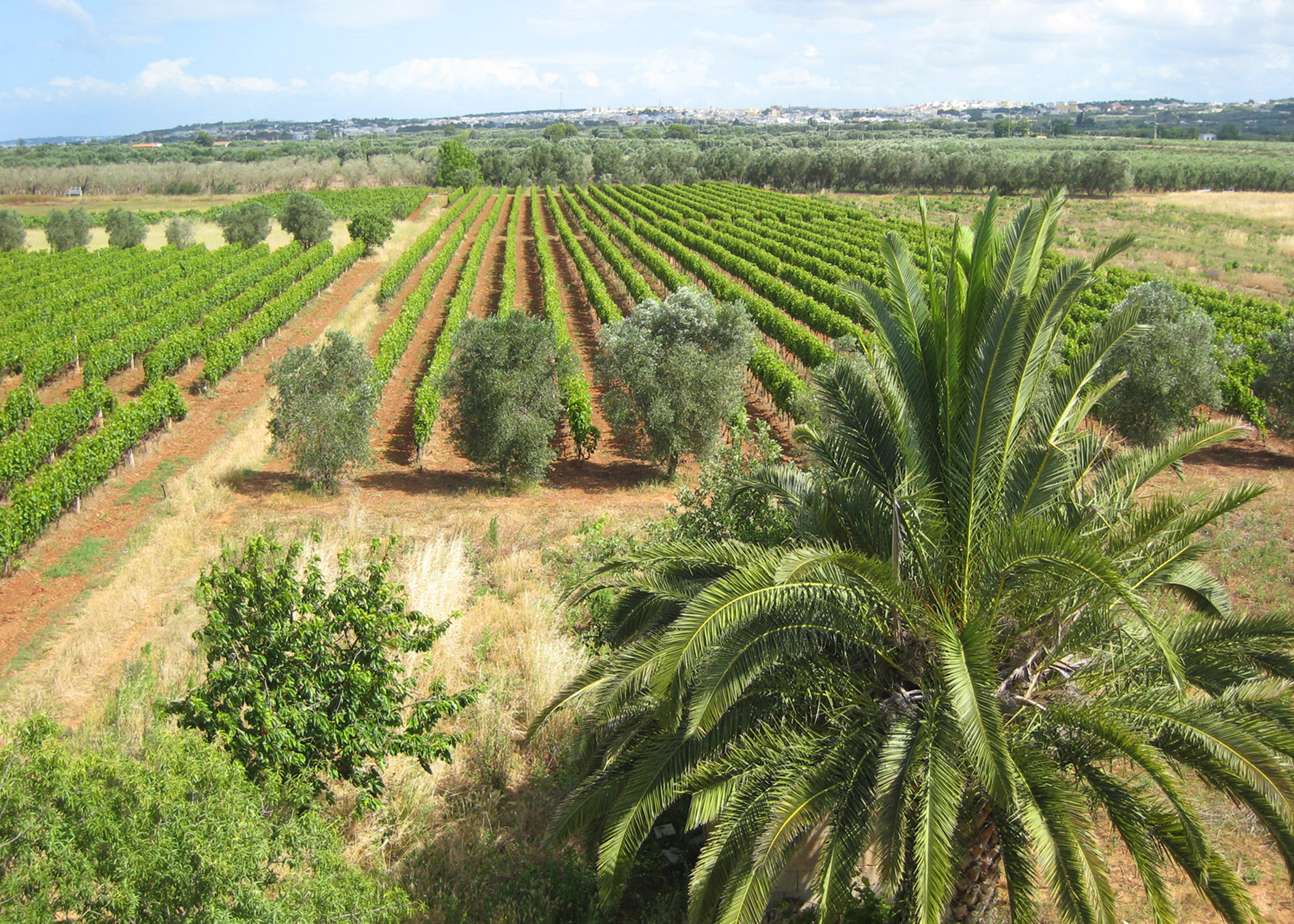
With fertile, reddish-brown soils, Puglia’s flat plains and valleys host an abundance of wild roses, berries, and proverbial rosemary and thyme; thriving among stands of maritime pine. As for the mix of agriculture in the landscape, widespread grain farming, and groves of ulivi secolari (centuries-old olive trees) yields an impressive 50% of Italy’s total pasta and olive oil production. Artichoke plum tomato, sheep herding, fish and seafood, and of course grapevines, round out the bountiful output from the region.

boaretti-vineyards

Curiously, in spite of being so prolific, Puglia remains one of the less-well-known Italian regions. In its middle and southern provinces, the hot and dry climate is perfect for cultivating fulsome grapes such as Negroamaro, Malvasia Nera and Primitivo. With a name derived from several Latin terms loosely translating as ‘the first to ripen,’ Primitivo has traditionally been a reliable blending component. More recently, the variety has gained increased profile as a stand-alone varietal wine, due in part to the burgeoning popularity of Zinfandel; a clonal relative that flourishes in Californian vineyards and North American marketplaces. Local lore suggests that this Italian variant of a Croatian parent grape was discovered by a 17th-century monk, Filippo Francesco Indellicati, as a wild vine growing in his monastery gardens. Over time, the adapted cultivars of Primitivo were spread throughout Puglia; including its southernmost province of Lecce.

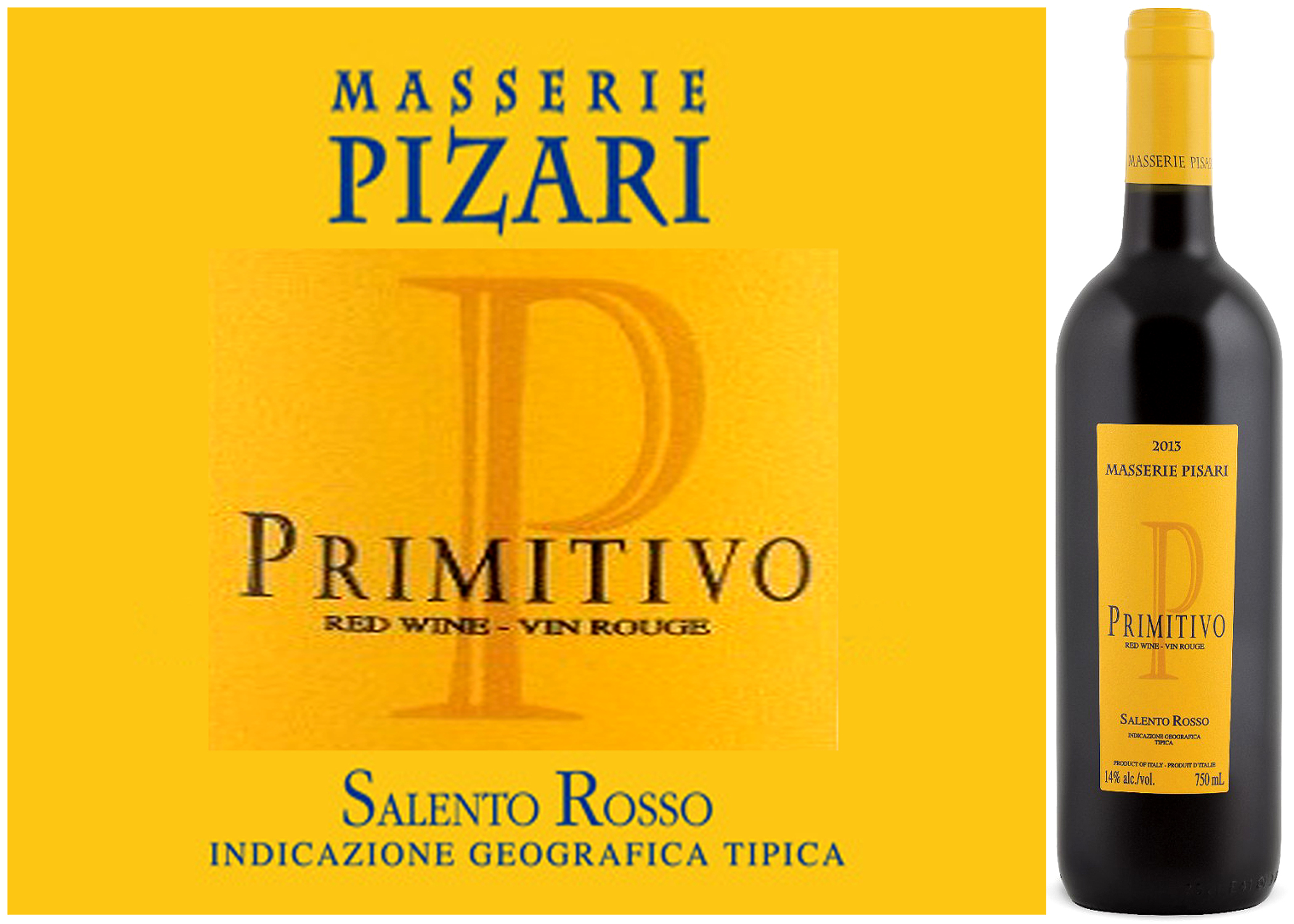
Home to this week’s DéClassé feature, the village vineyards of Ugento lie on the Murge Plateau, whose outskirts end abruptly as cliffs overhanging the Ionian Sea. The 10 hectares of Masserie Pisari were initially dedicated to bulk wine production; exclusively for local sale. In 2005 the winery was restructured with a focus on producing a higher quality of wines that would be more attractive to the international market, and so it is. If this pleasing, plush and rounded bottling of Masserie Pisari Primitivo 2013 is a representative offering, then in moving forward, the future looks even brighter in this sun-drenched corner of Italy. At a very modest price-point, you should be delighted with its structure and layered complexity. It’s ready now or over the next 3 – 4 years; buy half a case as it will be hard to hold onto in your cellar for very long!

Masserie Pisari

MASSERIE PISARI PRIMITIVO 2013
VINTAGES – LCBO Product # 270306 | 750 mL bottle
Price $ 13.95
14.5% Alcohol/Vol.
Sugar Content Descriptor: D

Made in Puglia, Italy
By: F.lli Boaretti
Release Date: May 28, 2016

Tasting Note
Rich and ripe, this dark Ruby coloured red has brambly berry and plum flavours and spicy accents typical of Primitivo. Try serving with summer antipasti plates of cheese, cured meat, and sun-dried tomato, or alongside a zesty mixed pepper lasagna and an arugula/radicchio salad topped with slivered Pecorino Romano.

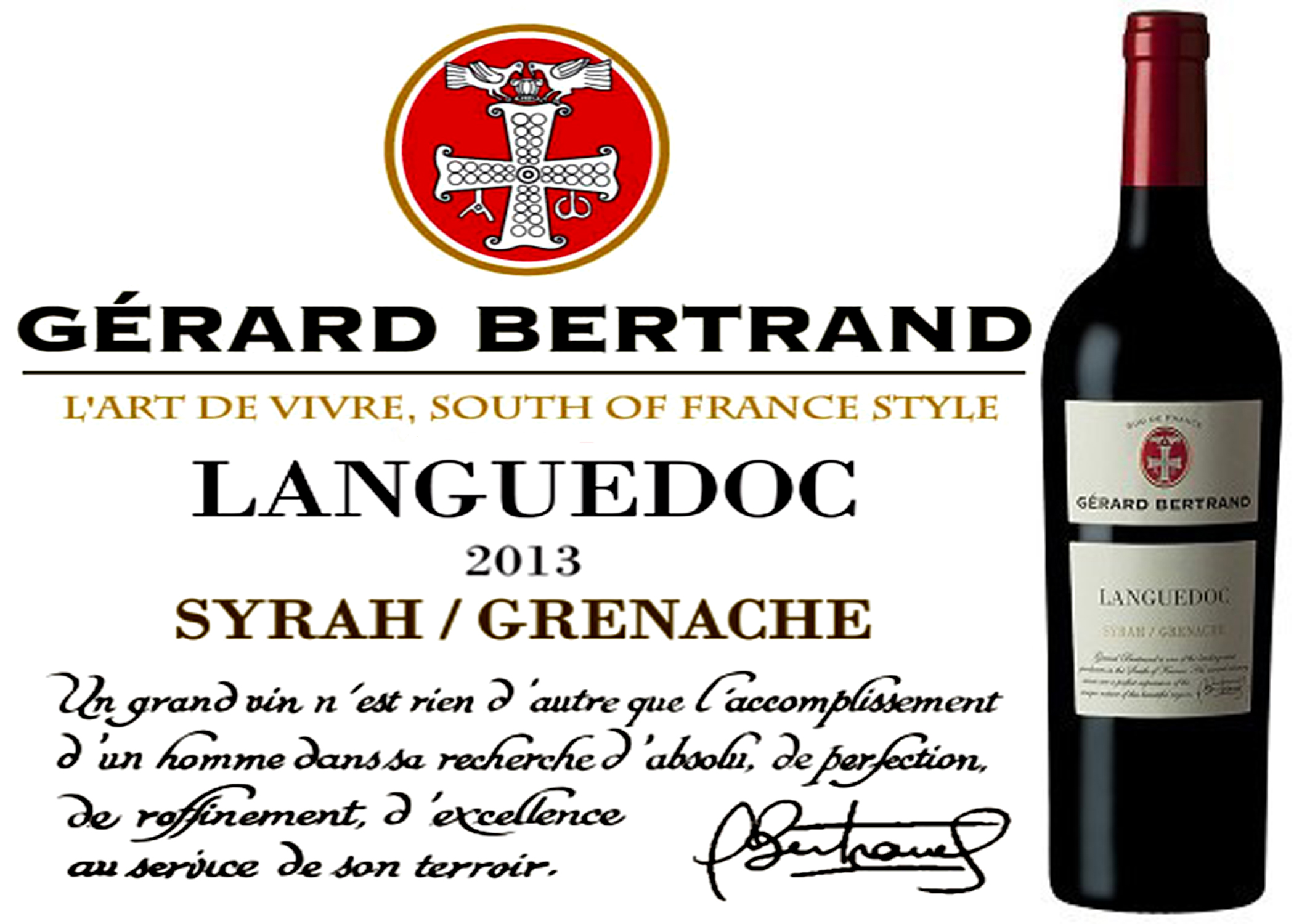
Languedoc Syrah/Grenache

Distinctively marking the labels of this terroir-specific wine line is a dramatic four armed Visigoth symbol dating to the 7th century. Later known as the Languedoc Cross or Cross of the Cathars, the four elements and twelve points of the zodiac represent the perpetual rhythms of time and nature. This vintner’s apt emblem also includes two doves drinking from a single cup–expressing both sharing and communion. Begun by Georges Bertrand, a winemaking pioneer in the Languedoc region who diligently built a spirit of cooperation among local growers in the 1970’s, this benchmark winery has consistently been at the forefront of quality development for an impressive range of regional wine styles. The multi-generational philosophy is being carried forward by the founder’s son, Gérard Bertrand, with an expanding portfolio of 10 estates, 550 hectares of vineyard and primary production facilities based in the city of Narbonne, the onetime capital of a prosperous Roman coastal province called Gallia Narbonensis.

languedoc-wine-region-1852

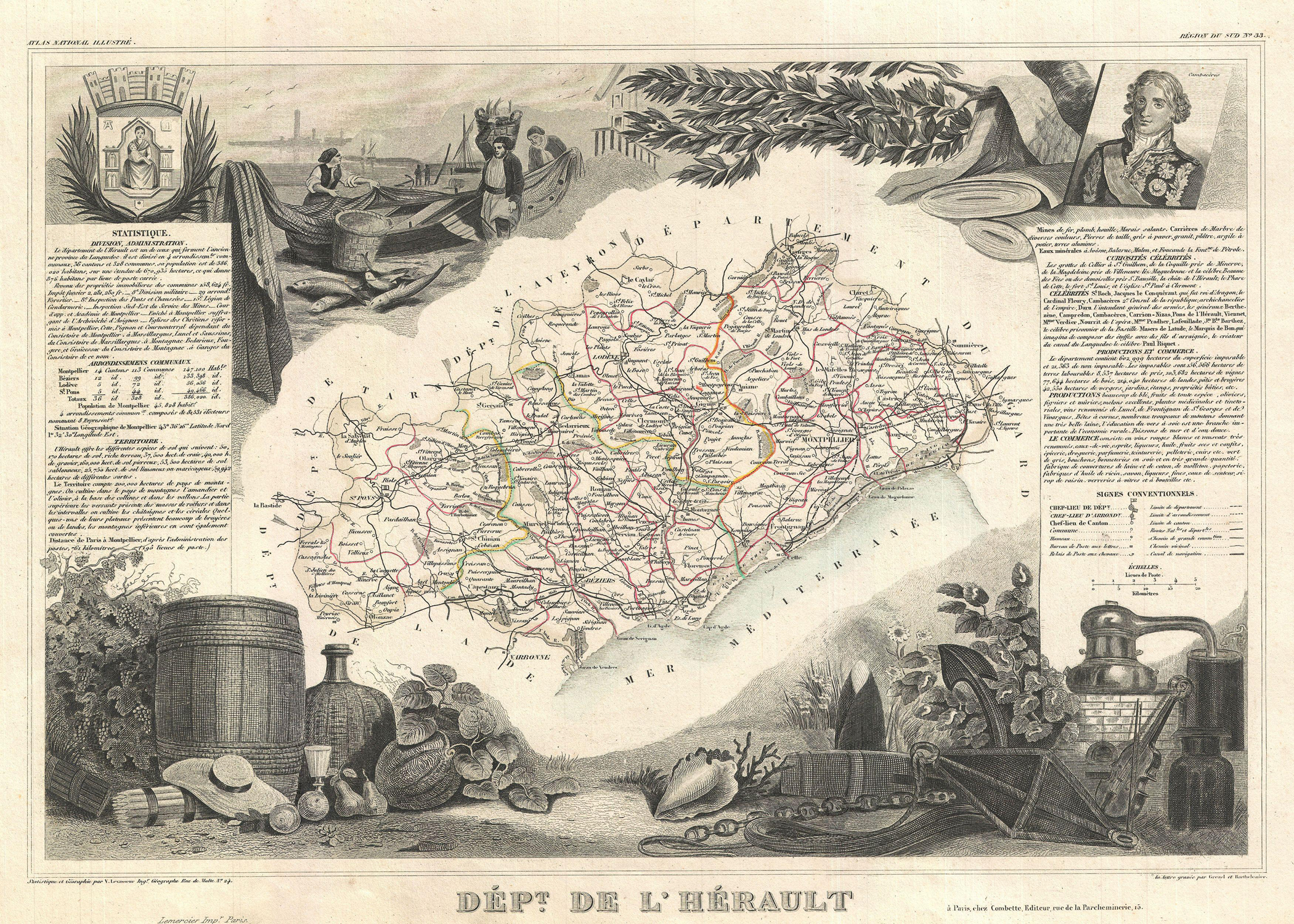
One of the world’s largest wine growing regions, Languedoc is a Mediterranean landscape of windswept scrubland with a geology of greyish-white, calcium-rich limestone. The eroded soils of this ancient seabed make for a fertile base where wild lavender, thyme, and undulating rows of gnarled Syrah and Grenache grapevine now thrive. As with the land’s nature, the AOC wine-producing regulations of this free-spirited region are somewhat less stringent than the neighbouring Burgundy or Bordeaux appellations to the north; allowing for the cultivation of a broad range of vine varieties and blending proportions; with these two starring grapes providing the backbone. In the hot climate of southern France, Syrah tends to ripen ahead of its blend partner so gets vatted in whole bunches first, while harvesting of the Grenache catches up later on. Once combined, they’re transferred to large 225-litre Bordeaux oak barrels to age for at least ten months. For this DéClassé recommended, Languedoc Syrah/Grenache 2013, it’s also rested in bottle for over a year.

Though you will find many offerings from this prolific vintner on the regular shelves of the LCBO, note that this particular release is only stocked in the Vintages section, in a limited volume that historically sells out quickly. With warmer days ahead, dare to try this ripe, fulsome, fruit-forward red slightly chilled!

Gerard Bertrand

GÉRARD BERTRAND LANGUEDOC SYRAH/GRENACHE 2013
VINTAGES – LCBO Product #413237 | 750 mL bottle
Price $ 16.95
14.5% Alcohol/Vol.
Sugar Content Descriptor: D

Made in: Midi, France
By: Gérard Bertrand
Release Date: May 14, 2016

Tasting Note
This fairly spicy wine, with its zippy ginger and liquorice notes, also has a fruity body and mellow tannins. Best with foods such as a marinated grilled brisket, veal meatballs in a piquant tomato and olive sauce, fire roasted vegetables or with stronger cheeses, Spanish Jamón Serrano, and sausage appetizers.