Graciano Alert

Bodegas y Viñedos Ilurce, representing 4 generations of diligent labour, is
a family company originally founded by Grandfather Amador Escudero in 1940
shortly after the Spanish Civil War ended. Their property in the Baja district, one
of 3 sub-regions of La Rioja that also includes Alta and Alavesa, has significant
plantings of old vine Graciano grapes on their 60 hectares of chalky, alluvial soil
– with most of these mature vineyards now averaging at least 40 years of age.

More typically, this highly regarded region’s wines are built around Tempranillo,
with Garnacha, Graciano and Mazuelo(Carignan) varieties incorporated in small
quantities as blending components, adding aroma, body or flavour depth. Now,
under the nervy and innovative guidance of younger Spanish vintners, Graciano
is experiencing a renaissance as an excellent varietal wine on its own, despite
its commercial liabilities of being notoriously low-yielding and mildew susceptible.

The wine trade in the La Rioja region is both storied and in a state of transition.
Apparently, the earliest mention of viticulture is preserved in a document known
as ‘Carta de población de Longares’ (Letter to the settlers of Longares) dating
to 1063 with the first legal recognition of Rioja wine bestowed in 1102 by the
King of Navarra and Aragon. In terms of its relative quality and practices, local
wine merchants have a long history of establishing Bodegas to market wines
made from intermixed fruit supplied by approx. 20,000 growers, in turn drawn
from the harvests throughout all 3 sub-regions. More recently, to better typify
its wine styles and output, Bodegas are becoming more discerning and are now
beginning to source grapes from only single zones in these allowable regions.

This week’s DéClassé recommended bottle is consistent with the latter practice
and results in an over-achieving table wine that defines exceptional value. Also,
having spent about 11 months in French Oak, it has sufficient structure to age
well in the cellar for at least another 2 – 5yrs. – meaning you won’t have to rush
through the second or third bottle that you bought after drinking the first.
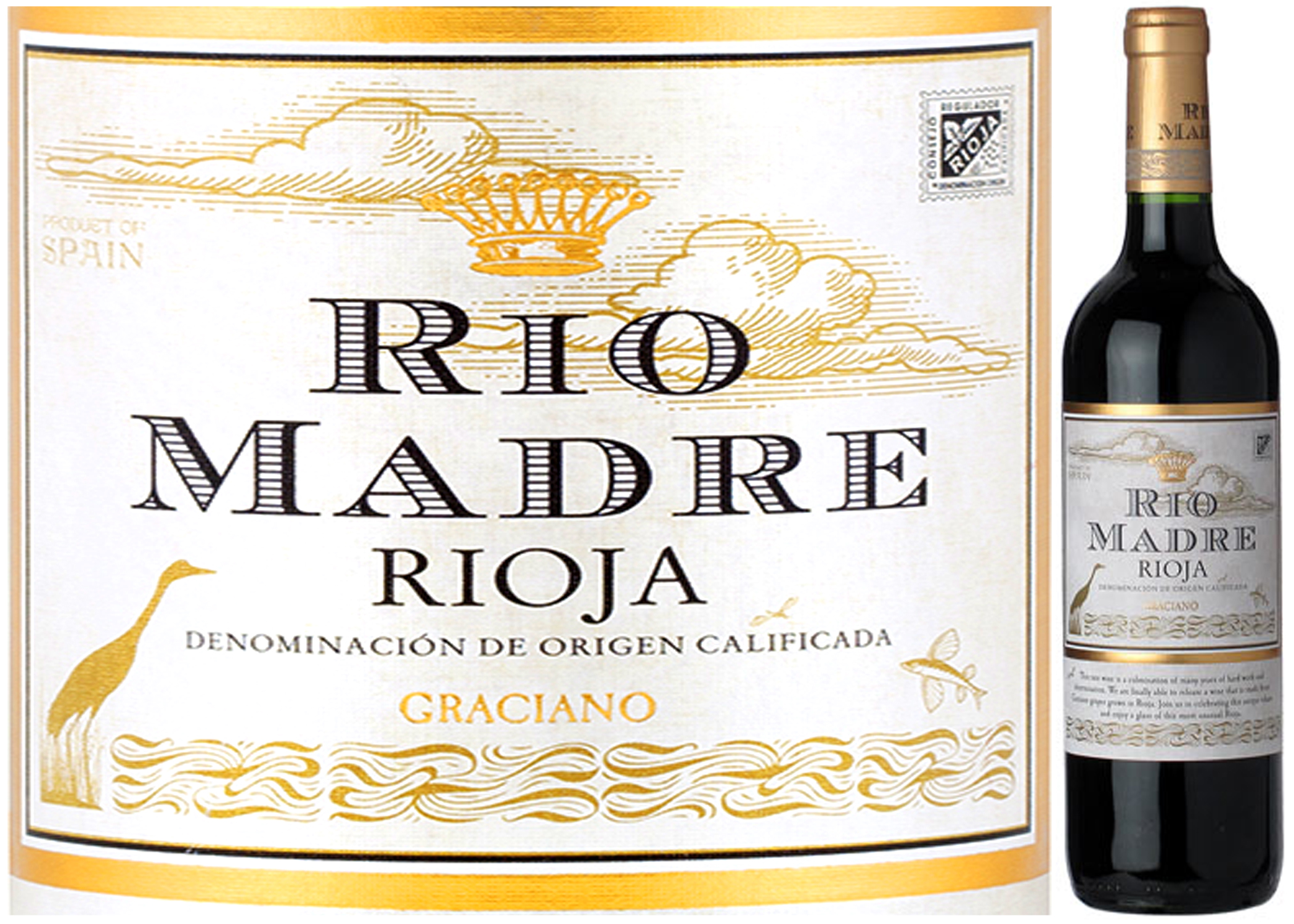
Rio Madre

RIO MADRE RIOJA 2013
VINTAGES – Product #354753 | 750 mL bottle
Price $ 14.95
14.5% Alcohol/Vol.
Sugar Content Descriptor: XD

Made in: Rioja, Spain
By: Bodegas Y Vinedos Ilurce
Release Date: Jan 10, 2015

Tasting Note
Dark fruits lend notes of black cherry, blackberry, pomegranate and a pleasant
touch of licorice. Try serving this medium-bodied and slightly spicy wine with beef
tenderloin, steak frites, chorizo and lentil stew or with strong cheeses.

Primitivo Alert

Primitivo’s name is derived from the combination of several Latin terms, loosely
translating in meaning as ‘the first to ripen’. The grape variety also has a popular
relative that’s cultivated and flourishing in California’s vineyards called Zinfandel.
After much debate and speculation, viticulturalists have finally determined that
the near genetic twins are descendent from the Croatian parent grape Crljenak
Kastelanskj (aka Plavina). The Italian clonal version featured here in this bottling,
is lighter-bodied, somewhat drier and significantly price-competitive with almost
all of the unjustifiably, overpriced American ‘Zins’, making for a very satisfying
combination of value and restraint after the holiday feasting!

Established in 1921, three generations of vintners at Varvaglione Vigne & Vini
have developed the brand into one of the premier, exporting producers from the
Puglia region after an initial history of focusing on bulk wine production aimed at
local consumption. Framed between the Ionian and Adriatic seas, the 400km
long coastal area is punctuated by the Salento Peninsula, often referred to as
the ‘heel’ of south-eastern Italy. Its astonishing level of wine-making output and
ever-rising quality is built on the ancient traditions first begun by the enterprising
Phoenicians, then followed by Spartans who settled here in 706BC from Greece.

First discovered by Benedictine monk Filippo Francesco Indellicati as a wild vine growing within the monastery gardens in the 17th century, various varieties
of Primitivo were proliferated throughout this suitable agricultural zone, arriving in
Taranto Province 100 years later. Here, the highly distinctive red soil character
results from the blending of calcareous fossils and iron oxide mixed with the clay
and silt loam base. Specifically, it’s the iron content that promotes soil drainage,
contributing to almost perfect conditions for the grapevine to thrive.

This week’s DéClassé recommendation is a well made, entry level example of
what is on offer from this sun-drenched region – at an attractive price-point, for
a limited time only. Buy several to nicely compliment your casual dining.

12 e Mezzo Primitivo

12 e MEZZO PRIMITIVO DEL SALENTO 2012
VINTAGES – LCBO Product #395053 | 750 mL bottle
Price $ 13.95
12.5% Alcohol/Vol.
Sugar Content Descriptor: XD

Made in: Puglia, Italy
By: Vigne & Vini Varvaglione
Release Date: January 10, 2015

Tasting Note
A very fruity palate typical of the grape style with aromas of mixed berries,
plums, spice and vanilla. Try with some classic winter comfort foods such as
braised brisket, veal scaloppini, pasta Bolognese or a Neapolitan-style pizza.

Malbec Blend Alert

Inspiring this bottling’s name, La Posta del Viñotero is a wine tavern in Mendoza
where local wine growers would historically congregate to sample the results of
their harvested labours, while passionately exchanging opinions and insights into
their working of soils, vines and wine styles. La Posta is also the Italian name for
Post Office. For many of the millions of Italians who immigrated to Argentina in
the 19th and 20th century, it became a key gathering place to socialize.

Fruit for this week’s DéClassé recommended offering is drawn from a collection
of 3,000 foot, high altitude vineyards in La Consulta, Rivadavia, Vista Flores and
Altamira. The narrow band of alluvial soils, in this now renowned and prolific wine
producing province, are ideally suited for the cultivation of Argentina’s signature
Malbec grape. The growing conditions are an apparent agricultural contradiction
whereby some of the most characterful wines are being extracted from mature,
30 year-old vine stock thriving in near-inhospitable geography. Just to the east is
infertile desert; to the west, is the so-called ‘rain shadow’ created by the nearby
chain of majestic Andean peaks.

This thick-skinned grape variety, which was first introduced to South America in
the 1850’s by Frenchman Miguel Pouget, has evolved through several cycles of
being in and out of commercial favour. The spiced and fresh fruit elements that
this variety lent to traditional Bordeaux blends, have become calling cards for
Argentinean Malbec, shining alone, on its own merits in varietal bottling form.

This opaque, purple red blend is made up of 60% Malbec with equal, 20% parts
of Bonarda and Syrah. It’s well-made, fun, easy drinking wine intended to be
enjoyed young. Aged for 14 months in oak, it has sufficient depth for those who
prefer bigger weight and mouth feel in their reds. For palettes that lean toward
brambly fruit flavours, this has loads to offer as well. Try it on the slightly cooler
side of serving temperature.

La Posta

LA POSTA TINTO 2013
VINTAGES – LCBO Product #269860 | 750 mL bottle
Price $ 12.95
13.5% Alcohol/Vol.
Sugar Content Descriptor: D

Made in: Mendoza, Argentina
By: Puerto Ancona S.A.
Release Date: Dec. 13, 2014

Tasting Note
Has many of the typical Malbec aromas and flavour profiles including raspberry
and cassis with some hints of cocoa and mocha. A fair amount of fresh acidity
lends balance to this fruit-driven red. Try this as an everyday, apéritif wine or with
herbed roast chicken, lamb, beef and grilled vegetables.

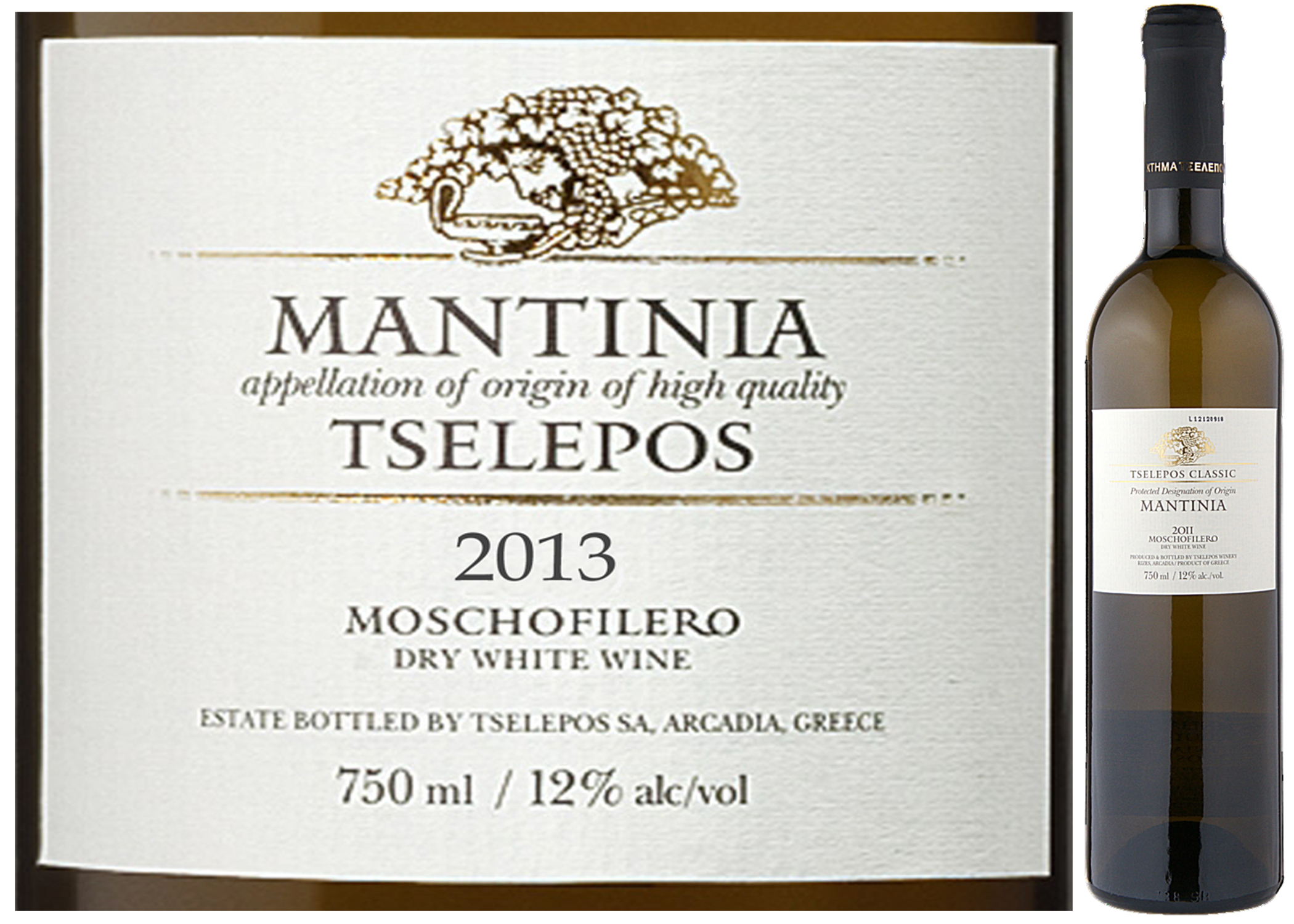
Mantinia Alert

Pastoral life still characterizes the mountainous region of Arcadia, in central
Peloponnesus. Its bucolic isolation have long been reflected on as a paradise in
both Greek and Roman poetry, as well as, in the literature of the Renaissance.
Formerly a peninsula, it technically become an island with the building of the
Corinth Canal at the end of the 19th century. Creating a maritime shortcut
across this ancient land, it connects the Gulf of Corinth, mouth of the Ionian
Sea and the Saronic Gulf, which is the gateway to the Aegean. Here, you’ll also
find so many of the sites that are quintessentially Greek: famed palaces include
King Agamemnon’s bronze-age construction at Mycenae and King Nestor’s at
Pýlos. You’ll also find one of the best preserved Greek theatres at Epidaurus
and Olympia: original host venue of the Olympic Games for over a millennium.
They also make a great deal of wine and have done so for a very long time.

In one of the 13 principal regions of modern-day Greece, Peleponnesus covers
approximately 12% of the landmass. The historian-poet Homer referred to it as:
Ampeloessa, meaning ‘full of vines’. So it is to this day, outstripping production
of all other Greek wine-producing areas. This week’s DéClassé recommended,
varietal bottling: Mantinia, takes its name from the larger region. In the Rizes,
Lithovounia, and Agiorgitika sub-communes of Mantinia, they primarily grow the
white grape variety: Moschofilero, which so-uniquely defines this refreshing wine.

In the parlance of international wine styles, Moschofilero is otherwise known as
‘blanc de gris’ due to the pale-grey caste of the grape’s skin colour. Though
much more subtle than the distantly related Gewurztraminer and Muscat, this
wine shares some of distinct flavor and aroma characteristics such as flower
and spice. These current 40 hectares of the Tselepos winery estate are in a
direct lineage to the very oldest vineyards found on the peninsula, many of which
were founded over 3,000 years ago. As is so often the case, poor soil makes for
counter-intuitive yet ideal conditions, yielding vigorous vines and characterful
fruit. This clay-based, rocky terrain is no exception to the rule, adding a touch of minerality to the resulting wine, providing a firm structure.

Once again white wine lovers, I’ll challenge you to try something different in the
still-limited pantheon of white wines available in the North American market. On
the LCBO Vintage’s shelves for a short while only, just buy 2 right away. Then go
back and pick up some more for Christmas and New Years.

Mantineia

TSELEPOS CLASSIC MOSCHFILERO 2013
VINTAGES – LCBO Product #724583 | 750 mL bottle
Price $ 17.95
13% Alcohol/Vol.
Sugar Content Descriptor: XD

Made in: Peloponnese, Greece
By: Domaine Tselepos
Release Date: Dec. 6, 2014

Tasting Note
This wine has an abundance of citrus fruit flavours and lemon flower aroma. Try
serving ahead of a meal with Phylo pastry appetizers, prosciutto, fresh fish dishes,
scallops or a cucumber and melon salad.

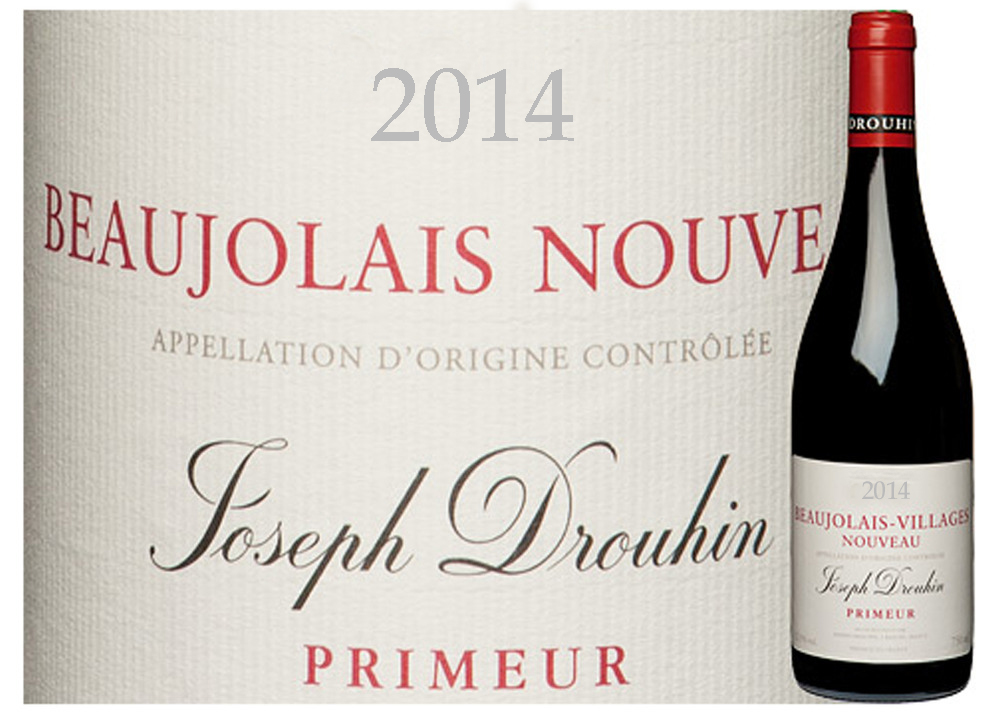
Beaujolais Nouveau

The Beaujolais area, part of the greater Burgundy region, has always produced
young wines – largely intended to be consumed as a celebration of the current
year’s harvest and as a reward for the vintner’s employees; however, shipping it
abroad as an export is a relatively contemporary concept, having only become
popularized around the middle of the 1950’s and hitting a peak around 1980.

In general, over-production by bulk-wine producers have given this varietal wine a
mixed reputation, confusing ever-more sophisticated drinkers with questionable
and off-putting flavor characteristics and descriptors such as “bubblegum”? A
few select producers though, have continued to consistently deliver high quality,
easy-drinking, light-bodied and charming wines that are possible with the Gamay
grape variety. Among these is Joseph Drouhin, hailing originally from another
noteworthy wine region: Chablis. In 1880 he founded the Maison bearing his
name in the city of Beaune, with subsequent family generations continuing the
refinement; becoming pioneers in mastering the “Nouveau” winemaking style.

Note that the “Villages” designation represents a significantly better grade of
sourced grapes, resulting in higher bottle pricing than standard Beaujolais. Dare
to pay a bit more for this offering – buy several and drink over the next 3 months.

Beaujolais Nouveau
JOSEPH DROUHIN BEAUJOLAIS VILLAGES NOUVEAU
VINTAGES – Product #113266 | 750 mL bottle
Price $ 15.95
12.5% Alcohol/Vol.
Sugar Content: D

Made in: Beaujolais, France
By: Joseph Drouhin S.A.
Release Date: November 20, 2014

Tasting Note
Garnet coloured with a distinct bouquet of ripe black cherries. Aged for several
months in stainless steel vats only, so may be suitable for drinkers that might
otherwise be adverse to the elevated Histamine levels that might result from
red wines being aged in Oak Barrels. Try serving very lightly chilled as aperitif
or with seasonal poultry and game dishes.

Corbières Alert

Proudly displaying the dramatic cross of the Visigoths dating to the 7th century,
later known as the Languedoc Cross or Cross of the Cathars, this vintner’s
very apt emblem also includes 2 doves drinking from a single cup – symbolizing
both sharing and communion. Begun by father Georges, a winemaking pioneer
in the Languedoc region who worked diligently to foster a spirit of cooperation
by local growers in the 1970’s, this benchmark winery has consistently been
at the forefront of quality development for an impressive range of regionally
distinctive wine styles. The multi-generational philosophy is being carried forward
by the founder’s son. Namesake of the current, burgeoning portfolio of vineyards,
Gérard Bertrand, now has its primary facilities based in Narbonne.

The Corbières terroir stretches from the base of the Pyrenees in the southwest
to Montagne Noire (Black Mountain) further north. A kaleidoscope of geology
and complex climates, the combinations serve to produce outstanding vines and
resulting, herb-scented wines. The prolific region was granted their official AOC
classification in 1985. The soils here consist of gravely clay and limestone with a
surface cover of stone pebbles, providing good drainage and healthy root stock.
The South of France, as a whole, is playfully described as a European wine lake,
containing 40% of France’s total vineyard acreage. The process of replacing
traditional, high-yielding grape varieties with lower yielding varieties to produce
smaller quantities of better wine, continues. What also carries forward, is that
they remain comparatively inexpensive and outstanding value.

A blend of Grenache, Syrah and Mourvèdre is the traditional output from an
arid landscape where no crop thrives except vines. Often counter-intuitive, the
most challenging terroirs yield the most interesting wine. Grapevines do well by
beingstressed. Here, they are stressed by wind, heat and poor organic soil. The
odd appropriateness of this land is manifest by creating a rippling sea of lush
green leaves. Stony white Limestone outcrops, tough, spiky Garrigue (herb-like
bushes), lines of Cyprus tree windbreaks and Terracotta covered stonework
houses, completes the complex picture.

The best Corbières wines can now hold their own with classic French vintages
of Bordeaux and Burgundy. Though you will find many bottlings from this prolific
vintner on the regular LCBO shelves, note that this limited release is only found
in the Vintages section and represents a value well above the sticker price!

Corbieres

GÉRARD BERTRAND CORBIERES 2011
VINTAGES – LCBO Product #394288 | 750 mL bottle
Price $ 18.95
13.5% Alcohol/Vol.
Sugar Content Descriptor: D

Made in: Roussillon, France
By: Gerard Bertrand
Release Date: Nov. 8, 2014

Tasting Note
This is a firm and spicy wine style that is best enjoyed with foods such as stuffed
peppers, meatballs in spiced tomato and olive sauce, grilled meats of all sorts
and ripe cheeses.

Chianti Classico Alert

Already 1,000 years old in its somewhat current form, this only references the
farm’s contemporary roots, a relative quantifier of fact and point of reference.
Earliest evidence of farming activity here, actually dates back much further to an
Etruscan period, preceding the very earliest, subsequent days of the Roman
age and culture. In turn, this eventually leads up to the tagging of its existence in
940AD in a registry managed under the domain of local, Medieval ruler: Otto IV.

Castagnoli is among the most celebrated estates within the larger Tuscan area,
having enjoyed the attentive development of vineyard and olive groves by noble
families such as Orlandi, Piccolomini and Tempi. Finally, toward the end of the
nineteenth century, the Ricasoli were the guiding hands before it passed into
becoming part of a 5 company consortium: Alimenta SPA, guided by Calogero
Cali. That’s quite a story – built over several millennia of compounding efforts.

The root of this week’s featured wine style: Chianti Classico is the term Chianti
itself. Some evidence suggests it derives from ‘clante’: the name of a person of
Etruscan origin; some believe it’s loosely associated to ‘clango’, a verb in Latin
that reproduces the sound of hunting horns and their announcement of hunting
season in the Tuscany territory. Moreover, the term does demark a territorial
boundary from the outskirts of Siena, reaching almost as far as Florence.

Chianti is Vino Nobile – the king of wines, made with Sangiovese. 100 hectares
of vineyard are devoted to this variety at Rocca di Castagnoli. In this bottling’s
blend are also 5% splashes of other indigenous grapes: Colorino and Canaiolo.
Sangiovese is the most widely planted, red-berried vine in all of Italy. High in acid
content and showing firm tannins, this slow ripening variety benefits from a long
growing season and relatively, delayed harvest. After fermentation, maturation
takes place partly in oak casks and partly in Tonneaux. The latter is a 900 litre,
wood container popular in the Middle Ages, eventually made into the smaller,
¼ size version that is today’s barrel standard.

With winter being hinted at, coming around the next corner, having satisfaction
of this medium-bodied wine will also arrive. You have to get some though, for this
prophecy to be fulfilled. It won’t be on Vintage’s shelves for long.

Rocca Di Castagnoli

ROCCA DI CASTAGNOLI CHIANTI CLASSICO 2011`
VINTAGES – LCBO Product #222810 | 750 mL bottle
Price $ 17.00
13.5% Alcohol/Vol.
Sugar Content Descriptor: XD

Made in: Tuscany, Italy
By: Alimenta, Spa
Release Date: Oct. 25, 2014

Tasting Note
This is a savory wine with flavours of dark cherries and stone fruit flecked with
notes of dried herbs. Try with roast veal, pork and mushroom or squash risotto.

Viognier Alert

With a 160-plus-year history, this is Australia’s oldest family owned winery being
founded in 1849 by English brewer Samuel Smith in Barossa Valley. Located in
South Australia’s most famous wine-making region, the winery’s name Yalumba
roughly translates to meaning “all the land around” – in one of the local aboriginal
dialects. Originally, a mere 30 acres of vineyard has grown in diversification and
scale, drawing on the output from choice parcels around the town of Angaston,
also known as’ German Pass’: pioneered largely by German immigrants in the
mid-nineteenth century. 50yrs. onward, the Smiths began development of the
flourishing viniculture that now marks the South Australian region as a whole.

The Viognier grape and its resulting varietal wine, is one of the great stories of
recovery and reemergence from near-extinction. In the early 1960’s, only about
80 acres of vine plantings were still active world-wide, all in a cluster in France’s
Northern Rhône Valley. This week’s DéClassé featured vintner was one of a small handful to re-establish the variety in the Eden Valley in the late 1970’s. Arguably,
in spite of a new-found popularity on its own along with its use as a very common blending component with other varieties such as Marsanne and Grenache Blanc, bolstering texture and deepening colour – it remains a niche variety. 

It’s a very difficult grape to grow with consistency, offering highly variable yields
from season to season. Since it’s thick-skinned, it also requires a lot of sunshine
exposure to bring it through to maturity, though not too much, as this results in
an overly ‘hot’ alcohol content. This week’s recommendation strikes the balance
just right: some steelyness, refreshing, while also fuller-bodied and fulfilling.

Get off the bandwagon of the current stars of often less-characterful, white wine
such as the inexpensive versions of Chardonnay and the like. Get a bottle and try
this fairly well-chilled and while it’s young, before heading back for another.

Yalumba Viognier

YALUMBA THE Y SERIES VIOGNEIR 2013
VINTAGES – LCBO Product #624502 | 750 mL bottle
Price $ 16.95
14.5% Alcohol/Vol.
Sugar Content Descriptor: XD

Made in: South Australia, Australia
By: Negociants International
Release Date: Oct. 25, 2014

Tasting Note
This bottling is classically typical of the variety. Light, floral aroma and flavour
with notes of stone fruit such as apricot and hints of peach, pineapple and spice
blended into a supple, textured body. Enjoy this somewhat bigger white as apéritif
or with seafood, salads and white-sauced pasta.

Vinho Verde Alert

Bordering the Cávado River, near Braga in the north-western sub-region of the
larger Vinho Verde DOC, with a damp, near-Atlantic coastal climate, grapes are
grown among forested hillsides that line the misty valleys. Of necessity these are
very fast maturing, fairly fragrant white wine varieties, more-typically cultivated
in an overhead canopy style of trellis, lessening the chance of fungal disease, due
to elevated moisture levels. This vintner employs a lower-level, so-called Unilateral Cordon (or Cordon de Royat in French – who pioneered this method) since these
issues are less-prevalent in the Minho zone.

Winemaker Alavaro van Zeller, has his experienced hands and stamp on this
week’s DéClassé recommended varietal creation using 100% Loureiro grape
content. It’s purported namesake comes from an association to laurel flowers,
acacia, lime and orange blossoms – in the prolific form of green-yellow bunches.
On the heels of a September harvest, the resulting must ferments and is stored
for a time in stainless steel vats to yield up a fresh and crisp wine style unique to
its source vineyards. In turn, these surround the central manor house ‘Solar’ set
in among the woods ‘Bouças’, inspiring this bottle’s catchy title.

Vinho Verde still too often, literally, construed as a ‘green’ wine; it’s more-likely
intending to reference that it is ‘young’ wine – decidedly a key facet of its charm.
Though well-known in Europe, North American consumers have been slow in
coming to appreciate its placement in the pantheon of white wine styles. Low
alcohol content means that it can be experienced and enjoyed in more-liberal
quantity but of course, not without a reasonable restraint!

For added emphasis, this bottling was selected as #1 of 50 great Portuguese
Wines in 2014 by lead editor Joshua Greene in Wine and Spirits magazine. A
significant endorsement for such an affordably priced offering.

Solar Das Boucas

SOLAR DAS BOUÇAS LOUREIRO 2013
VINTAGES – LCBO Product #221036 | 750 mL bottle
Price $ 13.95
10.7% Alcohol/Vol.
Sugar Content Descriptor: XD

Made in: Vinho Verde, Portugal
By: Baroa De Vilar
Release Date: Oct. 11, 2014

Tasting Note
Light, low alcohol, fruity and ever-so sparkling (‘petillant’), this wine has a pleasing
acidity akin to pears with a hint of citrus. Certainly this is appropriate to serve
as apéritif or with all manner of white meats, pasta and fresh fish dishes.

Gamay Noir Alert

As was mentioned in DéClassé late last year, while announcing the release of
the 2013 Nouveau stock, I promised to eventually feature a more fully aged and
developed version of Beaujolais to remind us that this wine style has a range of
sophistication – beyond the fun, simpler, ‘never been in the barrel’ versions that
appear on the 3rd Thursday of each November. In dedicating this week’s focus on
what is an often charming, medium-bodied wine, I’m also hoping to dispel some
of the dated scandal and derision that resulted in depressed sales of the output
from the Beaujolais AOC during the last 3 decades or so. Due to various follies, including overproduction in the 80’s when the ‘Nouveau craze’ really took hold,
the proud and storied Beaujolais vintners have had to be energetically engaged in
a public relations campaign to re-establish a well-deserved, favourable reputation.

In among 96 Beaujolais villages that are grouped together north of Lyon, in the
so-called gastronomic capital of France, the region’s highest-quality wines are
produced from the ten official ‘crus’ vineyard clusters – one of which is Morgon:
home to some of the 250 associated vintners, collectively marketing under the
umbrella marquee called Vignorons de Bel-Air.

Gamay Noir, one of the predominant varieties grown here, is an early ripening,
acidic type processed using a carbonic maceration method. The still-bunched
grape clusters are layered into fermentation vessels, with the bottom crushed
under the weight of those on top. The resultant juice begins its fermentation,
saturating the must in carbon dioxide. Since the grapes ferment as a whole berry,
this process tends to yield up very bright, colourful wines with low tannin content
along with a markedly, fruity flavor profile.

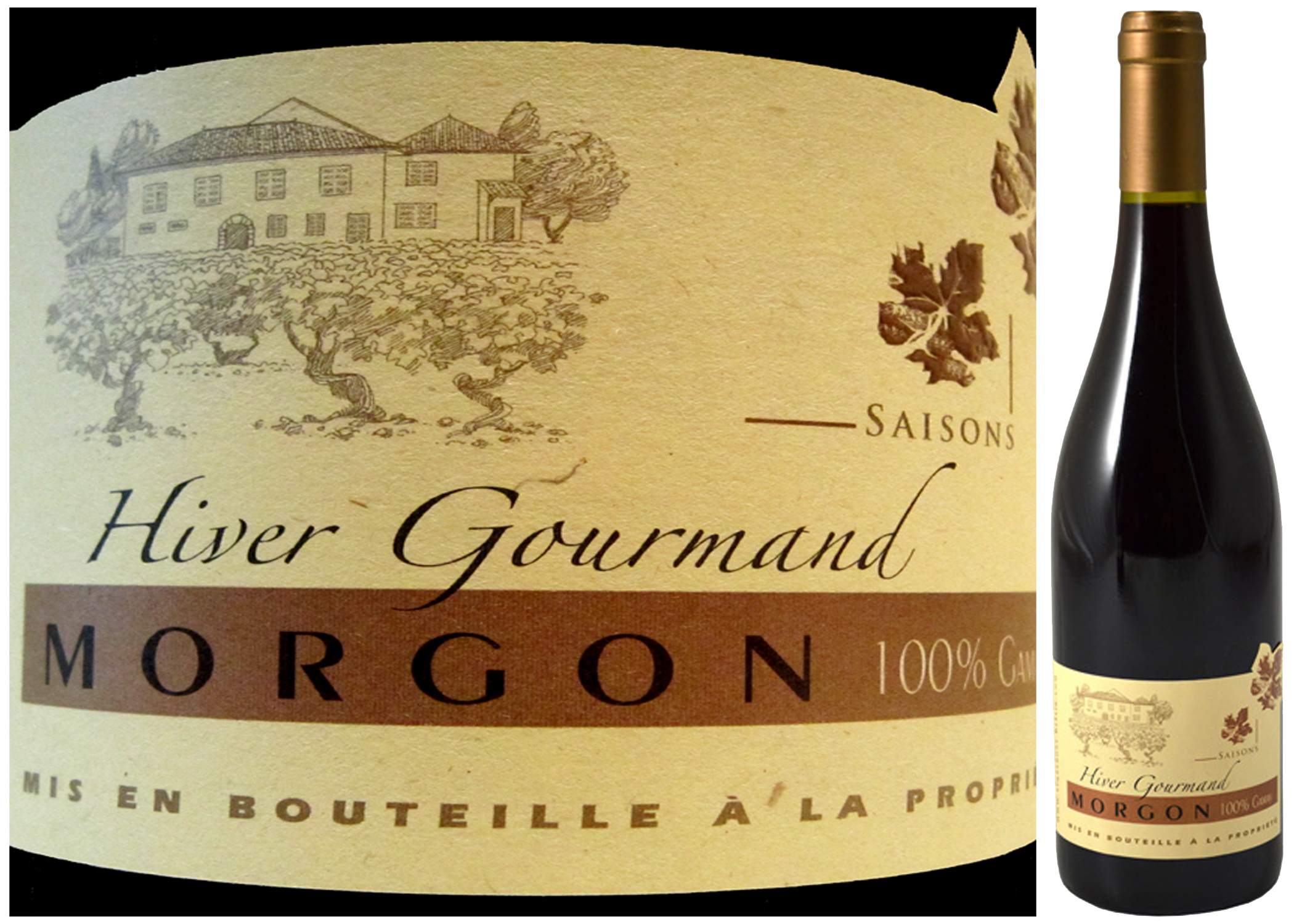
This week’s selection is the seasonally branded Hiver Gourmand – Silver Medal
winner at the Concours Général Agricole de Paris 2013, where any showing in
the upper 3 tiers of awards is a significant accomplishment for a $18 bottling!

Hiver Gourmand Morgon

VIGNERONS DE BEL-AIR HIVER GOURMAND MORGON 2012
VINTAGES – LCBO Product #383778 | 750 mL bottle
Price $ 17.95
13% Alcohol/Vol.
Sugar Content Descriptor: XD

Made in: Beaujolais, France
By: Cave Des Vignerons De Bel-Air
Release Date: September 27, 2014

Tasting Note
Plentiful black plum, cherry and some hints of raspberry aromas and flavours.
Earthy with moderately firm tannins and a fine acidity gives it balance. Try with
food fare such as charcuterie, roast veal, duck a l’orange, turkey or goose.