Primitivo Alert

Primitivo’s name is derived from the combination of several Latin terms, loosely
translating in meaning as ‘the first to ripen’. The grape variety also has a popular
relative that’s cultivated and flourishing in California’s vineyards called Zinfandel.
After much debate and speculation, viticulturalists have finally determined that
the near genetic twins are descendent from the Croatian parent grape Crljenak
Kastelanskj (aka Plavina). The Italian clonal version featured here in this bottling,
is lighter-bodied, somewhat drier and significantly price-competitive with almost
all of the unjustifiably, overpriced American ‘Zins’, making for a very satisfying
combination of value and restraint after the holiday feasting!

Established in 1921, three generations of vintners at Varvaglione Vigne & Vini
have developed the brand into one of the premier, exporting producers from the
Puglia region after an initial history of focusing on bulk wine production aimed at
local consumption. Framed between the Ionian and Adriatic seas, the 400km
long coastal area is punctuated by the Salento Peninsula, often referred to as
the ‘heel’ of south-eastern Italy. Its astonishing level of wine-making output and
ever-rising quality is built on the ancient traditions first begun by the enterprising
Phoenicians, then followed by Spartans who settled here in 706BC from Greece.

First discovered by Benedictine monk Filippo Francesco Indellicati as a wild vine growing within the monastery gardens in the 17th century, various varieties
of Primitivo were proliferated throughout this suitable agricultural zone, arriving in
Taranto Province 100 years later. Here, the highly distinctive red soil character
results from the blending of calcareous fossils and iron oxide mixed with the clay
and silt loam base. Specifically, it’s the iron content that promotes soil drainage,
contributing to almost perfect conditions for the grapevine to thrive.

This week’s DéClassé recommendation is a well made, entry level example of
what is on offer from this sun-drenched region – at an attractive price-point, for
a limited time only. Buy several to nicely compliment your casual dining.

12 e Mezzo Primitivo

12 e MEZZO PRIMITIVO DEL SALENTO 2012
VINTAGES – LCBO Product #395053 | 750 mL bottle
Price $ 13.95
12.5% Alcohol/Vol.
Sugar Content Descriptor: XD

Made in: Puglia, Italy
By: Vigne & Vini Varvaglione
Release Date: January 10, 2015

Tasting Note
A very fruity palate typical of the grape style with aromas of mixed berries,
plums, spice and vanilla. Try with some classic winter comfort foods such as
braised brisket, veal scaloppini, pasta Bolognese or a Neapolitan-style pizza.

Malbec Blend Alert

Inspiring this bottling’s name, La Posta del Viñotero is a wine tavern in Mendoza
where local wine growers would historically congregate to sample the results of
their harvested labours, while passionately exchanging opinions and insights into
their working of soils, vines and wine styles. La Posta is also the Italian name for
Post Office. For many of the millions of Italians who immigrated to Argentina in
the 19th and 20th century, it became a key gathering place to socialize.

Fruit for this week’s DéClassé recommended offering is drawn from a collection
of 3,000 foot, high altitude vineyards in La Consulta, Rivadavia, Vista Flores and
Altamira. The narrow band of alluvial soils, in this now renowned and prolific wine
producing province, are ideally suited for the cultivation of Argentina’s signature
Malbec grape. The growing conditions are an apparent agricultural contradiction
whereby some of the most characterful wines are being extracted from mature,
30 year-old vine stock thriving in near-inhospitable geography. Just to the east is
infertile desert; to the west, is the so-called ‘rain shadow’ created by the nearby
chain of majestic Andean peaks.

This thick-skinned grape variety, which was first introduced to South America in
the 1850’s by Frenchman Miguel Pouget, has evolved through several cycles of
being in and out of commercial favour. The spiced and fresh fruit elements that
this variety lent to traditional Bordeaux blends, have become calling cards for
Argentinean Malbec, shining alone, on its own merits in varietal bottling form.

This opaque, purple red blend is made up of 60% Malbec with equal, 20% parts
of Bonarda and Syrah. It’s well-made, fun, easy drinking wine intended to be
enjoyed young. Aged for 14 months in oak, it has sufficient depth for those who
prefer bigger weight and mouth feel in their reds. For palettes that lean toward
brambly fruit flavours, this has loads to offer as well. Try it on the slightly cooler
side of serving temperature.

La Posta

LA POSTA TINTO 2013
VINTAGES – LCBO Product #269860 | 750 mL bottle
Price $ 12.95
13.5% Alcohol/Vol.
Sugar Content Descriptor: D

Made in: Mendoza, Argentina
By: Puerto Ancona S.A.
Release Date: Dec. 13, 2014

Tasting Note
Has many of the typical Malbec aromas and flavour profiles including raspberry
and cassis with some hints of cocoa and mocha. A fair amount of fresh acidity
lends balance to this fruit-driven red. Try this as an everyday, apéritif wine or with
herbed roast chicken, lamb, beef and grilled vegetables.

Beaujolais Nouveau

The Beaujolais area, part of the greater Burgundy region, has always produced
young wines – largely intended to be consumed as a celebration of the current
year’s harvest and as a reward for the vintner’s employees; however, shipping it
abroad as an export is a relatively contemporary concept, having only become
popularized around the middle of the 1950’s and hitting a peak around 1980.

In general, over-production by bulk-wine producers have given this varietal wine a
mixed reputation, confusing ever-more sophisticated drinkers with questionable
and off-putting flavor characteristics and descriptors such as “bubblegum”? A
few select producers though, have continued to consistently deliver high quality,
easy-drinking, light-bodied and charming wines that are possible with the Gamay
grape variety. Among these is Joseph Drouhin, hailing originally from another
noteworthy wine region: Chablis. In 1880 he founded the Maison bearing his
name in the city of Beaune, with subsequent family generations continuing the
refinement; becoming pioneers in mastering the “Nouveau” winemaking style.

Note that the “Villages” designation represents a significantly better grade of
sourced grapes, resulting in higher bottle pricing than standard Beaujolais. Dare
to pay a bit more for this offering – buy several and drink over the next 3 months.

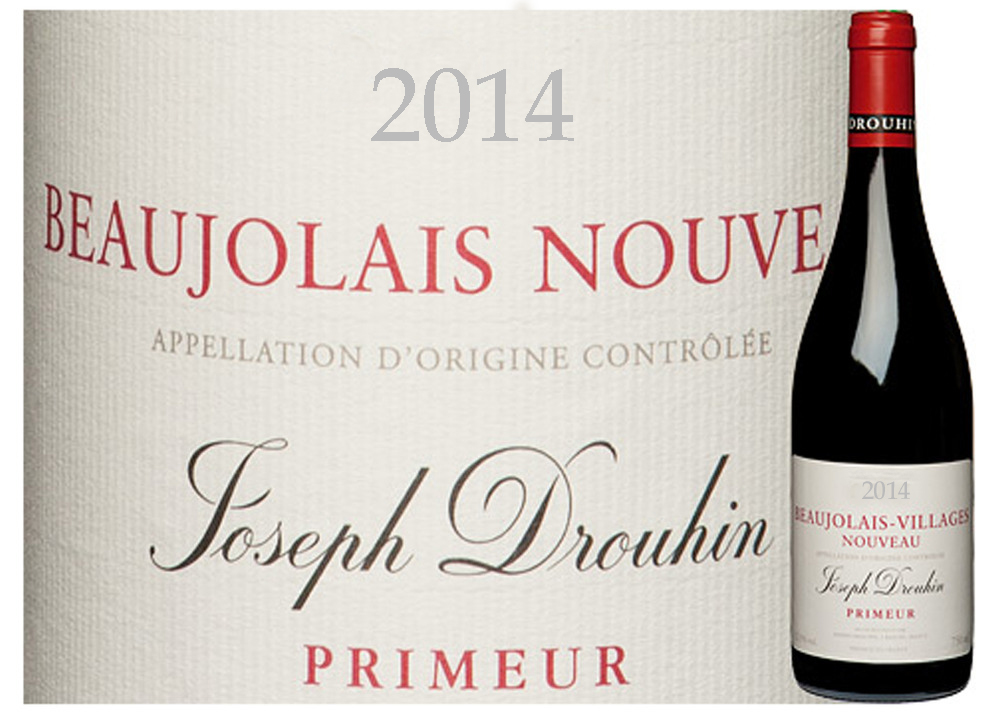
Beaujolais Nouveau
JOSEPH DROUHIN BEAUJOLAIS VILLAGES NOUVEAU
VINTAGES – Product #113266 | 750 mL bottle
Price $ 15.95
12.5% Alcohol/Vol.
Sugar Content: D

Made in: Beaujolais, France
By: Joseph Drouhin S.A.
Release Date: November 20, 2014

Tasting Note
Garnet coloured with a distinct bouquet of ripe black cherries. Aged for several
months in stainless steel vats only, so may be suitable for drinkers that might
otherwise be adverse to the elevated Histamine levels that might result from
red wines being aged in Oak Barrels. Try serving very lightly chilled as aperitif
or with seasonal poultry and game dishes.

Corbières Alert

Proudly displaying the dramatic cross of the Visigoths dating to the 7th century,
later known as the Languedoc Cross or Cross of the Cathars, this vintner’s
very apt emblem also includes 2 doves drinking from a single cup – symbolizing
both sharing and communion. Begun by father Georges, a winemaking pioneer
in the Languedoc region who worked diligently to foster a spirit of cooperation
by local growers in the 1970’s, this benchmark winery has consistently been
at the forefront of quality development for an impressive range of regionally
distinctive wine styles. The multi-generational philosophy is being carried forward
by the founder’s son. Namesake of the current, burgeoning portfolio of vineyards,
Gérard Bertrand, now has its primary facilities based in Narbonne.

The Corbières terroir stretches from the base of the Pyrenees in the southwest
to Montagne Noire (Black Mountain) further north. A kaleidoscope of geology
and complex climates, the combinations serve to produce outstanding vines and
resulting, herb-scented wines. The prolific region was granted their official AOC
classification in 1985. The soils here consist of gravely clay and limestone with a
surface cover of stone pebbles, providing good drainage and healthy root stock.
The South of France, as a whole, is playfully described as a European wine lake,
containing 40% of France’s total vineyard acreage. The process of replacing
traditional, high-yielding grape varieties with lower yielding varieties to produce
smaller quantities of better wine, continues. What also carries forward, is that
they remain comparatively inexpensive and outstanding value.

A blend of Grenache, Syrah and Mourvèdre is the traditional output from an
arid landscape where no crop thrives except vines. Often counter-intuitive, the
most challenging terroirs yield the most interesting wine. Grapevines do well by
beingstressed. Here, they are stressed by wind, heat and poor organic soil. The
odd appropriateness of this land is manifest by creating a rippling sea of lush
green leaves. Stony white Limestone outcrops, tough, spiky Garrigue (herb-like
bushes), lines of Cyprus tree windbreaks and Terracotta covered stonework
houses, completes the complex picture.

The best Corbières wines can now hold their own with classic French vintages
of Bordeaux and Burgundy. Though you will find many bottlings from this prolific
vintner on the regular LCBO shelves, note that this limited release is only found
in the Vintages section and represents a value well above the sticker price!

Corbieres

GÉRARD BERTRAND CORBIERES 2011
VINTAGES – LCBO Product #394288 | 750 mL bottle
Price $ 18.95
13.5% Alcohol/Vol.
Sugar Content Descriptor: D

Made in: Roussillon, France
By: Gerard Bertrand
Release Date: Nov. 8, 2014

Tasting Note
This is a firm and spicy wine style that is best enjoyed with foods such as stuffed
peppers, meatballs in spiced tomato and olive sauce, grilled meats of all sorts
and ripe cheeses.

Chianti Classico Alert

Already 1,000 years old in its somewhat current form, this only references the
farm’s contemporary roots, a relative quantifier of fact and point of reference.
Earliest evidence of farming activity here, actually dates back much further to an
Etruscan period, preceding the very earliest, subsequent days of the Roman
age and culture. In turn, this eventually leads up to the tagging of its existence in
940AD in a registry managed under the domain of local, Medieval ruler: Otto IV.

Castagnoli is among the most celebrated estates within the larger Tuscan area,
having enjoyed the attentive development of vineyard and olive groves by noble
families such as Orlandi, Piccolomini and Tempi. Finally, toward the end of the
nineteenth century, the Ricasoli were the guiding hands before it passed into
becoming part of a 5 company consortium: Alimenta SPA, guided by Calogero
Cali. That’s quite a story – built over several millennia of compounding efforts.

The root of this week’s featured wine style: Chianti Classico is the term Chianti
itself. Some evidence suggests it derives from ‘clante’: the name of a person of
Etruscan origin; some believe it’s loosely associated to ‘clango’, a verb in Latin
that reproduces the sound of hunting horns and their announcement of hunting
season in the Tuscany territory. Moreover, the term does demark a territorial
boundary from the outskirts of Siena, reaching almost as far as Florence.

Chianti is Vino Nobile – the king of wines, made with Sangiovese. 100 hectares
of vineyard are devoted to this variety at Rocca di Castagnoli. In this bottling’s
blend are also 5% splashes of other indigenous grapes: Colorino and Canaiolo.
Sangiovese is the most widely planted, red-berried vine in all of Italy. High in acid
content and showing firm tannins, this slow ripening variety benefits from a long
growing season and relatively, delayed harvest. After fermentation, maturation
takes place partly in oak casks and partly in Tonneaux. The latter is a 900 litre,
wood container popular in the Middle Ages, eventually made into the smaller,
¼ size version that is today’s barrel standard.

With winter being hinted at, coming around the next corner, having satisfaction
of this medium-bodied wine will also arrive. You have to get some though, for this
prophecy to be fulfilled. It won’t be on Vintage’s shelves for long.

Rocca Di Castagnoli

ROCCA DI CASTAGNOLI CHIANTI CLASSICO 2011`
VINTAGES – LCBO Product #222810 | 750 mL bottle
Price $ 17.00
13.5% Alcohol/Vol.
Sugar Content Descriptor: XD

Made in: Tuscany, Italy
By: Alimenta, Spa
Release Date: Oct. 25, 2014

Tasting Note
This is a savory wine with flavours of dark cherries and stone fruit flecked with
notes of dried herbs. Try with roast veal, pork and mushroom or squash risotto.

Gamay Noir Alert

As was mentioned in DéClassé late last year, while announcing the release of
the 2013 Nouveau stock, I promised to eventually feature a more fully aged and
developed version of Beaujolais to remind us that this wine style has a range of
sophistication – beyond the fun, simpler, ‘never been in the barrel’ versions that
appear on the 3rd Thursday of each November. In dedicating this week’s focus on
what is an often charming, medium-bodied wine, I’m also hoping to dispel some
of the dated scandal and derision that resulted in depressed sales of the output
from the Beaujolais AOC during the last 3 decades or so. Due to various follies, including overproduction in the 80’s when the ‘Nouveau craze’ really took hold,
the proud and storied Beaujolais vintners have had to be energetically engaged in
a public relations campaign to re-establish a well-deserved, favourable reputation.

In among 96 Beaujolais villages that are grouped together north of Lyon, in the
so-called gastronomic capital of France, the region’s highest-quality wines are
produced from the ten official ‘crus’ vineyard clusters – one of which is Morgon:
home to some of the 250 associated vintners, collectively marketing under the
umbrella marquee called Vignorons de Bel-Air.

Gamay Noir, one of the predominant varieties grown here, is an early ripening,
acidic type processed using a carbonic maceration method. The still-bunched
grape clusters are layered into fermentation vessels, with the bottom crushed
under the weight of those on top. The resultant juice begins its fermentation,
saturating the must in carbon dioxide. Since the grapes ferment as a whole berry,
this process tends to yield up very bright, colourful wines with low tannin content
along with a markedly, fruity flavor profile.

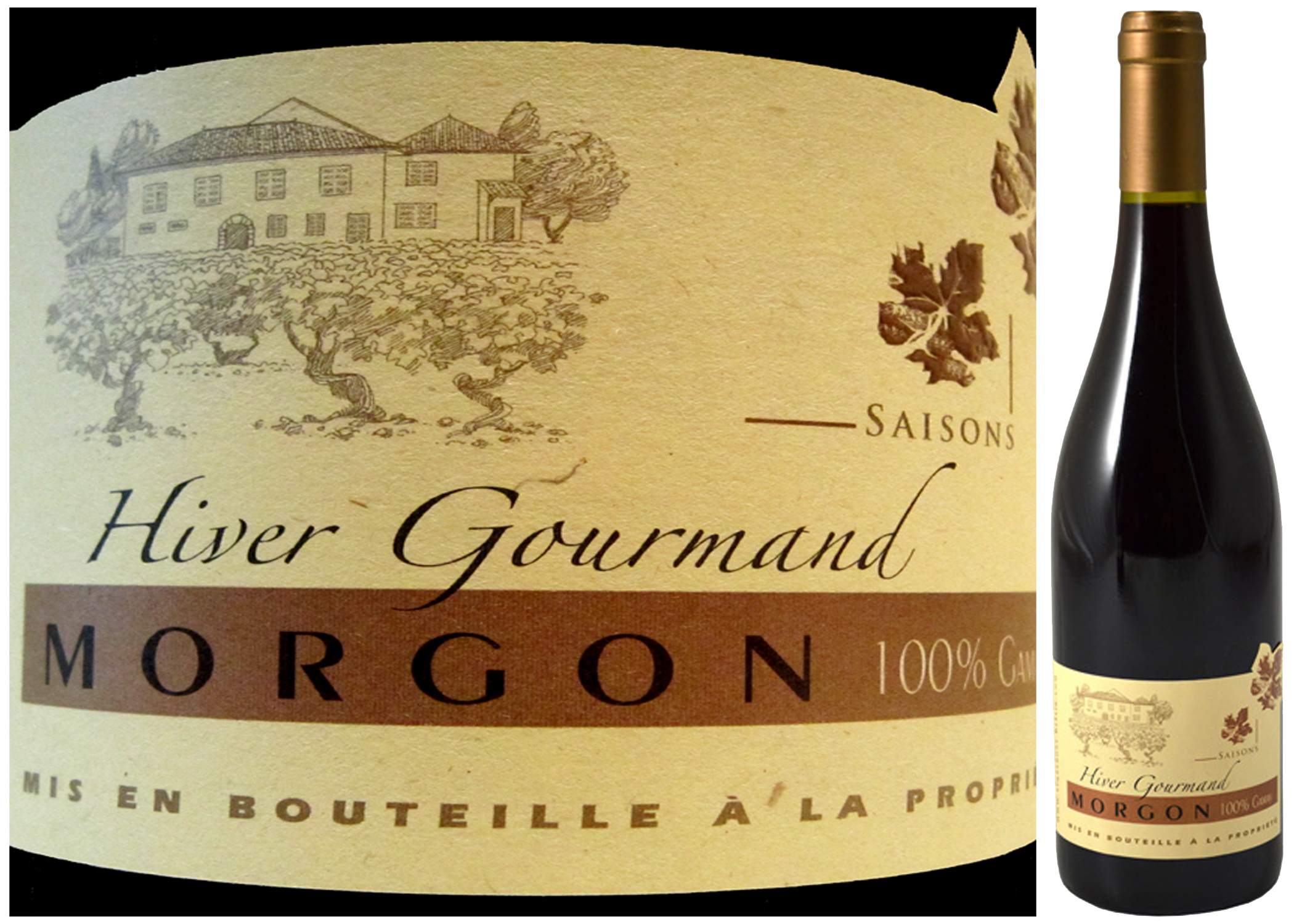
This week’s selection is the seasonally branded Hiver Gourmand – Silver Medal
winner at the Concours Général Agricole de Paris 2013, where any showing in
the upper 3 tiers of awards is a significant accomplishment for a $18 bottling!

Hiver Gourmand Morgon

VIGNERONS DE BEL-AIR HIVER GOURMAND MORGON 2012
VINTAGES – LCBO Product #383778 | 750 mL bottle
Price $ 17.95
13% Alcohol/Vol.
Sugar Content Descriptor: XD

Made in: Beaujolais, France
By: Cave Des Vignerons De Bel-Air
Release Date: September 27, 2014

Tasting Note
Plentiful black plum, cherry and some hints of raspberry aromas and flavours.
Earthy with moderately firm tannins and a fine acidity gives it balance. Try with
food fare such as charcuterie, roast veal, duck a l’orange, turkey or goose.

Petite Sirah alert

Mexican winemaking tradition is built on a historical foundation dating to early
in the 1520’s. Begun by and under the direction of the conquistadors, these
vineyards of ‘New Spain’ eventually became so successful that exports from
Spain to the Americas dwindled. In 1699, in response to the loss of revenues,
Spain’s King Charles II decided to prohibit all wine production in the colonies,
except for the making of a supply for the Church! This prohibition stayed in force
until 1821, finally only ending with Mexico’s independence from colonial rule.
Many missionaries refused to abide by this royal edict and in quiet defiance, they
continued to produce wine locally on a small-scale. Particularly significant in the
region was the work of Jesuit priest Juan Ugarte, who’s credited with planting
the first vines in Baja California when he arrived at the Loretto mission in 1701.

Since then, L.A. Cetto has become Mexico’s most successful exporting winery,
drawing on 1,200 hectares in the Valle de Guadalupe and continues to build on
the expertise and craft provided by its namesake Don Angelo Cetto – an Italian
immigrant who arrived in 1924. Following DéClassé’s recommendation of the
2011 vintage, this medium-bodied red from Anno 2012 again displays that soil,
climate and evolving skill in the vineyards of the arid Baja Peninsula is resulting
in highly competitive alternatives to the much-pricier offerings being produced
just across the border to the north.

Nonetheless, this varietal wine does owe its heritage to California’s Napa Valley
in the 1880’s, where the source grape was first imported and proliferated as a
variety which could resist mildew. In directly referencing the diminutive size of its
berries, early planters confused the vine for a Syrah clone, naming it (aptly, they
thought) ‘Petite Sirah’. Though still subject to continuing, vinicultural speculation,
it is now generally recognized as a variation of the French parent vine ‘Durif’.

With its attendant, naturally high levels of both tannins and acidity, it’s inherited
the ability to age and develop an even richer complexity – but is fully ready now.

L.A. Cetto 2011

L.A. CETTO PETITE SIRAH 2012
VINTAGES – LCBO Product #983742 | 750 mL bottle
Price $ 11.95
13.5% Alcohol/Vol.
Sugar Content Descriptor: XD

Made in: Baja California, Mexico
By: L.A. Cetto
Release Date: Jun 22, 2014

Tasting Note
This earthy, spicy style of wine with formidable tannins and vanilla oakiness is an
ideal partner to serve slightly chilled with hearty and savoury dishes of all sorts
including ratatouille, fajitas, grilled mushrooms, peppers, beef or lamb.

Monastrell Alert

In the southeastern corner of Spain, not far from Valencia, the emerging region
of the Yecla DO is producing some highly distinctive wines crafted by using both
newer and traditional wine-making methods. With the beginning of a viticulture
dating back to the Phoenician period, followed by Roman development and finally
a near-contemporary golden period in the 18th century, the region’s reputation is
being re-energized by a generation of younger vintners engaged in mastering this
difficult terrain. Low organic content soils and arid conditions, counter-intuitively,
are yielding up very characterful grapes and their resulting wines.

Ramón Castaño, subsequently his 3 sons and now international consumers are
reaping rewards from the investment that began in the 1950’s and then slowly
began coming to fruition in the 80’s – with a shift away from bulk wine production
to the pursuit of quality bottlings based on the strength of local varieties.

To create this 2012 vintage of their special, limited production Solanera line,
Bodega Castaño is blending 70% Monastrell (better known in neighbouring
France as Mourvèdre) with 15% splashes of Cab Sauvignon and Garnacha
Tintorera (Grenache). As suggested in the translation of the wine name’s byline
Viñas Viejas, the fruit is being drawn from some of the vineyard’s oldest, most
mature vines. The unfiltered wine is then bottled after aging for 10 months in a
balanced combination of French and American oak barrels.

Monastrell is the star here and is so in spite of requiring a significantly longer
period of grape cluster maturation, often meaning that harvest doesn’t take
place until mid-October – though this does translate into a broad flavor profile
requiring less help from other varieties to round out the recipe.

After reading this introduction, check the LCBO’s online search engine for local
availability of this limited release, then immediately sprint to the nearest location
and buy as much as you can afford – it will happily cellar for another 2- 4yrs.

Solanera

CASTANO SOLANERA VINAS VIEJAS 2012
VINTAGES – LCBO Product #276162 | 750 mL bottle
Price $ 17.00
14% Alcohol/Vol.
Sugar Content Descriptor: XD

Made in: Yecla, Spain
By: Bodegas Castaño
Release Date: August 30, 2014

Tasting Note
Try serving with richer food fare such as beef ribs, barbeque pork shoulder,
lentils, wild rice and shitake or portabello mushrooms. Also with dishes spiced
with rosemary and thyme.

Côtes du Rhône Alert

Domaine Le Grand Retour is one of a trio of estates owned and overseen by
the 3 Aubert Brothers, who since 1981 have been forwarding the foundation
and traditions begun by their father. The 150 hectares of this property were
originally established by Algerian immigrants who again left the country for a
time, then returned to find their mature plantings ready to bear wine-making
fruit – hence providing the Domaine’s namesake of ‘the major return’!

Here, due south of neighbouring Burgundy, the Rhône’s abundant vineyards
straddle the river for 125 miles from Vienne in the north: producing red wines
exclusively built on the Syrah grape – to just below Avignon in the south: where
the GSM (Grenache, Syrah, Mourvèdre) or GSMC (add Carignan) blends are
fashioned. Significant wine-making history here dates back at least to the arrival
of the popes in the Middle Ages with Avignon, more recently, being anointed as
the ‘capital city’ of Rhône wines in 1966.

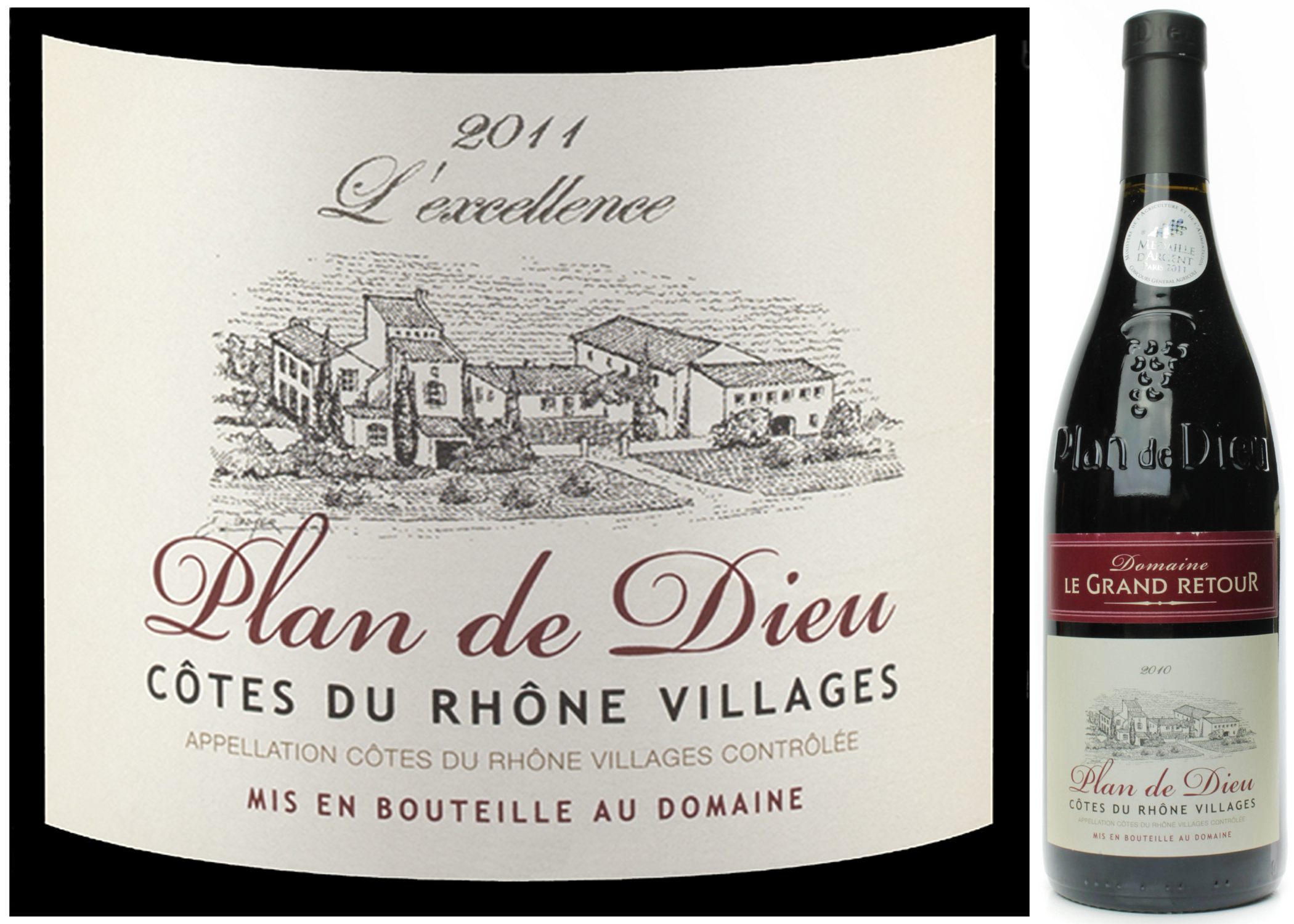
The DéClassé recommended red this week, is a bold, classic version of a 70%,
20%, 10% GSM extracted from 45yr.-old vine stock rooted in the warm, stony
limestone soils typical of the ‘Plan de Dieu’ sub-region within the larger Côtes
du Rhône Villages appellation. Enjoying a relatively hot and dry, localized climate
that’s ideal for the full maturation of these grape varieties, the geographic plain
which frames this designation of origin encompasses the towns of Jonquieres,
Camaret-sur-Aigues, Violes, as well as, the source of this week’s wine: Travaillan.
Though being a relatively new appellation (having only been created in 2005),
the classification nonetheless indicates the production of better quality wine
than from the fields of the nearby, generic Côtes du Rhône AOC.

This is a secondary release of the same vintage seen on shelves last year at this
time – a Gold Medal winner at the Concours Général Agricole de Paris 2012.

Le Grand Retour

DOMAINE LE GRAND RETOUR PLAN DE DIEU 2011
VINTAGES – LCBO Product #224592 | 750 mL bottle
Price $ 13.95
14.5% Alcohol/Vol.
Sugar Content Descriptor: XD

Made in: Rhône, France
By: Aubert Frères, Prop.-Récolt.
Release Date: Aug 16, 2014

Tasting Note
Dark, silky-smooth with rich fruit and savory notes, the complexity of aromas and
flavours in this bottling exceeds its general pedigree of an ‘entry level’, southern
Rhône wine. Try serving with duck, lamb, stuffed eggplant, bean stew with sage or
strong cheeses.

Barbera Alert

With a history dating to the late nineteenth century, Cantine Giacomo Ascheri
has been doing things their way for some time now. On one level, this means
shying away from the commercial temptation to plant international varieties and
remaining committed to the development of long-standing, indigenous grapes. In
the case of this week’s DéClassé recommendation, this translates as a varietal
bottling of 100% Barbera sourced from their Podere di Rivalta estate between
the communes of La Morra and Verduno – situated at the center of the famed
Piemonte wine-growing region.

Bordered on three sides by the Alps, the region comes by its moniker honestly
‘at the foot of the mountains’. Apart from the featured offering of the Fantonelle
from the Barbera D’Alba DOC, the verdant valleys and plain here produce a wide
range of notable grapes and wine styles including Barolo, Nebbiolo, Dolcetto and
various frothy versions of Asti! 
Food-wise, white Truffles, Porcini mushrooms and
the signature pasta Agnolotti provide a 
basis for many flavourful pairing options.

In Italy, Barbera is considered to be the quintessential ‘wine of the people’ as it’s
a staple and affordable table wine. With less commercial payoff, it is frequently
assigned to growing in less-desirable plots and as it enjoys fewer advantages of
terroir, it can sometimes be difficult to tame and bring to full maturity. Due to
very unusual though favourable swings in climate during 2011, this example is
nicely rounded and concentrated, demonstrating what’s possible with the grape.
It’s ready to be enjoyed now in a fresh, fruity state or could be allowed to become
more complex with some extra time tucked away. This is a benchmark vintage, so
budget allowing – buy lots and get some of this limited stock now!

Ascheri

ASCHERI FONTANELLE BARBERA D’ALBA 2011
VINTAGES – LCBO Product #982462 | 750 mL bottle
Price $ 17.95
14% Alcohol/Vol.
Sugar Content Descriptor: D

Made in: Piedmont, Italy
By: Ascheri Giacomo
Release Date: August 2, 2014

Tasting Note
Berry, plum, some restrained spice notes and a subtle touch of sweetness
characterize this deep, ruby-red wine. It’s medium-bodied with bright acidity,
so try with roasted meat and game dishes, root vegetables or strong cheeses.