Chardonnay Alert

In 2011, the European Union reclassified wine in an effort to streamline the too
wide-ranging, comparative designations. In France, this now breaks down as AOP Appellation d’Origine Protégée: the premier classification with a fairly strict set of requirements; IGP Indication Géographique Protégée: an intermediate category
with more 
flexible regulations and a greater diversity of permitted grape varieties,
and lastly, Vin de France: a more generic designation that allows cuvée (blending)
of wines sourced from different French regions.

Languedoc-Roussillon is by far the biggest and most prolific IGP region, whose
2,800 wine producers are drawing on approx. 200,000 hectares of vineyard.
It also provides the namesake of d’Oc into the classification, likely derived from
Lange d’Oc: one of two still actively spoken Provençal languages, whose historic
and cultural roots lie in the formerly independent kingdom of Aquitaine. Present
day boundaries stretch between the Spanish frontier to the west, the Loire to
the north, the Rhône region of the Gard to the east, and the Mediterranean Sea.

Slightly over 90% of all Pays d’Oc IGP bottling is varietal wine though the grape
varieties employed in the modern age bear little resemblance to those planted by
Greek traders in the 5th century. Nonetheless, these are widely acknowledged as France’s oldest vineyards, producing many of the country’s best value wines. As
for Chardonnay, the latter descriptor is certainly the case now, 45 years on from
the comprehensive overhaul that was undertaken in the early 1970’s, replacing
large areas of unremarkable vine stock with noble grape varieties such as Cab Sauvignon, Merlot, Chardonnay and Viognier. Despite some rising and falling of commercial success, there’s been a steady commitment to quality-advancement
while maintaining competitive and attractive price-points.

Flourishing in a diverse set of global regions, Chardonnay can be finished in a
broad range of styles; influenced equally by climate and the variable traditions at
work in its source terroir. In Languedoc-Roussillon, apart from being a generally
hot and dry zone that yields fully mature grapes, the easy-drinking Chardonnay
style being produced here is decidedly on the lighter side of the sliding scale. As
for this week’s DéClassé featured wine: Villa Blanche Chardonnay from vintner
Calmel & Joseph – this is a delightful virtue. Their fruit is harvested in staggered
batches to maintain a balance of brightness and body, and since only about 30%
of the vintage is barrel-aged for three months, the oak presence is integrated.

This will unlikely be the richest or complex Chardonnay you’ve tasted, but it will
be an enjoyable, easy-going and satisfying partner for brunch or lighter, dinner
food-fare. Note that this perennial, regular listing favourite might be tucked into
the LCBO’s somewhat more exclusive Vintages section. That says a great deal
about this overachieving offering. Buy one, then if you’re inclined – half a case!

Villa Blanche

CALMEL & JOSEPH VILLA BLANCHE CHARDONNAY 2014
LCBO Product #375071 | 750 mL bottle
Price $ 13.95
13.5% Alcohol/Vol.
Sugar Content Descriptor: XD

Made in: Roussillon, France
By: Calmel & Joseph
Release Date: September 5, 2015

Tasting Note
As expected from the region, this medium-bodied, light green-yellow wine has
pear and grapefruit aromas along with some delicate touches of vanilla and
butter flavour. A natural complement to oysters and mussels, you might also
try with Cassoulet: the signature dish of beans, sausage and confit of duck.

Muscat Alert

Suggestively expressing its dual, Franco-German, cultural-heritage, the dramatic Wolfberger branding logo and graphic also reveal its founding in 1902 – one of numerous, auspicious points in Alsatian history. At the turn of the 20th century, the region had regained a nominal degree of self-governance while under the banner of a still-fledgling, German federation. Flash forward 60 years, past three more territorial swaps – to discover that this resilient winery, having begun with a modest investment in 60 Hungarian oak barrels, has evolved into a prolific co-op of 450 vignerons (vintners), tending to vineyards that are, indisputably, a unique part of a diversified French republic and its northeastern, winemaking terrains.

The Alsace AOC (Appellation d’Origine Contrôlée) established in the 1960’s, with its fairly stringent requirements, reflects the prideful desire to codify and project Alsatian grape-growing and winemaking expertise. In being the largest of the 3 related appellations, almost ¾ of the region’s vintners work within its guidelines, sharing geography with a small number of estates that are AOC designated as Alsace Grand Crus (select land parcels) or Crémant d’Alsace (sparkling wine). Their production of varietal white wines such as Gewürztraminer, Riesling, Pinot Gris and Blanc, Sylvaner, Auxerrois and this week’s DéClassé featured Muscat, tend to be regarded as benchmark examples. With the near-global proliferation of these adaptive varieties, Alsatians are deserving of and prudently cautious in guarding their regional distinction that’s taken centuries to forge. Arguably, they remain in leadership for the cultivation and ongoing development of these cool climate grapes and finishing styles – just ahead of the growing competition.

Sold in a distinctively shaped bottle known as the Flute, the tall and slender form personifies the wine source as being from the greater Rhine region; shared on both sides of the river that marks the modern, French and German border. It’s also suggestive of the content’s often refined and un-doctored nature, a result of the wise, practiced and unobtrusive touch by the winemakers. Their offerings of wines are well-suited to a traditional, gastronomic mix that can range from Choucroute à l’Alsacienne: cabbage with steeped potatoes, various meats and sausage, to Pâté de foie gras: pastry-wrapped, goose liver paté with truffles, or Flàmmeküeche: flatbread with crème fraîche, sliced onion and smoked lardons.

Not to be confused with the often-sweeter Muscats from the south of France, this dry wine, lightly chilled, is also lovely on its own – especially in summer. It’s Muscat time at the LCBO; it comes around far too infrequently. Buy lots!

Wolfberger

WOLFBERGER SIGNATURE MUSCAT 2013
VINTAGES – LCBO Product #408211| 750 mL bottle
Price $ 16.95
11.5% Alcohol/Vol.
Sugar Content Descriptor: D

Made in: Alsace, France
By: Wolfberger
Release Date: July 25, 2015

Tasting Note One of a very few white wines that noticeably imparts fresh table grape aromas and flavours, this pale yellow version also has subtle and intriguing notes of rose and lychee fruit. Try this as apéritif with Muenster cheese, as an appetizer with asparagus and hollandaise sauce or with mains such as light Thai recipes.

Pecorino Alert

Separating the Italian and the Balkan peninsulas, the turquoise and generally
calm waters of the Adriatic Sea lap up alluringly against the full length of Italy’s
eastern shore – from north of Venice to south of Brindisi. Roughly mid-way down,
20km or so inland of the balmy coast lies the town of Offida with its surrounding,
grape growing terroir. A part of Ascoli Piceno province, this is the southernmost
sub-region of Le Marche. Framed between the verdant foothills of the Apennine
mountains and the tempering influence of the sea, vintners are diligently tending
to a handful of resurgent, regionally distinctive, indigenous grape varieties and
finishing styles that range from the very dry through slightly sweeter, to frothy.

They also still proudly reference 1st-century writings by Roman historian and
naturalist, Pliny the Elder, who understatedly described Marche wines as being
generous. Well their red wines certainly are – but there’s also an array of novel
whites on offer here. Along with the stalwart grapes Verdicchio and Trebbiano
that flourish a little to the north, here in Piceno the various versions of Passerina
and Pecorino also have unique potential to impart nuanced and delicate layers
of flavour. The winemaking finesse shows itself in being able to deftly integrate
a fairly hefty 14% level of alcohol. Though at the very top end for dry white wine, somewhat elevated alcohol content reveals that fully ripe fruit was harvested
at its peak, generally providing the resulting wine with more body.

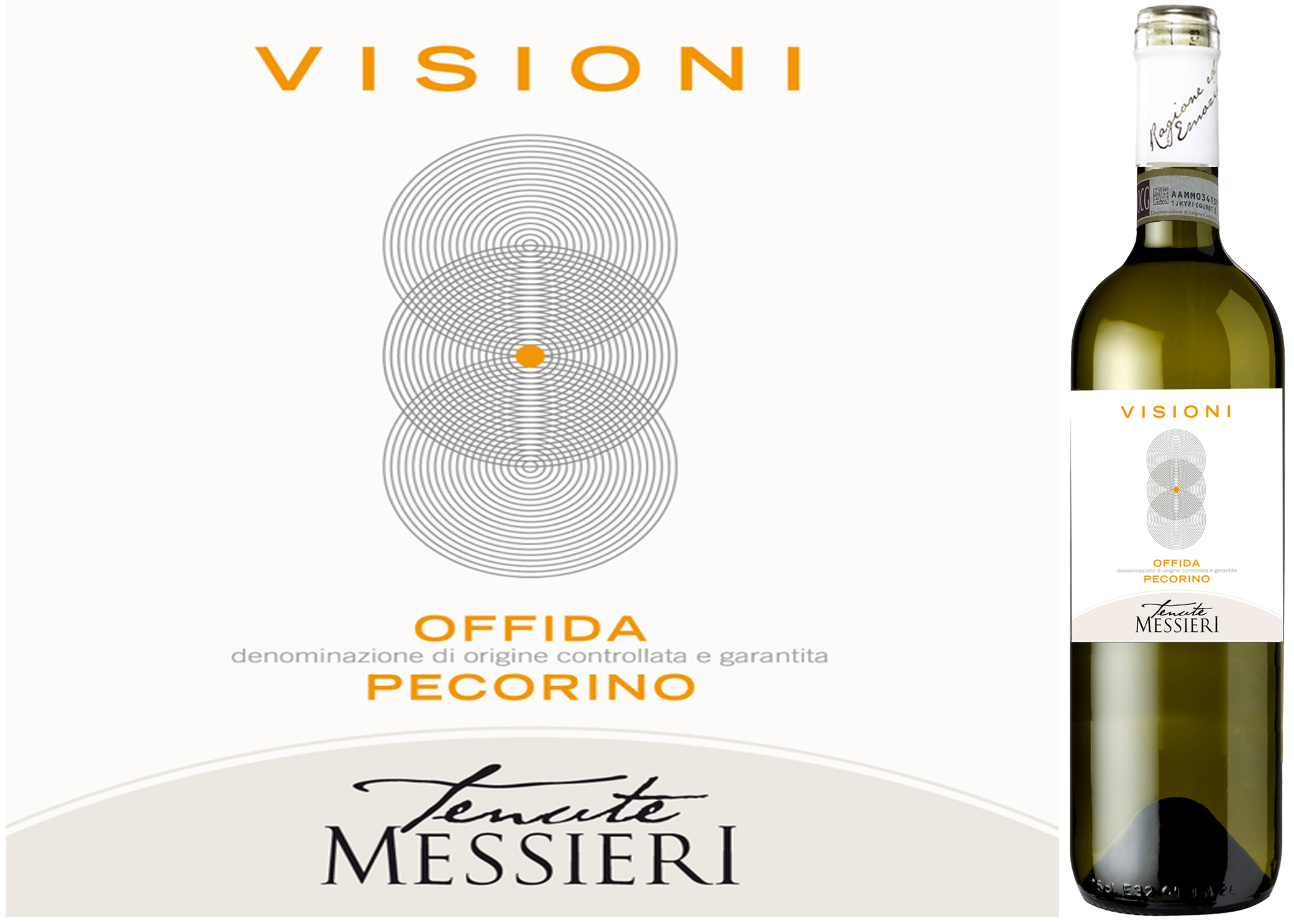
This week’s DéClassé featured Tenuta Messieri is a vintner deeply committed
to reviving the cultivation and varietal bottling of Pecorino. This grape variety,
offering low yields and primarily only used as a component in blended whites,
had fallen out of commercial favour and was near to extinction. With the vision
and 
daring by vintners to promote Pecorino as a stand-alone wine, it is now
being touted as one of the flagship varieties in the Offida DOC. Its strong suits
as a fragrant, fuller-bodied white with a sufficient counterbalance of acidity – is
finding an appreciative following and the necessary market.

I recommend you briskly walk past the familiar Pinot Grigio, Trebbiano, Soave and Verdicchio that’s largely available all year round, then dash with purpose toward
the time-limited, LCBO Vintages shelf-slot for this far more unusual and surprising
wine. It will hold up in your cellar for some time, so have no fear to buy enough
stock to see your dinner guests through the fall and deep into winter of 2016!

Pecorino

TENUTE MESSIERI VISIONI OFFIDA PECORINO 2012
VINTAGES – LCBO Product #414011| 750 mL bottle
Price $ 16.95
14% Alcohol/Vol.
Sugar Content Descriptor: XD

Made in: Marche, Italy
By: Cocci Grifoni
Release Date: July 25, 2015

Tasting Note
This medium-bodied, straw-yellow wine imparts a range of soft floral aromas
with melon, peach and restrained, tropical fruit flavours. Try this with poultry,
fresh fish, or as a classic pairing with Fava beans and shaved Pecorino cheese.

Vinho Verde Alert

Monção is the most northerly wine making sub-region of the Vinho Verde DOC,
which in turn is tucked into the most northern province of Portugal. Here on the
frontier with Spanish Galicia, the agricultural terroir is influenced by the damp
coastal climate of the eastern Atlantic. The white grapes growing among these
misty, forested hillsides that line the Rio Miño river valleys are necessarily fast
maturing varieties. The vines are often pruned into an overhead canopy style
that promotes better air circulation between both the leaves and around the
fruit clusters; guarding against fungal diseases that can be more prevalent with
elevated and prolonged moisture levels.

This week’s recommended vintner is Adega Cooperativa Regional de Monção,
based in the heart of Melgaço, a still-vibrant historical town whose intriguing
stone walls provide both the bottle’s namesake and graphic. Over the past half
century, the 25 original co-op visionaries have achieved an enviable reputation
as being consistent producers of quality wine. This despite numerous variables
involved in sourcing grapes from an additional 1,700 individual growers, each
of whom contributes from very small plots – typically only one hectare or less.

Becoming a seasonal tradition, spring sees DéClassé promoting a Vinho Verde,
though this year’s familiar LCBO Vintages release of Muralhas de Monção has
arrived somewhat later. This particular Loureiro blend of so-called green wine
(more likely to mean young) is built with 2 noble grape varieties: the indigenous,
Portuguese Trajadura paired with the aromatic and slightly spritzy Alvarinho.
The latter’s heritage lies across the border in Spain and contributes slightly
higher alcohol levels than is the DOC norm for this wine style, clocking in at
12%. Summer has finally come, so celebrate by uncorking some of this bright,
ebullient bottling of sunshine – to enjoy alongside lighter food fare offerings at
your next al fresco meal on the patio!

Muralhas

MURALHAS DE MONÇÃO VINHO VERDE 2014
VINTAGES – LCBO Product #80374 | 750 mL bottle
Price $ 15.95
12% Alcohol/Vol.
Sugar Content Descriptor: D

Made in: Monção e Melgaço, Portugal
By: Adega Coop. Regional de Monção
Release Date: July 11, 2015

Tasting Note
This divinely fresh wine has aromas of grapefruit and apricot mingling about
apple flavours. With a pleasing structure of acidity and minerality, it’s a natural
complement to seafood, white meats, pasta and light cream or pesto sauces.

Sylvaner Alert

Firmly part of territorial France in the 21st century, Alsace has been enriched by
its dual Frankish and Germanic cultural history, but has also experienced some
geopolitical upheaval due to the competing aspirations of its 2 parent nations:
Colonized by 1st century BC. Romans; then allied with the Medieval Holy Roman
Empire a millennium or so later; occupied by ambitious 16th century French Kings;
annexed by Germans in the late 19th century during the Franco-Prussian War;
ceded back to France in the terms of armistice following the First World War
and finally, after many areas were entirely destroyed in the second world war
bombing campaign by Allied forces – reaffirmed as French again. Throughout
all of this tumult, steadfast Alsatians have rebuilt and found many ways to keep producing fine grapes and a highly distinctive quality of wines.

Geographically bookended by the banks of the Rhine River to the east and the
Vosges Mountains westward, an undulating, fairytale-like landscape of verdant
vineyards is punctuated by castles on hilltops and half-timbered, half-plastered,
colourfully painted villages and towns such as ancient Sigolsheim. This is home
to this week’s DéClassé recommended, varietal bottling of a Sylvaner: Alsace’s
lesser-known, golden-yellow grape. As is often the case with once-popular styles,
in cycles, careless overproduction of a high-yielding grape to satisfy the market, can 
result in the making of unremarkable wine; thereby depressing demand or
eroding a producer’s reputation. Arguably, this is somewhat more Sylvaner’s
legacy across the border in Germany rather than in northern France. Here, the
AOC standards established in the1960’s, better ensure a judicious practise of pruning to tailor yields and traditional, hands-on harvesting to boost quality.

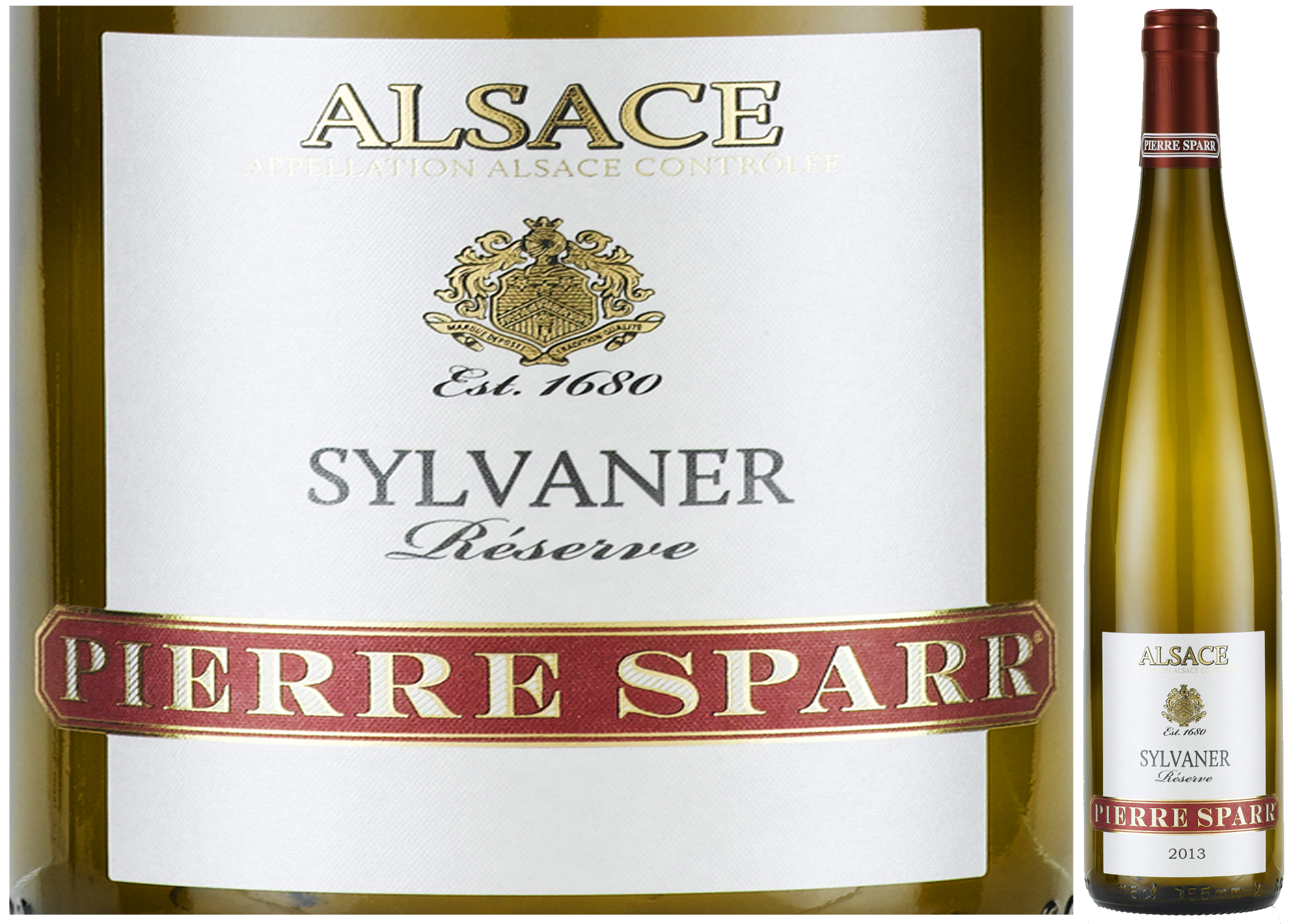
Bernard Sparr is the current vintner heading Maison Pierre Sparr Successeurs,
following in the lineage of 9 family generations that date to 1680 and the reign
of Louis X1V. Proud Alsatians, the House of Sparr has been tending to their 37
hectares of vineyard in the Haut-Rhin (upper Rhine) for a very long time. In the
modern age, they’ve expanded collaborations with a select group of regional
growers, drawing fruit from an additional 150h. With this increased output the
brand has evolved into one of the region’s more renowned and identifiable.

Sylvaner is a delicate and charming summer white, whose release onto shelves
here should be on your calendar of time-limited selections to be on the lookout
for; this time of year. Stock up and serve this dry wine chilled, though not cold,
or you’ll miss some of its subtle layering of citrus, apple and pear flavours.

Sylvaner

PIERRE SPARR RESERVE SYLVANER 2013
VINTAGES – LCBO Product #408179 | 750 mL bottle
Price $ 13.95
12% Alcohol/Vol.
Sugar Content Descriptor: D

Made in: Alsace, France
By: Cvb Maison Pierre Sparr Successeurs
Release Date: May 16, 2015

Tasting Note
Try serving this beguiling, light, white flower and lime-scented refresher with
salad and onion tarts, choucroute, smoked ham hock and sausages, all sorts
of freshwater fish dishes or as apéritif with pickled herring.

Chenin Blanc Alert

With some justified claim to becoming one of the Cape’s greatest white grape
varieties, the plucky, old and gnarly bush vines which produce Chenin Blanc do
so well because of their ability to thrive in this region’s arid, unirrigated, crushed
granite soils. Compelled by the dryland conditions, the root stock burrows deeply,
seeking moisture and mineral-rich nutrients. As is often the case with grapevine,
the stresses, counter-intuitively, promote development of characterful fruit with
more-nuanced layers of flavour in the finished wines. That’s certainly the case in
this week’s DéClassé recommended bottling of a historically overlooked though
now resurgent white, varietal style from this continent’s southernmost tip: the
aptly and evocatively named Vinum Africa.

Comprising 20% of South Africa’s total cultivation and output, the winelands of
the Stellenbosch region in the western cape continue to rise in the competitive
ranks of reputation, both locally and internationally. Blessed with a diversity of
micro-climates and soil composition, its potential was first recognized by French
Huguenots who arrived in the 1690’s and immediately began planting vines. The
somewhat younger, ocean-facing vineyards of the Winery of Good Hope line the
slopes of Helderberg (bright mountain) and are a dynamic farming enterprise at
the forefront of creatively exploiting this emerging, wine making terroir.

Hands-on harvesting, manual sorting and selection lead a careful production
process where fermentation of most of the grapes takes place in the coolness
of stainless steel tanks. While it’s left to linger in the expired yeast (on its lees),
infusing the batch with some subtle, toasty hints, the other 30% is transferred
into Burgundian Oak barrels where it takes on its spiced accents. Final blending
of both components is the recipe key which allows for a balance of freshly acidic,
still-crisp fruit endowed with considerable aromatic depth.

The striking symbol acting as label, combines an ethnic flourish with the latin
term Vinum (wine) and was conceived as an expression of the positive political,
historical and social progression in a revitalizing South Africa. Proudly playing
out their part, the passion and care of these vintners is palatable in the glass.
This is truly a lovely, layered wine, offered at a very reasonable price-point.

Vinum Africa

VINUM AFRICA CHENIN BLANC 2012
VINTAGES – LCBO Product #739995 | 750 mL bottle
Price $ 15.95
13.5% Alcohol/Vol.
Sugar Content Descriptor: XD

Made in: Stellenbosch, South Africa
By: The Winery of Good Hope
Release Date: May 16, 2015

Tasting Note
Medium-bodied, fragrant and dry, try serving this zesty wine with Mediterranean
dishes, grilled vegetables of all sorts, sushi or as complement to Asian cuisine. It’s
also satisfying as an apéritif with goat cheese canapés.

Grüner Veltliner Alert

Grown primarily in Austria but also widely in the neighbouring Czech Republic,
Grüner Veltliner is a white grape variety that hasn’t yet taken hold anywhere
else. A fairly hardy vine, its current success is tied to the rocky soils found on
the slopes of the ancient volcanic calderas in these regions. Mostly intended to
be consumed young (a staple in the so-called “Heuriger” wine bars of Vienna),
it’s also known as being particularly food-friendly – suitable to serve both as an
apéritif and as a compliment to main courses.

In the mid-18th century, 20 hectares of land associated with Weingut Rudolph
Rabl began as a traditional farm with mixed crops and livestock. Then, having
added grape vines, the business was confined to providing bulk wine in barrels
to the local innkeepers up until the early 20th century. In 1986 Rudolf Rabl junior
(Rudi) joined his father Rudolf senior, which allowed the winery to expand to 80
hectares, becoming one of the largest estates in the Kamptal (the Kamp River
Valley) with 35% of the vineyards dedicated to the Grüner Veltliner variety.

The fruit derived from terraced vineyards near the town of Langenlois in lower
Austria, benefit from the desirable combination of rich löss (wind-blown soil) on
top of an underlying crushed stone bed; providing the necessary drainage for
healthy, mildew-free grape cultivation. The distinctive green raven icon depicted
on Rabl (little Raven) labels represents their line of very well made, entry-level,
single vineyard wines.

All in all, it’s taken some time for North American markets to catch on to white
wine styles other than the classic, enduring stars such as Chardonnay, Soave,
Sauvignon Blanc and Pinot Grigio. So, in the spirit of exploring the horizon at the
outset of spring – add this wine style to your DéClassé-recommended listing of
characterful dry whites: Sylvaner, Sèvre et Maine, Picpoul de Pinet, Vinho Verde,
Tsinandali, Pecorino and Gavi.

Rabl Gruner Veltliner

RABL LOSS GRÜNER VELTLINER 2013
VINTAGES – LCBO Product #295709 | 750 mL bottle
Price $ 14.95
12.5% Alcohol/Vol.
Sugar Content Descriptor: XD

Made in: Kamptal, Austria
By: Weingut Rudolph Rabl
Release Date: Mar. 4, 2015

Tasting Note
This is a bright, fresh and fruity wine with loads of ripe acidity and intriguing
mineral notes on the finish. Try serving with smoked fish, Wiener schnitzel,
roasted vegetable minestrone or Prosciutto and crostini.

Riesling Alert

The Weingut Dr. Hermann estate is located in the charming winegrowing town
of Ürzig. Also known as “Ürziger Würzgarten” as of the 13th century, the name
references the historic garden of 10,000 shrubs and its 160 varieties of spice,
aromatic herbs and medicinal plants. Equally impressive in the landscape, are
the terraced vineyards boasting mature 30 – 100 year-old grape vines. Clinging
onto the exceptionally steep, red slate and sandstone slopes that were carved
over the millenniums by the picturesque Mosel River, hand picking and sorting is
both a point of pride and physical necessity in the heartland of noble Riesling.

Looking back 30 – 40yrs., local wine markets were awash with German Rieslings
of limited varieties, typically ranging from the very sweet to saccharine. This fact
created the impression that the wines offered little more than being appropriate
for dessert. Thankfully for all, times have changed. The reframing of reputation
has come about due to broader distribution of high quality wine by independent
producers that now includes drier variants and the emergence of Asian cuisine,
which has breathed a wonderful new range into the food fare that’s commonly
associated with the Riesling style.

In this relatively cool weather, wine growing region, getting the vines to produce
adequately ripened fruit is always challenging. This fact, in part, has prompted
development of the German classification system of Prädikatswein. Concerned
with establishing verifiable standards for harvest times and the attendant sugar
levels, it also forbids the practice of chaptalisation, whereby extra sugars might
be added to less-ripe grapes before fermentation, to boost the eventual alcohol
content. This week’s DéClassé recommended bottling carries the designation of
Kabinett, which is the first level of ripeness, typically producing the lightest style
of Riesling and naturally lowest in alcohol content (8.5%).

Erdener Treppchen (‘little staircase’ of Erden) is the name of the single-vineyard
source of the grapes, whose unique soil gives this wine its exotic, spicy aromas
as well as, its great potential for aging. It’s a medium-bodied white that delivers
an elusive balance of sweet fruit with a dry finish, beautifully rounded with lively
acidity. Though appealingly sweeter as a so-called medium dry, it is nonetheless
elegant, complex and affordable for its exceptional caliber. Serve well chilled.

Untitled-3

DR. HERMANN ERDENER TREPPCHEN KABINETT RIESLING 2010
VINTAGES – Product #402420 | 750 mL bottle
Price: $ 17.95
Wine, White Wine
8.5% Alcohol/Vol.
Sugar Content : MD

Made in: Mosel, Germany
By: Weingut Dr. Hermann
Release Date: Mar. 21, 2015

Tasting Note
Delivers textbook Mosel aromas and flavours of stonefruit, citrus, honey and
spice, freshly devoid of oak . Though vibrant, the texture is at the creamy end of
the scale, making this an ideal for pairing with turkey, root vegetables, herb-rich
stuffing, potato and leek gratin or chicken satay and spicy Thai dishes.

White Burgundy Alert

White Burgundy still ranks among the wine world’s most famous grape varieties
and the benchmark styles from its native terroir remain a gold standard. We’re
of course referencing Chardonnay. It has also done very well in California, where
climate and drinking tastes converged in the 20th century, providing a significant
cornerstone upon which a young wine industry was initially built-up, then broadly
diversified. Widespread popularity of particular wine styles is subject to cycles. A
rapid rise for Chardonnay as a staple table wine in North America, was followed
by a degree of consumer fatigue, clearly expressed in a somewhat derisive and
unfortunate acronym: ABC ‘anything but chardonnay’. Within the vast range of
possible finishing styles that includes both dry sparkling and still wines, this, the
world’s most planted white grape, is enduring and defying fickle fashion.

Finished Chardonnay is a definitive winemaker’s wine, in that the characteristics
commonly associated with it: being highly aromatic, having a buttery mouthfeel,
tropical or stonefruit flavoured body, notes of vanilla – are all the carefully coaxed
results of how this relatively neutral grape is methodically fashioned. From time
to time, this has translated into excesses of one aspect overshadowing others.
As this is also one rarer example of a white wine being suitable for barrel aging,
overly Oaked versions of less-select grape harvests, did for a time, contribute to
the decline in reputation and desirability for ever-more discerning drinkers. With
development of the grape in other cooler climate vineyards, fresh and vibrant
expressions of Chardonnay are more common again and arguably, truer to the
originating style from Burgundy. This week’s DéClassé recommended bottle is a
balanced classic and more than deserving of a revisit and re-appreciation.

The Mâconnais do have an indisputable expertise with this wine and their lighter
touch in production allows the more natural character of the fruit to shine. Their
practiced traditions with Chardonnay reach well back into the middle ages when
Mâcon was the heart of the Duchy of Burgundy. Some of France’s oldest lineage
of vines are found here, having begun a sustained cultivation, not surprisingly, by
monks as early as the 5th century. Flash forward to modern times and the region
is still outputting great, signature examples. This is one, where you will rue not
having picked up a second bottle, to enjoy with guests after having polished off
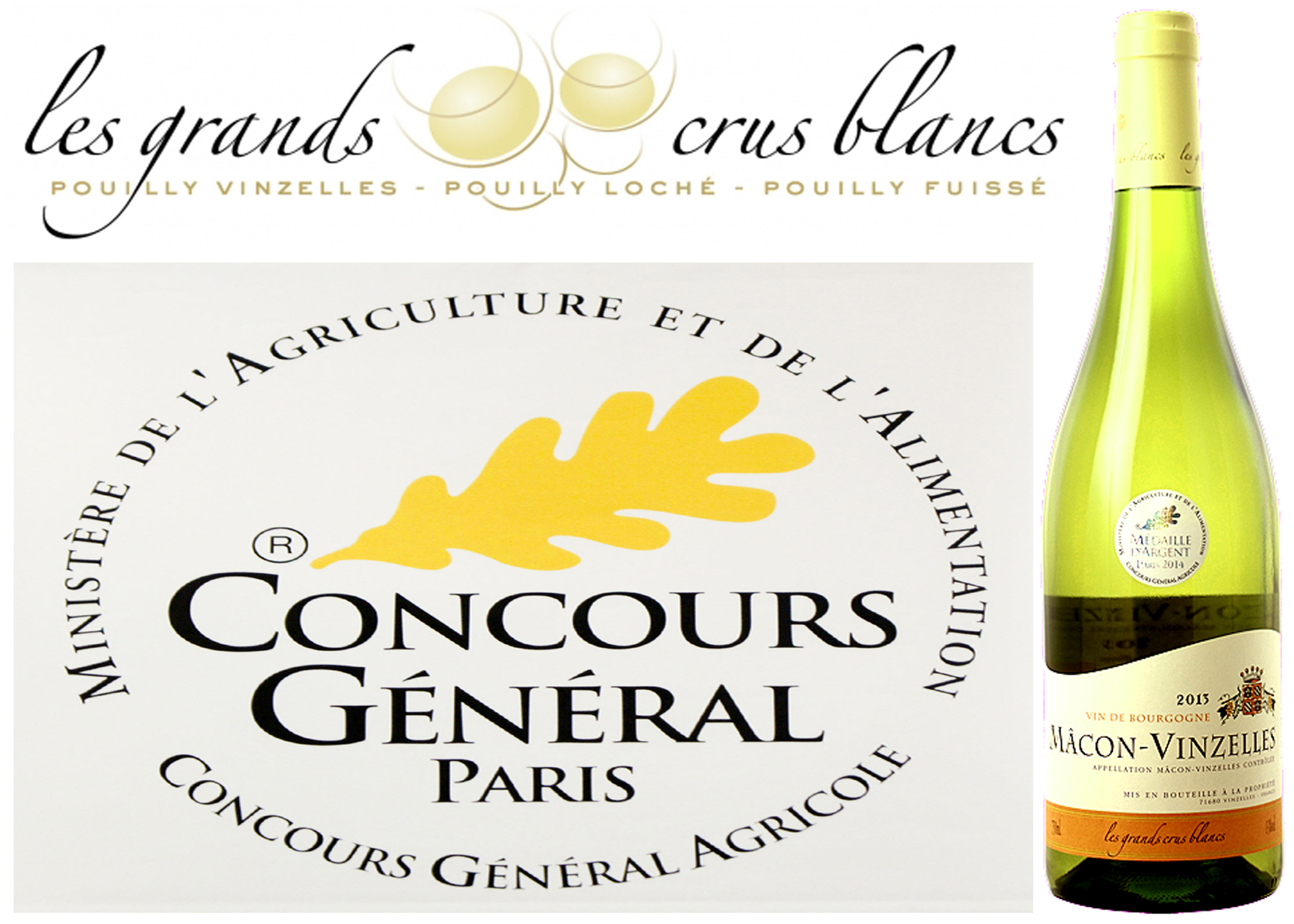
the first – Gold Medal, 2014 Concours Général Agricole in Paris.

Macon Vinzelles

CAVE DES GRANDS CRUS BLANC MACON VINZELLES 2013
VINTAGES – LCBO Product #405795 | 750 mL bottle
Price $ 17.95
13% Alcohol/Vol.
Sugar Content Descriptor: XD

Made in: Burgundy, France
By: Cave Des Grands Crus Blancs
Release Date: Mar. 7, 2015

Tasting Note
This is a wine that can be easily overwhelmed by food choices, so shy away from
heavy meats or anything with an acidic character such as tomatoes. As apéritif,
try with smoked salmon and gruyere cheese. As a main course compliment, try
with roast chicken, pork, fresh fish and pastas in light cream sauces.

Gavi Alert

Since 1956, the Piedmont winemaker Michele Chiarlo has been at the forefront
of innovation and the significant elevation of quality, particularly for Barbaresco,
Barolo and Barbera, as well as, some of the less well-known styles such as this
week’s DéClassé recommended Gavi. Now with official designation, the Gavi
DOCG lies in northern Italy: a region that enjoys a unique micro-climate which
is highly conducive to cultivation of early ripening grape varieties like Cortese.
On 60 hectares, the Chiarlo family operation continues to explore and develop
the full potential of a terroir in which the combined Alpine and Maritime weather
conditions sees the heat of summer alternating with fog-bound harvest seasons.

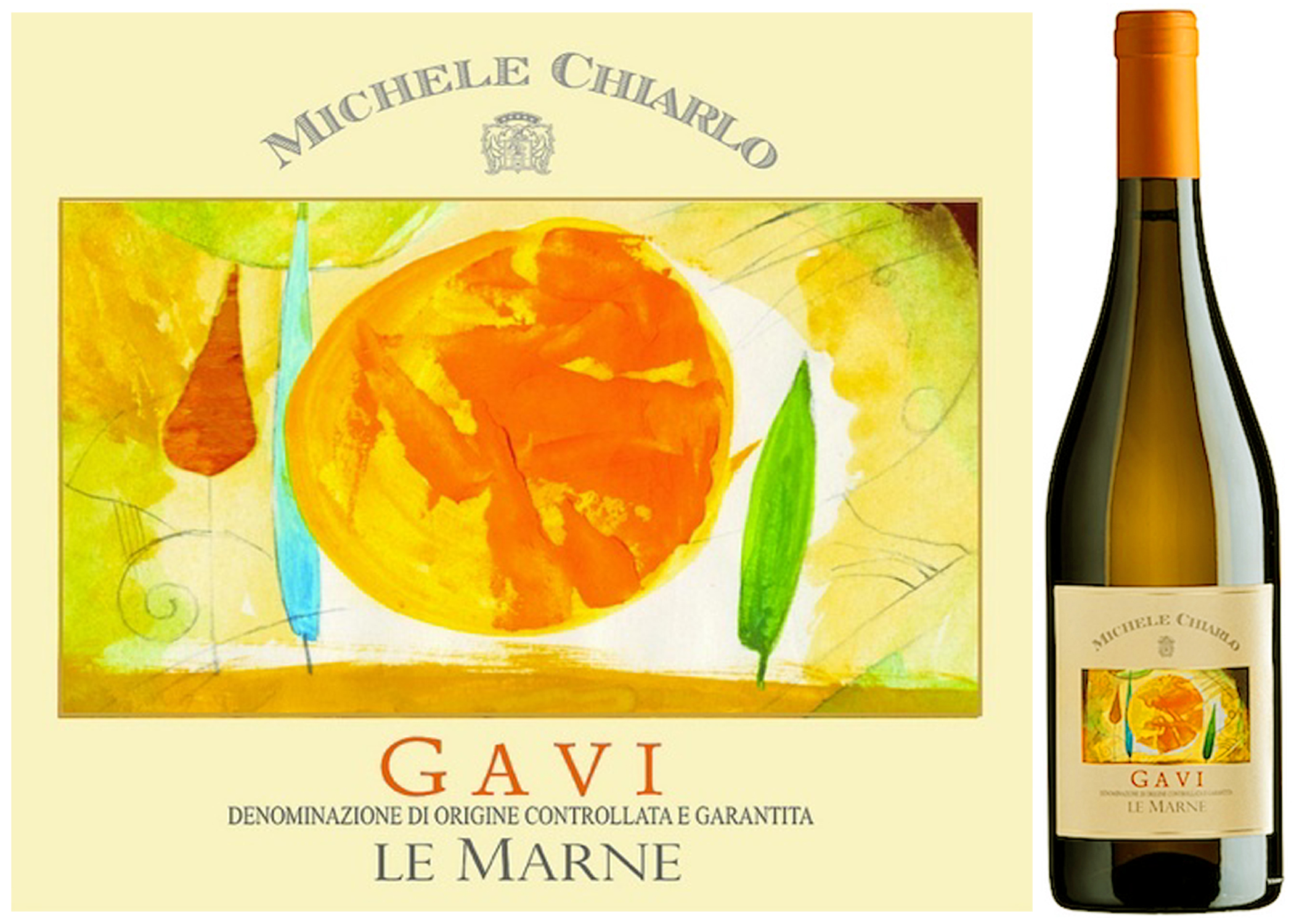
Orme Su La Court (Footsteps in La Court) is an additionally remarkable aspect
of a winery already blessed with the beauty of its natural surroundings. It’s an
art walk that expresses the influences of the four elements of Earth, Air, Water
and Fire. Designed in collaboration with Genovese artist Emanuele Luzzati, the
sculpture installations have been placed amidst the long rows of vines that wend
their way across the rolling hills of the La Court estate. A notable feature, is the
grouping of ceramic heads on poles called ‘Le Teste Segnapalo’. These are
the reinterpretation of a traditional practice of placing figureheads in the vineyard
landscape to ward away negative influences on the growth of the grapes. The
walk begins and ends at a cluster of farm houses where exhibits, film showings
and live performance offer visitors the delightful chance to mix the appreciation
and creativity of the wines with the experiences of art.

The North American market is still slow in grasping an appreciation for the wide
range of Italy’s dry white wine other than ubiquitous varieties of Pinot Grigio and
Soave; arguably the least distinctive of their exported offerings. Gavi, apart from
being a pleasing apéritif wine served alongside antipasti, is also complimentary
to main courses of grilled fish, light cream-based pasta or pesto dishes. Dare to
consider adding this to an evolving contingent of alternate and more-interesting
choices such as Pecorino and Verdicchio. Only available in LCBO’s Vintages
section, this limited, seasonal release won’t be on shelves for very long.

Gavi

MICHELE CHIARLO LE MARNE GAVI 2013
VINTAGES – LCBO Product #228528 | 750 mL bottle
Price $ 16.95
12.5% Alcohol/Vol.
Sugar Content Descriptor: XD

Made in: Piedmont, Italy
By: Michele Chiarlo Azienda Srl
Release Date: Feb. 7, 2015

Tasting Note
This crisp, dry white wine has many of the typical characteristics of the Cortese
grape including delicate notes of honey, apples, vanilla and a touch of minerality.
Try serving with stuffed trout, roast pork or vegetable and cheese ravioli.